
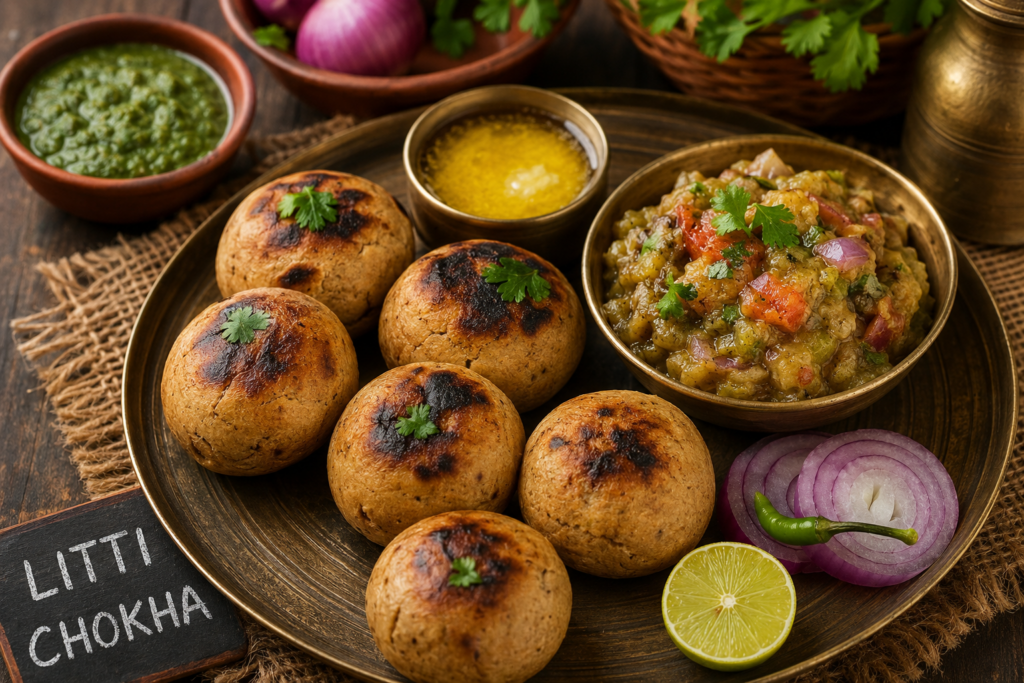
Indian cuisine is filled with dishes that are more than just food — they carry stories, traditions, and the spirit of generations. One such timeless dish is ✨ Litti Chokha ✨, a rustic and flavorful meal that originated in the heartlands of Bihar and Eastern Uttar Pradesh.
From village kitchens and roadside stalls to modern restaurants across India, litti chokha has traveled through time while preserving its authentic identity. Loved for its smoky flavor, nutritional value, and cultural significance, this humble dish is now gaining recognition far beyond its regional roots.
But what makes litti chokha so special? Let’s explore its fascinating journey, traditional preparation, and health benefits.
🍽️ What Is Litti Chokha?
Litti chokha is a traditional Indian dish made of two main components:
🟤 Litti
Round wheat dough balls stuffed with spicy and flavorful sattu (roasted gram flour).
🍆 Chokha
A smoky mashed mixture made using roasted vegetables such as:
- Eggplant (Baingan)
- Tomato
- Potato
The dish is often served with:
- 🧈 Melted ghee
- 🌿 Green chutney
- 🥒 Pickles
- 🥛 Fresh curd
Its earthy aroma and rich flavors make it one of the most comforting traditional meals in Indian cuisine.
🏺 The Origin of Litti Chokha
Litti chokha traces its roots back to Bihar, especially the Bhojpuri and Magahi regions. Over centuries, it became a staple food among rural communities because of its simplicity, affordability, and long shelf life.
Traditionally, farmers, travelers, and laborers preferred litti because it was:
✅ Easy to prepare
✅ Highly filling
✅ Nutritious
✅ Travel-friendly
The use of sattu played an important role in its popularity. Roasted gram flour was widely available, protein-rich, and easy to carry during long journeys.
Some traditional accounts also associate sattu-based foods with travelers and soldiers during the colonial period because of their portability and energy value.
🔥 Traditional Cooking Method
One of the reasons litti chokha tastes so unique is its authentic preparation style.
🟤 Preparing the Litti
The dough balls are stuffed with:
- Sattu
- Garlic
- Ginger
- Green chilies
- Ajwain
- Mustard oil
- Traditional spices
Traditionally, litti is roasted over:
🔥 Coal
🔥 Wood fire
🔥 Cow-dung cakes
This gives it its signature smoky flavor and crispy texture.
🍆 Preparing the Chokha
Vegetables are roasted directly over open flame before being mashed together with:
- Mustard oil
- Onion
- Garlic
- Coriander
- Green chilies
The smoky vegetables perfectly complement the roasted litti.
💪 Health Benefits of Litti Chokha
Litti chokha is not only delicious but also naturally balanced and nutritious.
🌱 1. Rich in Protein
The sattu stuffing provides excellent plant-based protein that helps:
- Build energy
- Keep you full longer
- Support muscle health
🌾 2. High in Fiber
Whole wheat flour and roasted gram flour contain dietary fiber that:
- Supports digestion
- Promotes gut health
- Helps maintain fullness
🥗 3. Nutrient-Rich Vegetables
Chokha includes roasted vegetables packed with:
✨ Vitamins
✨ Minerals
✨ Antioxidants
✨ Natural fiber
🍃 4. Traditionally Low in Oil
Authentic litti is roasted rather than deep-fried, making it lighter than many processed fast foods.
☀️ 5. Traditionally Considered Cooling
In Indian traditional diets, sattu is commonly considered cooling and energizing during hot summers.
❤️ More Than Food: A Cultural Identity
In Bihar, litti chokha is more than a meal — it is part of regional identity and pride.
It is commonly enjoyed during:
🎉 Family gatherings
🎉 Festivals
🎉 Village feasts
🎉 Evening street-food outings
The dish represents:
- Simplicity
- Tradition
- Community
- Rural heritage
Even today, roadside vendors roasting litti over coal fires remain a nostalgic sight across many towns and cities.
🌍 Litti Chokha in Modern India
Traditional Indian foods are making a strong comeback, and litti chokha is now loved across the country.
Modern variations include:
🧀 Paneer litti
🧈 Extra ghee versions
🌮 Fusion platters
🥗 Health-focused baked versions
Despite these innovations, the authentic rustic preparation remains the favorite for many food lovers.
⚖️ Litti Chokha vs Dal Baati
Litti chokha is often compared with Rajasthan’s famous Dal Baati, but they are quite different.
| 🟤 Litti Chokha | 🟡 Dal Baati |
|---|---|
| Stuffed with sattu | Plain baked dough balls |
| Served with chokha | Served with dal |
| Smoky flavor | Rich buttery flavor |
| Popular in Bihar & Eastern UP | Popular in Rajasthan |
Both dishes beautifully represent India’s regional culinary diversity.
🌿 Why Traditional Foods Still Matter
In today’s fast-food culture, traditional dishes like litti chokha remind us of the value of:
✅ Local ingredients
✅ Sustainable cooking
✅ Balanced nutrition
✅ Cultural heritage
These recipes survived for generations because they were practical, nourishing, and deeply connected to community life.
✨ Final Thoughts
Litti chokha is a perfect example of how simple ingredients can create something extraordinary. What began as a humble rural meal has now become one of India’s most celebrated traditional dishes.
Its smoky flavors, nutritional richness, and historical roots make it much more than comfort food — it is a story of tradition, resilience, and culinary heritage served on a plate.
Whether you enjoy it from a roadside stall in Bihar or prepare it at home, litti chokha offers a delicious glimpse into India’s timeless food culture.