Category: Food

  • Gud (Jaggery): The Traditional Sweetness That Existed Before Modern Sugar

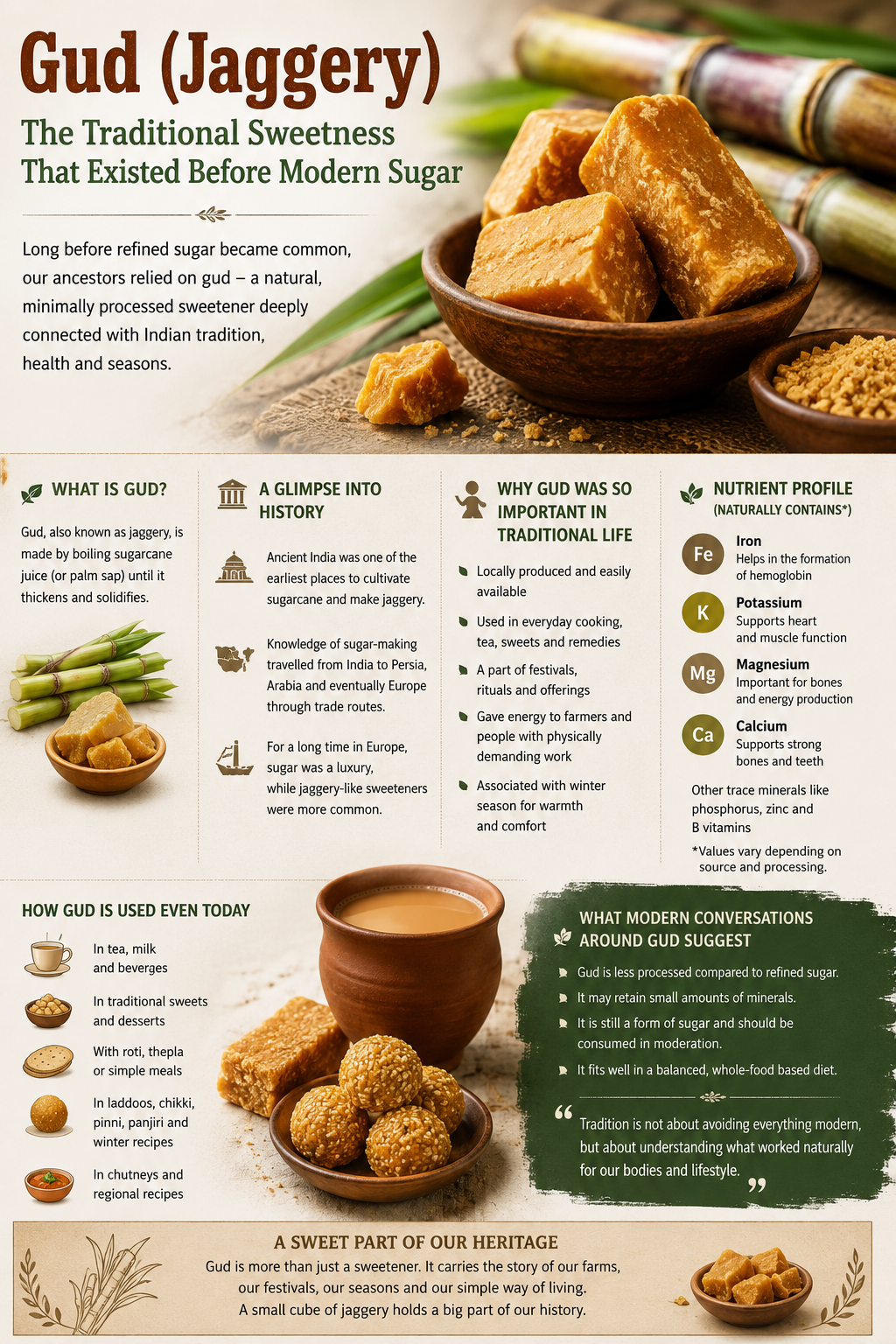
    Gud (Jaggery): The Traditional Sweetness That Existed Before Modern Sugar

    Sugar feels so normal today that it’s difficult to imagine a time when it wasn’t part of everyday life.

    It quietly exists in:

    • tea
    • sweets
    • packaged snacks
    • desserts
    • almost every kitchen shelf

    But while reading more about traditional foods and older eating habits, I came across something interesting:

    Before refined white sugar became widely common, many households across India relied far more on gud (jaggery) for sweetness.

    And the more I explored its history, the more it felt like gud was never just about taste. It was connected with:

    • farming traditions
    • seasonal eating
    • homemade recipes
    • festivals
    • and everyday village life.

    So I thought it would be interesting to bring together some of these details in one place.


    🌾 What Exactly Is Gud?

    Gud, also known as jaggery, is traditionally made by slowly boiling sugarcane juice until it thickens and solidifies.

    In some regions, jaggery is also prepared from:

    • date palm
    • coconut palm

    Unlike refined sugar, gud usually goes through much less processing.

    That’s why it keeps:

    • its golden or brown color
    • deeper taste
    • slightly earthy flavor

    And maybe that’s one reason older generations often viewed it differently from ordinary sugar.


    🏺 India’s Deep Connection with Sugarcane and Gud

    One detail that really stood out while reading about gud was how strongly India is connected with the early history of sugarcane and sweet-making.

    Historical references suggest that ancient India was among the earliest places where people:

    • cultivated sugarcane extensively
    • extracted sugarcane juice
    • developed early sweeteners like jaggery

    Before modern sugar factories existed, gud was already being prepared and used in everyday life.

    Over time, knowledge of sugar processing gradually spread through:

    • traders
    • travelers
    • trade routes

    moving from India toward:

    • Persia
    • the Arab world
    • and eventually Europe.

    🍬 Before White Sugar Became Common

    Another interesting thing is that refined white sugar was once rare and expensive in many parts of the world.

    For a long time, people depended more on:

    • honey
    • fruits
    • jaggery-like sweeteners

    In India especially, gud naturally became part of:

    • homemade sweets
    • tea
    • winter recipes
    • festive food
    • farming households

    And because it was locally prepared, it stayed closely connected with rural food traditions.


    ❄️ Why Gud Became Closely Linked with Winters

    One pattern I noticed while reading about traditional Indian food habits is how closely foods were connected with seasons.

    Gud often appeared in:

    • til laddoos
    • chikki
    • panjiri
    • winter sweets

    Older traditions frequently described it as:

    • warming
    • comforting
    • satisfying during colder months

    Even today, many families naturally start using gud more during winter.


    🌿 What Nutrients Does Gud Naturally Contain?

    Because jaggery is less refined than white sugar, it may retain small amounts of naturally occurring minerals.

    Depending on the preparation, gud can contain traces of:

    • iron
    • potassium
    • magnesium
    • calcium

    Of course, it is still a sweetener and naturally contains sugar.

    But what I found interesting is that modern discussions often describe gud less as a “miracle food” and more as a traditional ingredient connected with older eating patterns.


    🧠 What Current Conversations Around Gud Seem to Suggest

    While exploring more recent discussions around jaggery, I noticed that the conversation today feels very different from older times.

    Instead of dividing foods strictly into “good” and “bad,” many current discussions seem more focused on:

    • moderation
    • less processed foods
    • traditional preparation methods
    • balanced eating habits

    Gud often appears in these conversations because of:

    • its traditional preparation
    • richer taste
    • connection with homemade food culture

    At the same time, many sources also mention that gud is still a form of sugar and is best understood in balance rather than through extreme claims.

    That balanced perspective honestly felt more realistic and interesting to me.


    🍛 How Gud Quietly Stayed Part of Everyday Life

    What surprised me most is how naturally gud still fits into daily routines in many homes.

    Even today, people continue using it:

    • with roti
    • in tea
    • in homemade sweets
    • after meals
    • during winter evenings

    And despite modern packaged foods becoming more common, gud still somehow feels connected with slower, older styles of eating.


    🌟 A Small Reflection

    Reading about gud made me realize how many traditional foods quietly survived across generations not because they were heavily promoted, but because they naturally fit into people’s lifestyles.

    Sometimes, food history says as much about culture and everyday life as it does about nutrition.


    🍯 Final Thought

    Gud may look simple, but behind it is a long story of sugarcane farming, seasonal eating, village traditions, trade routes, and changing food habits.

    And maybe that’s why it still feels more connected to tradition than ordinary sweetness does.


    📚 References


    ⚠️ Disclaimer

    The information shared here is based on historical references, cultural observations, and general reading from publicly available sources. It is meant for informational purposes only and should not be considered medical or dietary advice.
  • The Story of Mango: How It Became India’s Most Loved Summer Fruit

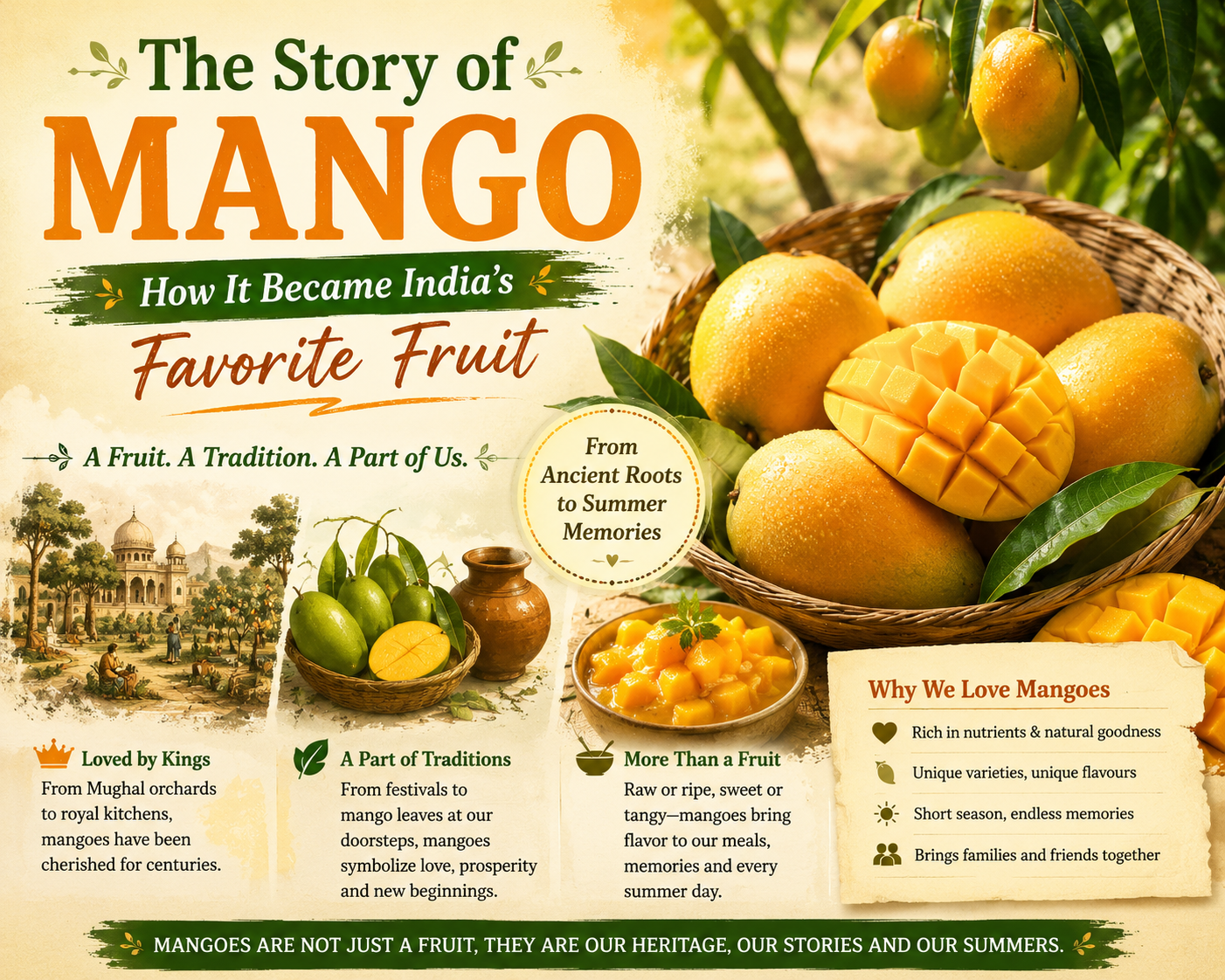
    The Story of Mango: How It Became India’s Most Loved Summer Fruit

    There’s something different about mango season in India.

    The moment mangoes begin appearing in markets, everything changes a little.

    People start discussing:

    • Which variety arrived first
    • Whether Alphonso is better than Dasheri
    • How sweet this year’s mangoes are
    • And when homemade pickles will finally be ready

    Very few foods create this kind of excitement.

    And while reading more about the history of everyday foods, I realized something interesting:

    👉 Mango is not just a fruit in India.
    It has quietly become part of memories, traditions, festivals, and even emotions across generations.

    So I thought it would be interesting to gather some of these details together in one place.


    🌳 A Fruit That Has Been Around for Thousands of Years

    Mango is believed to have originated around the Indian subcontinent and nearby regions of South Asia.

    Historical references suggest that mangoes were cultivated in India thousands of years ago.

    Which means long before modern supermarkets and fruit packaging existed, mango trees were already part of Indian landscapes.

    Over time, the fruit slowly became connected with:

    • Summer traditions
    • Hospitality
    • Seasonal eating habits
    • Family gatherings

    And somehow, that connection still exists today.


    👑 Even Kings Were Fascinated by Mangoes

    One detail that really stood out to me was how much mangoes were admired during royal times.

    During the Mughal era, mango cultivation became extremely popular.

    Emperor Akbar is believed to have planted a massive mango orchard called Lakhi Bagh, which reportedly had thousands of mango trees.

    It’s interesting to think that a fruit we casually cut and eat today was once so admired by kings and royal courts.


    🥭 India Didn’t Just Grow Mangoes — It Created Mango Personalities

    One of the most fascinating things about mangoes is how every region developed its own favorite variety.

    And people become surprisingly loyal to them.

    Some famous varieties include:

    • Alphonso from Maharashtra
    • Dasheri from Uttar Pradesh
    • Langra from Varanasi
    • Kesar from Gujarat
    • Banganapalli from Andhra Pradesh

    And if you ask people which one is best, the debate can go on for hours.

    Because for many people, mangoes are personal.


    ☀️ Why Mango Season Feels Emotional

    Unlike fruits available throughout the year, mangoes arrive for a limited time.

    Maybe that’s part of what makes them special.

    For many families, summer memories are tied to:

    • Eating chilled mango slices in the afternoon
    • Drinking aam panna during hot days
    • Watching elders prepare mango pickle jars
    • Storing boxes of mangoes wrapped in newspaper at home

    Even the smell of ripe mangoes can remind people of childhood summers.


    🍛 Mango Is More Versatile Than We Realize

    Another thing I found interesting is how differently mango is used across India.

    🥭 Raw Mango

    Used in:

    • Pickles
    • Chutneys
    • Aam panna
    • Tangy summer dishes

    🌞 Ripe Mango

    Used in:

    • Milkshakes
    • Desserts
    • Aamras
    • Homemade sweets
    • Or simply eaten fresh

    Very few fruits fit into both spicy and sweet traditions so naturally.


    🌿 Mango Beyond Food

    Mangoes also became part of Indian traditions beyond eating.

    Even today:

    • Mango leaves are used during festivals
    • They are placed near entrances during celebrations
    • Mango motifs appear in Indian art and fabrics

    Which shows how deeply the fruit entered cultural life over time.


    Simple Benefits People Associate with Mango

    Without making things too technical, mangoes naturally contain:

    • Vitamin C
    • Vitamin A
    • Fiber
    • Natural sweetness

    And because they are seasonal, many people enjoy them as part of balanced summer eating rather than an everyday fruit.


    🧠 Why Mango Still Feels Different From Other Fruits

    Reading about mangoes made me realize something:

    People don’t just “consume” mangoes.

    They wait for them.

    They discuss them.
    Compare them.
    Gift them.
    Remember summers through them.

    And very few foods create that kind of emotional connection across an entire country.


    🌟 A Small Reflection

    From royal orchards to roadside fruit stalls, mango has traveled through centuries while still remaining deeply familiar.

    Maybe that’s why it continues to feel special no matter how common it becomes.


    🥭 Final Thought

    Some foods simply become part of our diet.

    Others slowly become part of culture, memories, and seasons.

    And mango seems to have become all three.


    📚 References


    ⚠️ Disclaimer

    The information shared here is based on commonly available historical references, cultural observations, and general reading. It is meant for informational purposes only and should not be considered medical advice or nutritional guidance.

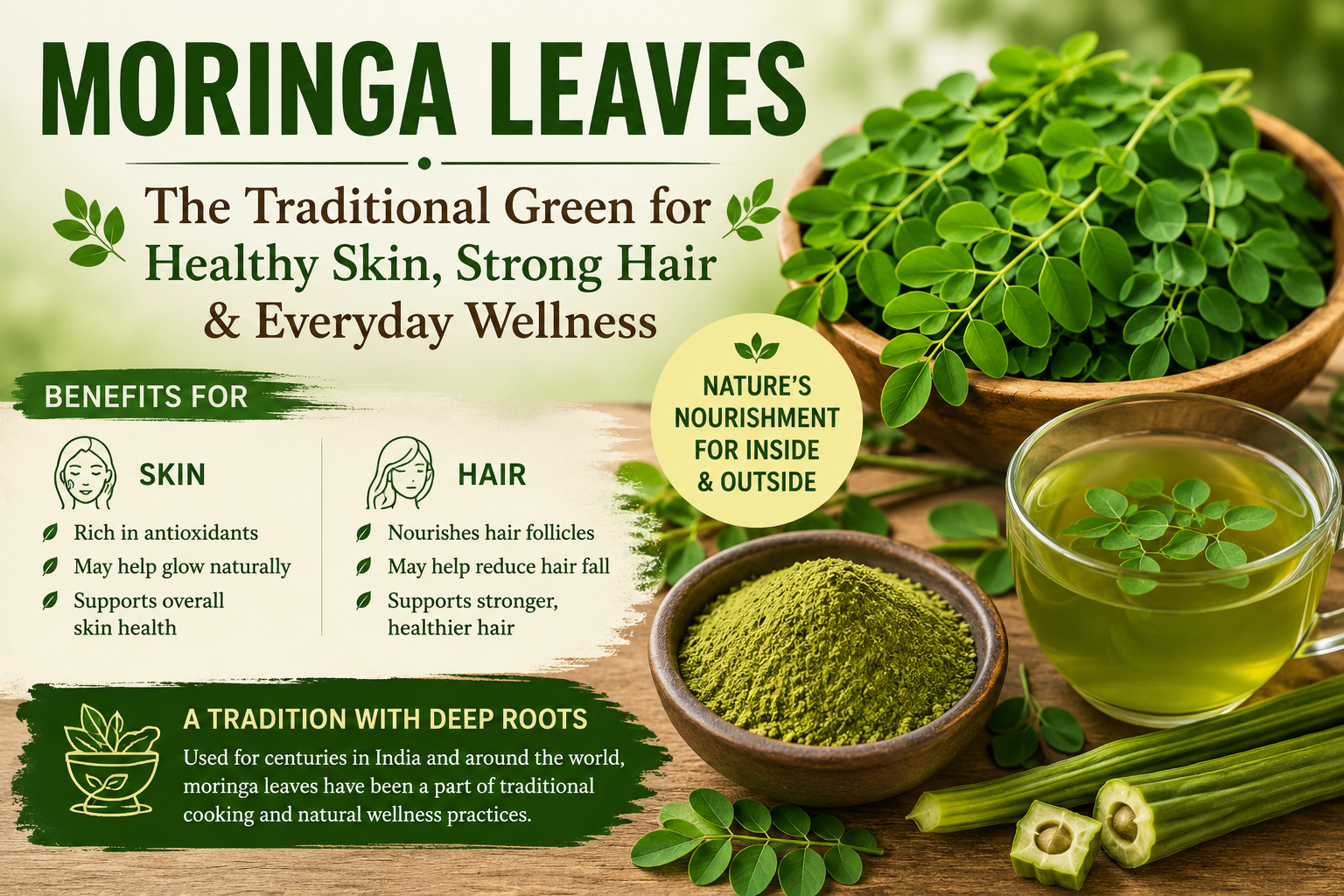
  • Moringa Leaves: The Traditional Green That Quietly Supported Skin, Hair, and Everyday Wellness

    Moringa Leaves: The Traditional Green That Quietly Supported Skin, Hair, and Everyday Wellness

    There are some ingredients that stay part of traditional food culture for generations without needing much attention.

    Moringa leaves are one of them.

    Today, many people know moringa as a modern “superfood,” but while reading more about it, I realized that it had already been part of everyday cooking long before wellness trends began talking about it.

    In many Indian homes—especially in the South—moringa wasn’t treated as something fancy or rare. It was simply used in regular meals, often without much discussion around its “benefits.”

    And maybe that’s what makes it interesting.

    So I thought it would be nice to gather together some details about its history and why moringa leaves have remained valued for generations.


    🌳 What Exactly Are Moringa Leaves?

    Moringa comes from the Moringa oleifera tree, commonly known as:

    • Drumstick tree
    • Sajjan tree
    • Miracle tree

    Almost every part of the tree has traditionally been used:

    • Pods (drumsticks)
    • Leaves
    • Seeds

    But the leaves especially became popular because they were easy to cook and naturally rich in nutrients.


    🏺 A Long History in Traditional Food Culture

    Moringa has been used for centuries in:

    • India
    • Africa
    • Southeast Asia

    In India, moringa leaves were commonly added to:

    • Dal
    • Soups
    • Vegetable dishes
    • Homemade recipes

    What stood out to me was that older generations didn’t consume moringa as a “health supplement.”

    It was simply treated as nourishing everyday food.


    🌿 Why Moringa Leaves Stayed Important

    One reason moringa leaves remained part of traditional diets is because they naturally contain:

    • Iron
    • Calcium
    • Vitamin C
    • Plant-based nutrients

    And since they were easy to grow in many regions, they became part of practical home cooking.


    How Moringa Leaves May Support Skin

    Skin often reflects what’s happening inside the body.

    And traditional foods that support overall nourishment sometimes quietly reflect on the skin too.


    💧 1. May Help Skin Feel Fresher

    Moringa leaves contain natural vitamins and antioxidants.

    Because of this, many people feel that regularly including nourishing greens in meals helps the skin appear:

    • Less dull
    • More refreshed
    • Better balanced over time

    🌿 2. Supports Overall Nourishment

    When the body feels undernourished or imbalanced, skin is often one of the first places where it shows.

    Moringa leaves have traditionally been valued because they provide plant-based nourishment in a simple way.


    3. Traditionally Associated with Healthy-Looking Skin

    In many traditional food practices, leafy greens like moringa were included regularly because they were believed to support overall wellness—including skin appearance.

    Not as a quick fix, but as part of a balanced lifestyle.


    🌱 How Moringa Leaves May Support Hair

    Hair health is often connected with:

    • Nutrition
    • Overall wellness
    • Daily food habits

    And this is one reason moringa leaves became valued in traditional diets.


    🌿 1. Naturally Contains Iron and Nutrients

    Moringa leaves contain nutrients that are important for overall nourishment.

    This is why they have often been linked with:

    • Supporting healthy hair
    • Maintaining scalp nourishment
    • General wellness from within

    💧 2. Traditionally Used in Hair Practices

    In some traditional home practices, moringa leaves and oils made from the tree were also connected with hair care routines.

    The idea was simple:
    👉 nourishment from inside and outside together.


    🌱 3. Part of Everyday Food, Not a Trend

    One interesting thing is that moringa was never traditionally promoted as a “hair solution.”

    It was simply included regularly in meals, which reflects a very different approach compared to modern quick-fix trends.


    🍛 How Moringa Leaves Were Traditionally Eaten

    Moringa leaves were usually cooked in very simple ways:

    • Mixed into dal
    • Added to stir-fries
    • Used in soups
    • Combined with coconut in South Indian dishes

    Nothing complicated—just part of regular food.


    🧠 Why Moringa Is Becoming Popular Again

    Interestingly, ingredients like moringa are now being rediscovered globally.

    What older generations quietly used in homemade meals is now often packaged into:

    • Powders
    • Capsules
    • Wellness products

    But traditionally, it was simply fresh food.


    🌿 A Small Reflection

    Reading about moringa made me realize how many traditional ingredients quietly carried nutritional value without being marketed heavily.

    Sometimes, older food habits focused less on trends and more on simple nourishment.


    🌟 Final Thought

    Moringa leaves are a reminder that not every useful ingredient needs to feel modern or complicated.

    Sometimes, simple foods that stayed part of traditional kitchens for generations continue to remain relevant for a reason.


    📚 References


    ⚠️ Disclaimer

    The information shared here is based on commonly available historical references, traditional usage, and general reading. It is meant for informational purposes only and should not be considered medical advice. Food habits and nutritional needs may vary from person to person.

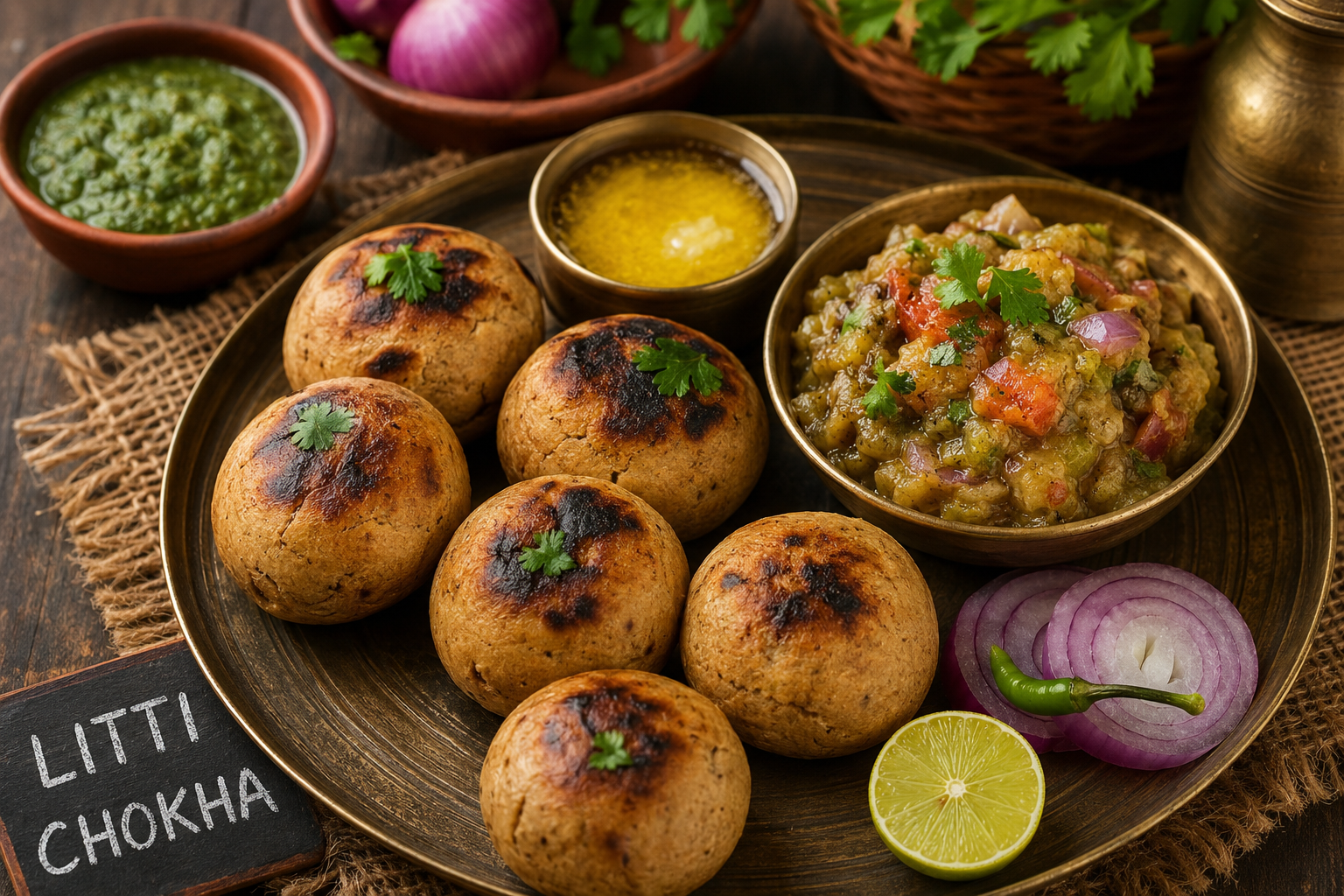
  • Litti Chokha: History, Origin, Health Benefits & Cultural Significance

    Litti Chokha: History, Origin, Health Benefits & Cultural Significance

    Indian cuisine is filled with dishes that are more than just food — they carry stories, traditions, and the spirit of generations. One such timeless dish is ✨ Litti Chokha ✨, a rustic and flavorful meal that originated in the heartlands of Bihar and Eastern Uttar Pradesh.

    From village kitchens and roadside stalls to modern restaurants across India, litti chokha has traveled through time while preserving its authentic identity. Loved for its smoky flavor, nutritional value, and cultural significance, this humble dish is now gaining recognition far beyond its regional roots.

    But what makes litti chokha so special? Let’s explore its fascinating journey, traditional preparation, and health benefits.


    🍽️ What Is Litti Chokha?

    Litti chokha is a traditional Indian dish made of two main components:

    🟤 Litti

    Round wheat dough balls stuffed with spicy and flavorful sattu (roasted gram flour).

    🍆 Chokha

    A smoky mashed mixture made using roasted vegetables such as:

    • Eggplant (Baingan)
    • Tomato
    • Potato

    The dish is often served with:

    • 🧈 Melted ghee
    • 🌿 Green chutney
    • 🥒 Pickles
    • 🥛 Fresh curd

    Its earthy aroma and rich flavors make it one of the most comforting traditional meals in Indian cuisine.


    🏺 The Origin of Litti Chokha

    Litti chokha traces its roots back to Bihar, especially the Bhojpuri and Magahi regions. Over centuries, it became a staple food among rural communities because of its simplicity, affordability, and long shelf life.

    Traditionally, farmers, travelers, and laborers preferred litti because it was:
    ✅ Easy to prepare
    ✅ Highly filling
    ✅ Nutritious
    ✅ Travel-friendly

    The use of sattu played an important role in its popularity. Roasted gram flour was widely available, protein-rich, and easy to carry during long journeys.

    Some traditional accounts also associate sattu-based foods with travelers and soldiers during the colonial period because of their portability and energy value.


    🔥 Traditional Cooking Method

    One of the reasons litti chokha tastes so unique is its authentic preparation style.

    🟤 Preparing the Litti

    The dough balls are stuffed with:

    • Sattu
    • Garlic
    • Ginger
    • Green chilies
    • Ajwain
    • Mustard oil
    • Traditional spices

    Traditionally, litti is roasted over:
    🔥 Coal
    🔥 Wood fire
    🔥 Cow-dung cakes

    This gives it its signature smoky flavor and crispy texture.


    🍆 Preparing the Chokha

    Vegetables are roasted directly over open flame before being mashed together with:

    • Mustard oil
    • Onion
    • Garlic
    • Coriander
    • Green chilies

    The smoky vegetables perfectly complement the roasted litti.


    💪 Health Benefits of Litti Chokha

    Litti chokha is not only delicious but also naturally balanced and nutritious.


    🌱 1. Rich in Protein

    The sattu stuffing provides excellent plant-based protein that helps:

    • Build energy
    • Keep you full longer
    • Support muscle health

    🌾 2. High in Fiber

    Whole wheat flour and roasted gram flour contain dietary fiber that:

    • Supports digestion
    • Promotes gut health
    • Helps maintain fullness

    🥗 3. Nutrient-Rich Vegetables

    Chokha includes roasted vegetables packed with:
    ✨ Vitamins
    ✨ Minerals
    ✨ Antioxidants
    ✨ Natural fiber


    🍃 4. Traditionally Low in Oil

    Authentic litti is roasted rather than deep-fried, making it lighter than many processed fast foods.


    ☀️ 5. Traditionally Considered Cooling

    In Indian traditional diets, sattu is commonly considered cooling and energizing during hot summers.


    ❤️ More Than Food: A Cultural Identity

    In Bihar, litti chokha is more than a meal — it is part of regional identity and pride.

    It is commonly enjoyed during:
    🎉 Family gatherings
    🎉 Festivals
    🎉 Village feasts
    🎉 Evening street-food outings

    The dish represents:

    • Simplicity
    • Tradition
    • Community
    • Rural heritage

    Even today, roadside vendors roasting litti over coal fires remain a nostalgic sight across many towns and cities.


    🌍 Litti Chokha in Modern India

    Traditional Indian foods are making a strong comeback, and litti chokha is now loved across the country.

    Modern variations include:
    🧀 Paneer litti
    🧈 Extra ghee versions
    🌮 Fusion platters
    🥗 Health-focused baked versions

    Despite these innovations, the authentic rustic preparation remains the favorite for many food lovers.


    ⚖️ Litti Chokha vs Dal Baati

    Litti chokha is often compared with Rajasthan’s famous Dal Baati, but they are quite different.

    🟤 Litti Chokha🟡 Dal Baati
    Stuffed with sattuPlain baked dough balls
    Served with chokhaServed with dal
    Smoky flavorRich buttery flavor
    Popular in Bihar & Eastern UPPopular in Rajasthan

    Both dishes beautifully represent India’s regional culinary diversity.


    🌿 Why Traditional Foods Still Matter

    In today’s fast-food culture, traditional dishes like litti chokha remind us of the value of:
    ✅ Local ingredients
    ✅ Sustainable cooking
    ✅ Balanced nutrition
    ✅ Cultural heritage

    These recipes survived for generations because they were practical, nourishing, and deeply connected to community life.


    ✨ Final Thoughts

    Litti chokha is a perfect example of how simple ingredients can create something extraordinary. What began as a humble rural meal has now become one of India’s most celebrated traditional dishes.

    Its smoky flavors, nutritional richness, and historical roots make it much more than comfort food — it is a story of tradition, resilience, and culinary heritage served on a plate.

    Whether you enjoy it from a roadside stall in Bihar or prepare it at home, litti chokha offers a delicious glimpse into India’s timeless food culture.