Category: fun facts

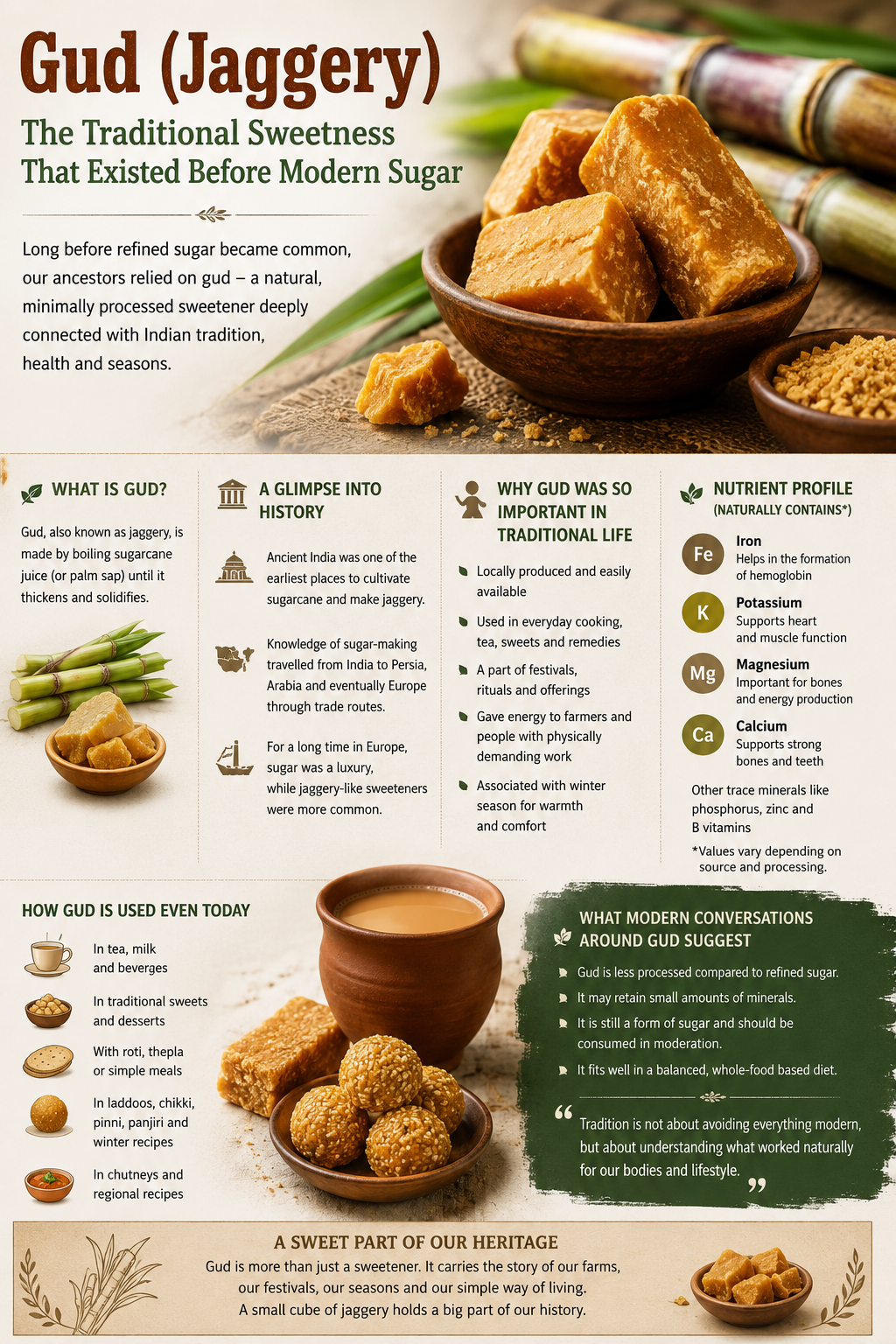
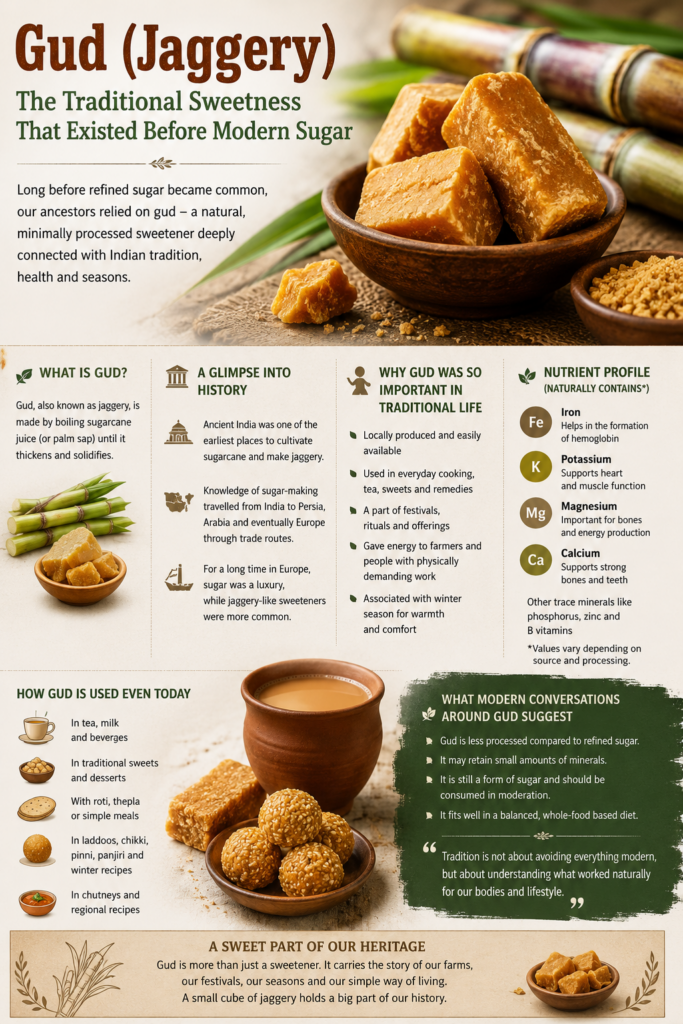
  • Gud (Jaggery): The Traditional Sweetness That Existed Before Modern Sugar

    Gud (Jaggery): The Traditional Sweetness That Existed Before Modern Sugar

    Sugar feels so normal today that it’s difficult to imagine a time when it wasn’t part of everyday life.

    It quietly exists in:

    • tea
    • sweets
    • packaged snacks
    • desserts
    • almost every kitchen shelf

    But while reading more about traditional foods and older eating habits, I came across something interesting:

    Before refined white sugar became widely common, many households across India relied far more on gud (jaggery) for sweetness.

    And the more I explored its history, the more it felt like gud was never just about taste. It was connected with:

    • farming traditions
    • seasonal eating
    • homemade recipes
    • festivals
    • and everyday village life.

    So I thought it would be interesting to bring together some of these details in one place.


    🌾 What Exactly Is Gud?

    Gud, also known as jaggery, is traditionally made by slowly boiling sugarcane juice until it thickens and solidifies.

    In some regions, jaggery is also prepared from:

    • date palm
    • coconut palm

    Unlike refined sugar, gud usually goes through much less processing.

    That’s why it keeps:

    • its golden or brown color
    • deeper taste
    • slightly earthy flavor

    And maybe that’s one reason older generations often viewed it differently from ordinary sugar.


    🏺 India’s Deep Connection with Sugarcane and Gud

    One detail that really stood out while reading about gud was how strongly India is connected with the early history of sugarcane and sweet-making.

    Historical references suggest that ancient India was among the earliest places where people:

    • cultivated sugarcane extensively
    • extracted sugarcane juice
    • developed early sweeteners like jaggery

    Before modern sugar factories existed, gud was already being prepared and used in everyday life.

    Over time, knowledge of sugar processing gradually spread through:

    • traders
    • travelers
    • trade routes

    moving from India toward:

    • Persia
    • the Arab world
    • and eventually Europe.

    🍬 Before White Sugar Became Common

    Another interesting thing is that refined white sugar was once rare and expensive in many parts of the world.

    For a long time, people depended more on:

    • honey
    • fruits
    • jaggery-like sweeteners

    In India especially, gud naturally became part of:

    • homemade sweets
    • tea
    • winter recipes
    • festive food
    • farming households

    And because it was locally prepared, it stayed closely connected with rural food traditions.


    ❄️ Why Gud Became Closely Linked with Winters

    One pattern I noticed while reading about traditional Indian food habits is how closely foods were connected with seasons.

    Gud often appeared in:

    • til laddoos
    • chikki
    • panjiri
    • winter sweets

    Older traditions frequently described it as:

    • warming
    • comforting
    • satisfying during colder months

    Even today, many families naturally start using gud more during winter.


    🌿 What Nutrients Does Gud Naturally Contain?

    Because jaggery is less refined than white sugar, it may retain small amounts of naturally occurring minerals.

    Depending on the preparation, gud can contain traces of:

    • iron
    • potassium
    • magnesium
    • calcium

    Of course, it is still a sweetener and naturally contains sugar.

    But what I found interesting is that modern discussions often describe gud less as a “miracle food” and more as a traditional ingredient connected with older eating patterns.


    🧠 What Current Conversations Around Gud Seem to Suggest

    While exploring more recent discussions around jaggery, I noticed that the conversation today feels very different from older times.

    Instead of dividing foods strictly into “good” and “bad,” many current discussions seem more focused on:

    • moderation
    • less processed foods
    • traditional preparation methods
    • balanced eating habits

    Gud often appears in these conversations because of:

    • its traditional preparation
    • richer taste
    • connection with homemade food culture

    At the same time, many sources also mention that gud is still a form of sugar and is best understood in balance rather than through extreme claims.

    That balanced perspective honestly felt more realistic and interesting to me.


    🍛 How Gud Quietly Stayed Part of Everyday Life

    What surprised me most is how naturally gud still fits into daily routines in many homes.

    Even today, people continue using it:

    • with roti
    • in tea
    • in homemade sweets
    • after meals
    • during winter evenings

    And despite modern packaged foods becoming more common, gud still somehow feels connected with slower, older styles of eating.


    🌟 A Small Reflection

    Reading about gud made me realize how many traditional foods quietly survived across generations not because they were heavily promoted, but because they naturally fit into people’s lifestyles.

    Sometimes, food history says as much about culture and everyday life as it does about nutrition.


    🍯 Final Thought

    Gud may look simple, but behind it is a long story of sugarcane farming, seasonal eating, village traditions, trade routes, and changing food habits.

    And maybe that’s why it still feels more connected to tradition than ordinary sweetness does.


    📚 References


    ⚠️ Disclaimer

    The information shared here is based on historical references, cultural observations, and general reading from publicly available sources. It is meant for informational purposes only and should not be considered medical or dietary advice.
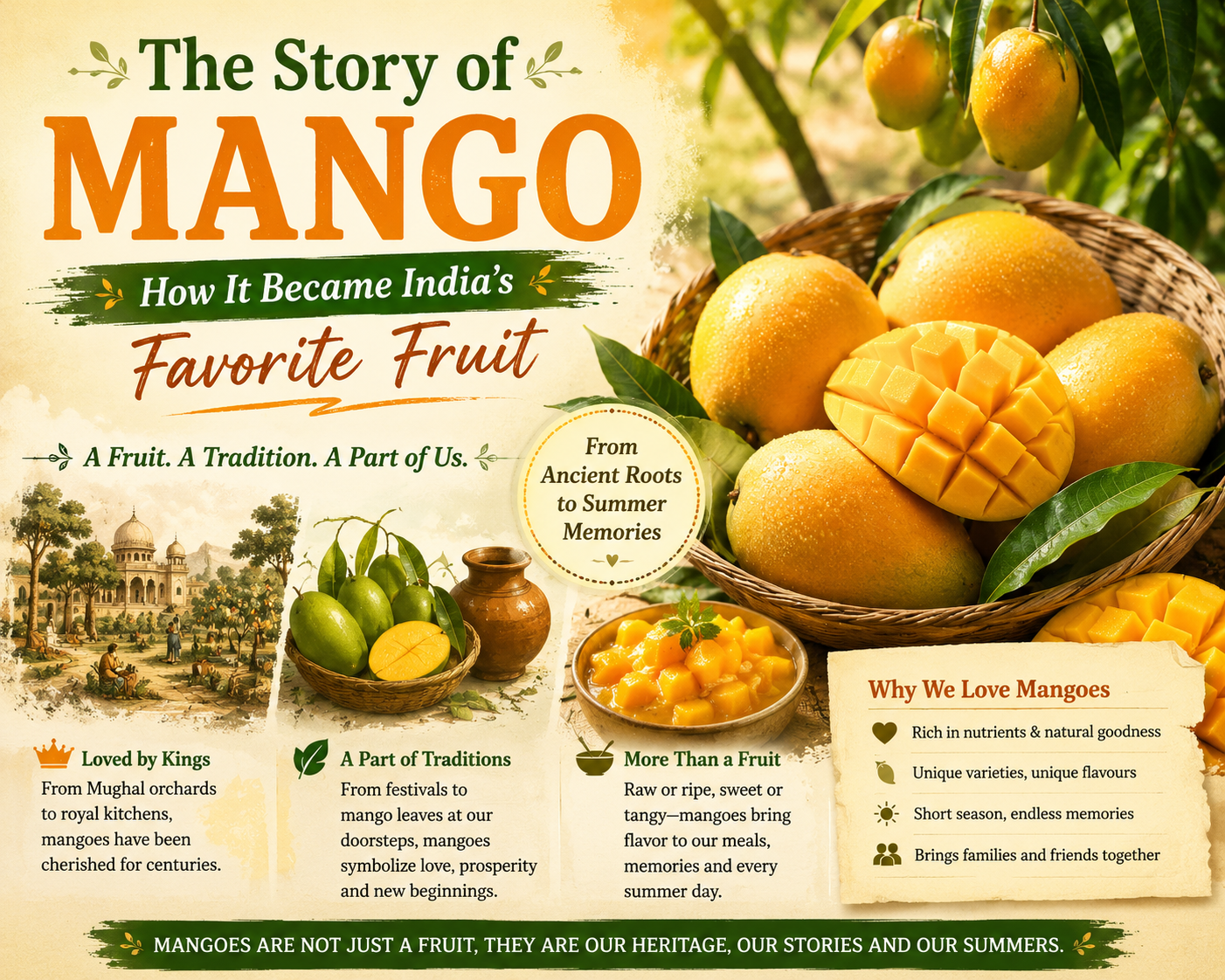
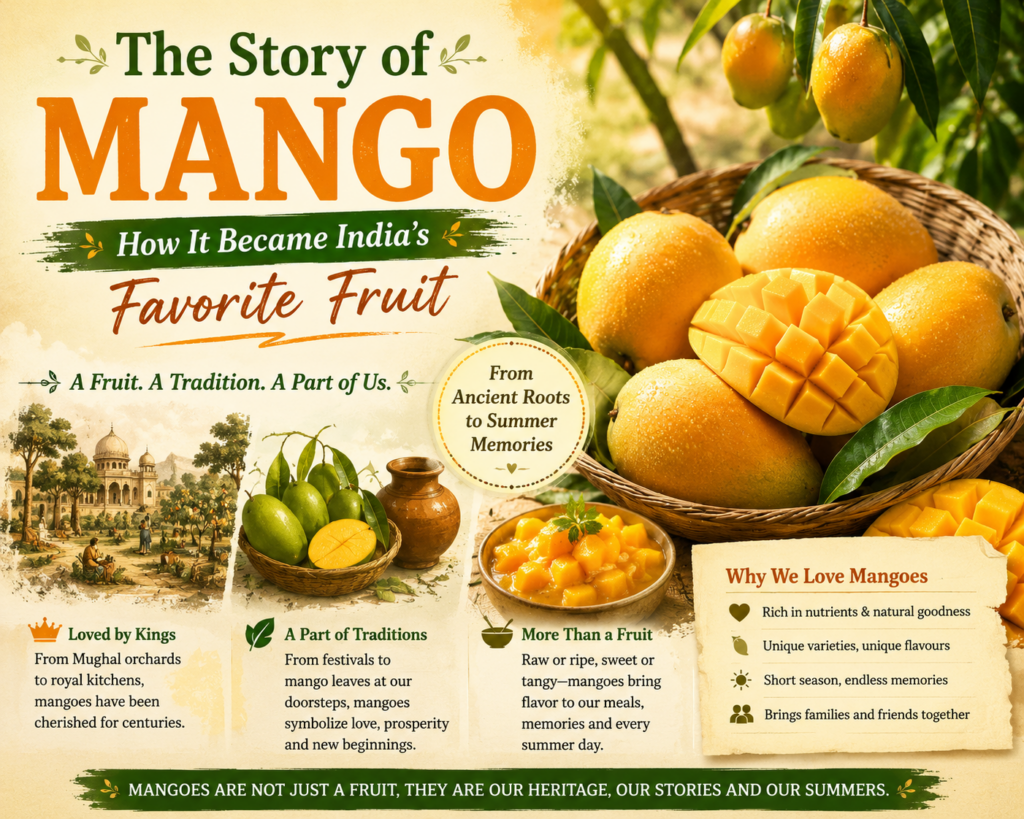
  • The Story of Mango: How It Became India’s Most Loved Summer Fruit

    The Story of Mango: How It Became India’s Most Loved Summer Fruit

    There’s something different about mango season in India.

    The moment mangoes begin appearing in markets, everything changes a little.

    People start discussing:

    • Which variety arrived first
    • Whether Alphonso is better than Dasheri
    • How sweet this year’s mangoes are
    • And when homemade pickles will finally be ready

    Very few foods create this kind of excitement.

    And while reading more about the history of everyday foods, I realized something interesting:

    👉 Mango is not just a fruit in India.
    It has quietly become part of memories, traditions, festivals, and even emotions across generations.

    So I thought it would be interesting to gather some of these details together in one place.


    🌳 A Fruit That Has Been Around for Thousands of Years

    Mango is believed to have originated around the Indian subcontinent and nearby regions of South Asia.

    Historical references suggest that mangoes were cultivated in India thousands of years ago.

    Which means long before modern supermarkets and fruit packaging existed, mango trees were already part of Indian landscapes.

    Over time, the fruit slowly became connected with:

    • Summer traditions
    • Hospitality
    • Seasonal eating habits
    • Family gatherings

    And somehow, that connection still exists today.


    👑 Even Kings Were Fascinated by Mangoes

    One detail that really stood out to me was how much mangoes were admired during royal times.

    During the Mughal era, mango cultivation became extremely popular.

    Emperor Akbar is believed to have planted a massive mango orchard called Lakhi Bagh, which reportedly had thousands of mango trees.

    It’s interesting to think that a fruit we casually cut and eat today was once so admired by kings and royal courts.


    🥭 India Didn’t Just Grow Mangoes — It Created Mango Personalities

    One of the most fascinating things about mangoes is how every region developed its own favorite variety.

    And people become surprisingly loyal to them.

    Some famous varieties include:

    • Alphonso from Maharashtra
    • Dasheri from Uttar Pradesh
    • Langra from Varanasi
    • Kesar from Gujarat
    • Banganapalli from Andhra Pradesh

    And if you ask people which one is best, the debate can go on for hours.

    Because for many people, mangoes are personal.


    ☀️ Why Mango Season Feels Emotional

    Unlike fruits available throughout the year, mangoes arrive for a limited time.

    Maybe that’s part of what makes them special.

    For many families, summer memories are tied to:

    • Eating chilled mango slices in the afternoon
    • Drinking aam panna during hot days
    • Watching elders prepare mango pickle jars
    • Storing boxes of mangoes wrapped in newspaper at home

    Even the smell of ripe mangoes can remind people of childhood summers.


    🍛 Mango Is More Versatile Than We Realize

    Another thing I found interesting is how differently mango is used across India.

    🥭 Raw Mango

    Used in:

    • Pickles
    • Chutneys
    • Aam panna
    • Tangy summer dishes

    🌞 Ripe Mango

    Used in:

    • Milkshakes
    • Desserts
    • Aamras
    • Homemade sweets
    • Or simply eaten fresh

    Very few fruits fit into both spicy and sweet traditions so naturally.


    🌿 Mango Beyond Food

    Mangoes also became part of Indian traditions beyond eating.

    Even today:

    • Mango leaves are used during festivals
    • They are placed near entrances during celebrations
    • Mango motifs appear in Indian art and fabrics

    Which shows how deeply the fruit entered cultural life over time.


    Simple Benefits People Associate with Mango

    Without making things too technical, mangoes naturally contain:

    • Vitamin C
    • Vitamin A
    • Fiber
    • Natural sweetness

    And because they are seasonal, many people enjoy them as part of balanced summer eating rather than an everyday fruit.


    🧠 Why Mango Still Feels Different From Other Fruits

    Reading about mangoes made me realize something:

    People don’t just “consume” mangoes.

    They wait for them.

    They discuss them.
    Compare them.
    Gift them.
    Remember summers through them.

    And very few foods create that kind of emotional connection across an entire country.


    🌟 A Small Reflection

    From royal orchards to roadside fruit stalls, mango has traveled through centuries while still remaining deeply familiar.

    Maybe that’s why it continues to feel special no matter how common it becomes.


    🥭 Final Thought

    Some foods simply become part of our diet.

    Others slowly become part of culture, memories, and seasons.

    And mango seems to have become all three.


    📚 References


    ⚠️ Disclaimer

    The information shared here is based on commonly available historical references, cultural observations, and general reading. It is meant for informational purposes only and should not be considered medical advice or nutritional guidance.

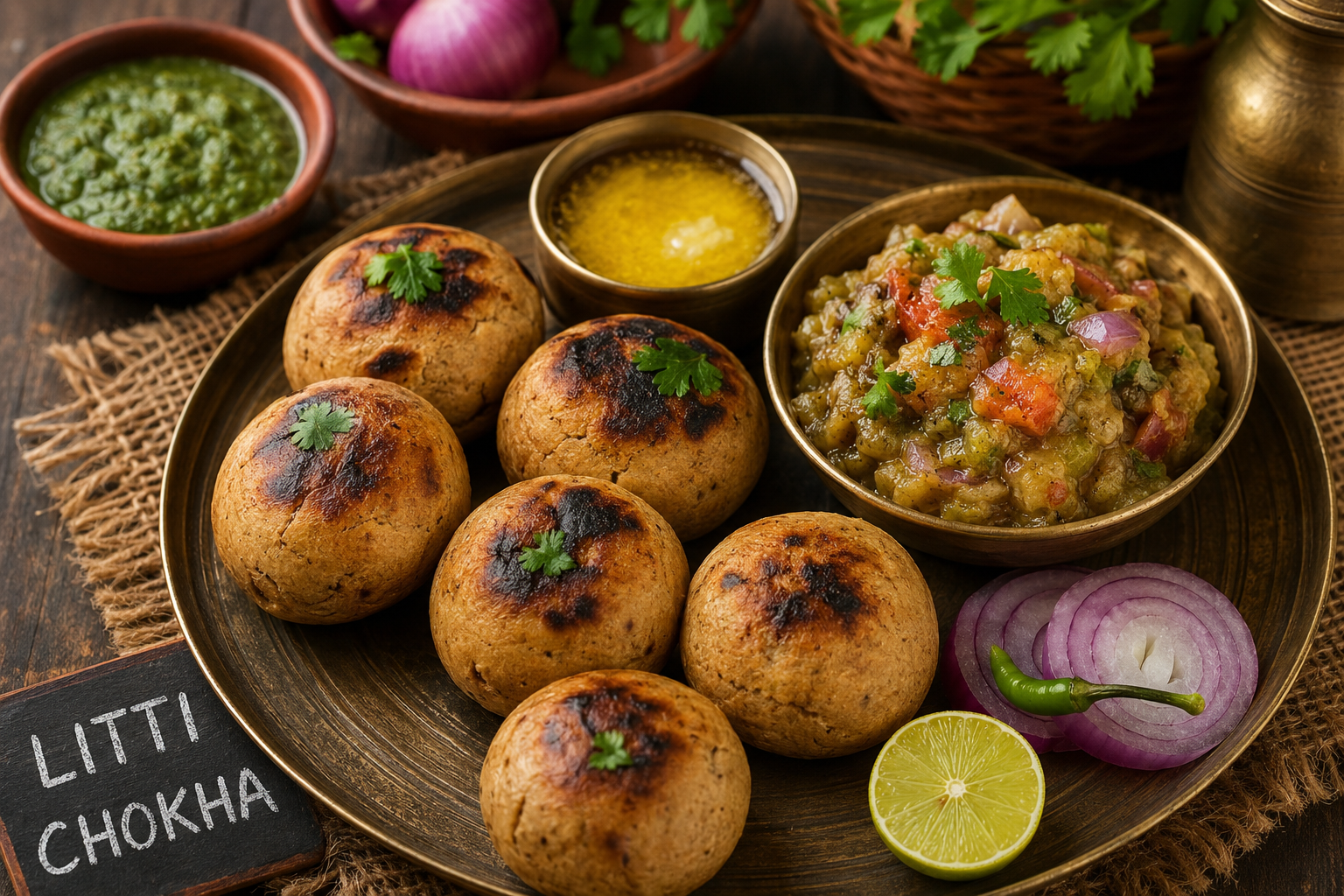
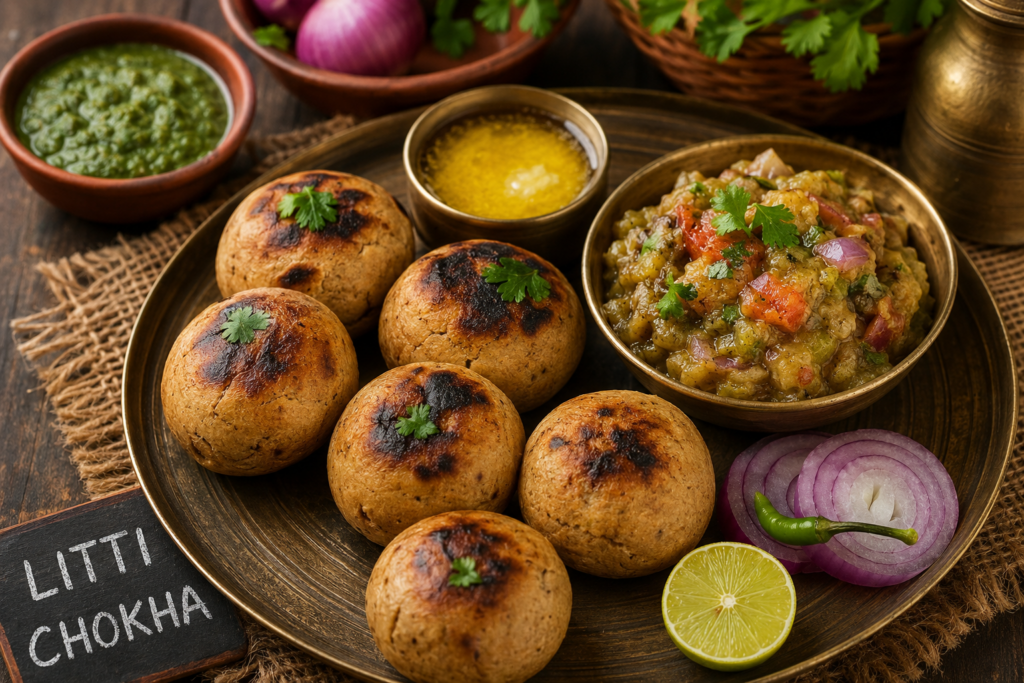
  • Litti Chokha: History, Origin, Health Benefits & Cultural Significance

    Litti Chokha: History, Origin, Health Benefits & Cultural Significance

    Indian cuisine is filled with dishes that are more than just food — they carry stories, traditions, and the spirit of generations. One such timeless dish is ✨ Litti Chokha ✨, a rustic and flavorful meal that originated in the heartlands of Bihar and Eastern Uttar Pradesh.

    From village kitchens and roadside stalls to modern restaurants across India, litti chokha has traveled through time while preserving its authentic identity. Loved for its smoky flavor, nutritional value, and cultural significance, this humble dish is now gaining recognition far beyond its regional roots.

    But what makes litti chokha so special? Let’s explore its fascinating journey, traditional preparation, and health benefits.


    🍽️ What Is Litti Chokha?

    Litti chokha is a traditional Indian dish made of two main components:

    🟤 Litti

    Round wheat dough balls stuffed with spicy and flavorful sattu (roasted gram flour).

    🍆 Chokha

    A smoky mashed mixture made using roasted vegetables such as:

    • Eggplant (Baingan)
    • Tomato
    • Potato

    The dish is often served with:

    • 🧈 Melted ghee
    • 🌿 Green chutney
    • 🥒 Pickles
    • 🥛 Fresh curd

    Its earthy aroma and rich flavors make it one of the most comforting traditional meals in Indian cuisine.


    🏺 The Origin of Litti Chokha

    Litti chokha traces its roots back to Bihar, especially the Bhojpuri and Magahi regions. Over centuries, it became a staple food among rural communities because of its simplicity, affordability, and long shelf life.

    Traditionally, farmers, travelers, and laborers preferred litti because it was:
    ✅ Easy to prepare
    ✅ Highly filling
    ✅ Nutritious
    ✅ Travel-friendly

    The use of sattu played an important role in its popularity. Roasted gram flour was widely available, protein-rich, and easy to carry during long journeys.

    Some traditional accounts also associate sattu-based foods with travelers and soldiers during the colonial period because of their portability and energy value.


    🔥 Traditional Cooking Method

    One of the reasons litti chokha tastes so unique is its authentic preparation style.

    🟤 Preparing the Litti

    The dough balls are stuffed with:

    • Sattu
    • Garlic
    • Ginger
    • Green chilies
    • Ajwain
    • Mustard oil
    • Traditional spices

    Traditionally, litti is roasted over:
    🔥 Coal
    🔥 Wood fire
    🔥 Cow-dung cakes

    This gives it its signature smoky flavor and crispy texture.


    🍆 Preparing the Chokha

    Vegetables are roasted directly over open flame before being mashed together with:

    • Mustard oil
    • Onion
    • Garlic
    • Coriander
    • Green chilies

    The smoky vegetables perfectly complement the roasted litti.


    💪 Health Benefits of Litti Chokha

    Litti chokha is not only delicious but also naturally balanced and nutritious.


    🌱 1. Rich in Protein

    The sattu stuffing provides excellent plant-based protein that helps:

    • Build energy
    • Keep you full longer
    • Support muscle health

    🌾 2. High in Fiber

    Whole wheat flour and roasted gram flour contain dietary fiber that:

    • Supports digestion
    • Promotes gut health
    • Helps maintain fullness

    🥗 3. Nutrient-Rich Vegetables

    Chokha includes roasted vegetables packed with:
    ✨ Vitamins
    ✨ Minerals
    ✨ Antioxidants
    ✨ Natural fiber


    🍃 4. Traditionally Low in Oil

    Authentic litti is roasted rather than deep-fried, making it lighter than many processed fast foods.


    ☀️ 5. Traditionally Considered Cooling

    In Indian traditional diets, sattu is commonly considered cooling and energizing during hot summers.


    ❤️ More Than Food: A Cultural Identity

    In Bihar, litti chokha is more than a meal — it is part of regional identity and pride.

    It is commonly enjoyed during:
    🎉 Family gatherings
    🎉 Festivals
    🎉 Village feasts
    🎉 Evening street-food outings

    The dish represents:

    • Simplicity
    • Tradition
    • Community
    • Rural heritage

    Even today, roadside vendors roasting litti over coal fires remain a nostalgic sight across many towns and cities.


    🌍 Litti Chokha in Modern India

    Traditional Indian foods are making a strong comeback, and litti chokha is now loved across the country.

    Modern variations include:
    🧀 Paneer litti
    🧈 Extra ghee versions
    🌮 Fusion platters
    🥗 Health-focused baked versions

    Despite these innovations, the authentic rustic preparation remains the favorite for many food lovers.


    ⚖️ Litti Chokha vs Dal Baati

    Litti chokha is often compared with Rajasthan’s famous Dal Baati, but they are quite different.

    🟤 Litti Chokha🟡 Dal Baati
    Stuffed with sattuPlain baked dough balls
    Served with chokhaServed with dal
    Smoky flavorRich buttery flavor
    Popular in Bihar & Eastern UPPopular in Rajasthan

    Both dishes beautifully represent India’s regional culinary diversity.


    🌿 Why Traditional Foods Still Matter

    In today’s fast-food culture, traditional dishes like litti chokha remind us of the value of:
    ✅ Local ingredients
    ✅ Sustainable cooking
    ✅ Balanced nutrition
    ✅ Cultural heritage

    These recipes survived for generations because they were practical, nourishing, and deeply connected to community life.


    ✨ Final Thoughts

    Litti chokha is a perfect example of how simple ingredients can create something extraordinary. What began as a humble rural meal has now become one of India’s most celebrated traditional dishes.

    Its smoky flavors, nutritional richness, and historical roots make it much more than comfort food — it is a story of tradition, resilience, and culinary heritage served on a plate.

    Whether you enjoy it from a roadside stall in Bihar or prepare it at home, litti chokha offers a delicious glimpse into India’s timeless food culture.

  • Locks in India: Stories Hidden Behind Every Click

    Locks in India: Stories Hidden Behind Every Click

    🔐 Locks in India: Stories Hidden Behind Every Click

    There’s a moment we all know.

    You shut the door… turn the key… and hear that soft click.
    It feels ordinary. Automatic.

    But what if that tiny sound carried thousands of years of human cleverness?

    Because in India, locks were never just objects.
    They were puzzles, artworks, and silent guardians—each with a story to tell.

    🏺 Before Iron and Steel—When Intelligence Was the Only Tool

    Long before metal locks existed, people in India were already solving a complex problem:

    How do you keep something safe without being there?

    The answer wasn’t brute force—it was design.

    Early locks were made of wood, using sliding pins and carefully fitted parts. They didn’t look impressive, but they worked. These simple mechanisms protected food, valuables, and daily essentials.

    What’s striking is this:
    Even without advanced tools, people understood that security is not about strength—it’s about thinking ahead.

    ⚒️ When Locks Became More Than Protection

    As metalworking grew, locks began to change.

    They didn’t just protect anymore—they expressed something.

    Craftsmen started shaping locks into animals and symbols. An elephant-shaped lock wasn’t random—it represented strength. A bird symbolized watchfulness.

    Suddenly, a lock wasn’t just hanging on a door.
    It was saying something about the person behind it.

    And no two locks were exactly the same. Each one carried the touch of its maker.

    🧠 The Game Between the Lockmaker and the Thief

    This is where things get fascinating.

    Indian locksmiths didn’t just build locks to stop thieves.
    They built them to confuse them.

    Some locks had:

    Hidden buttons you had to press while turning the key
    Keyholes that weren’t real
    Mechanisms that only worked in a specific sequence

    Even if someone had the correct key, that didn’t guarantee success.

    Imagine being a thief, confident you’ve cracked the system…
    only to realize the lock is playing a game you don’t understand.

    Some locks would even jam permanently if handled incorrectly—leaving clear evidence of tampering.

    It wasn’t just security.
    It was psychology.

    👨‍🔧 A Craft Built on Secrets

    Lockmaking was never just a trade—it was guarded knowledge.

    Skills were passed down quietly within families. Techniques weren’t written in books or shared openly. You learned by watching, practicing, and earning trust.

    This created something rare:
    Locks that weren’t mass-produced, but deeply personal.

    Each one had its own logic. Its own behavior. Its own secret.

    🛕 The Locks That Guarded More Than Wealth

    In temples across India, locks took on a different meaning.

    They weren’t just protecting objects—they were guarding belief, devotion, and sacred spaces.

    These locks were often:

    Large and heavy
    Mechanically complex
    Built to last for generations

    Opening them wasn’t just an action.
    It felt like entering something important.

    🏭 From Handmade to Millions: The Rise of Aligarh

    Over time, the world changed—and so did locks.

    Production shifted from individual craftsmen to organized manufacturing. At the center of this shift was one city: Aligarh.

    What began as small workshops grew into a major industry. Today, Aligarh is known across India for its lock production.

    And yet, behind every modern lock, there’s still a trace of that older idea:
    security through smart design.

    🤯 Small Details That Make Locks Surprisingly Fascinating

    Look closer, and locks reveal unexpected stories:

    Some didn’t need keys at all—only secret movements.
    Some were designed to mislead, not just resist.
    Some signaled authority—holding keys meant holding responsibility.
    And many, today, sit in museums—not as tools, but as art.

    📱 From Metal to Memory—The Evolution Continues

    Today, locks respond to fingerprints, codes, and even smartphones.

    They’ve become faster, smarter, and less visible.

    But at their core, nothing has changed.

    A lock still asks the same question it always has:

    Who is allowed in—and who isn’t?

    ✨ The Thought That Stays With You

    The next time you lock something, pause for a second.

    That simple action connects you to centuries of innovation, craftsmanship, and human curiosity.

    Because a lock isn’t just about keeping something closed.

    It’s about trust, control… and the quiet battle between those who protect and those who try to break in.

  • 🌿 Amla: The Ancient Superfruit That’s More Than Just a Berry

    🌿 Amla: The Ancient Superfruit That’s More Than Just a Berry

    🌿 Amla: The Ancient Superfruit That’s More Than Just a Berry

    If fruits had a Hall of Fame, Amla—the Indian gooseberry—would be right at the top. Small, pale green, and easy to overlook, this fruit hides an extraordinary legacy behind its sharp, sour bite.

    But Amla isn’t just another “superfood” trend—it’s a fruit that has quietly shaped traditions, medicine, and daily life for thousands of years.

    So what makes it so special?

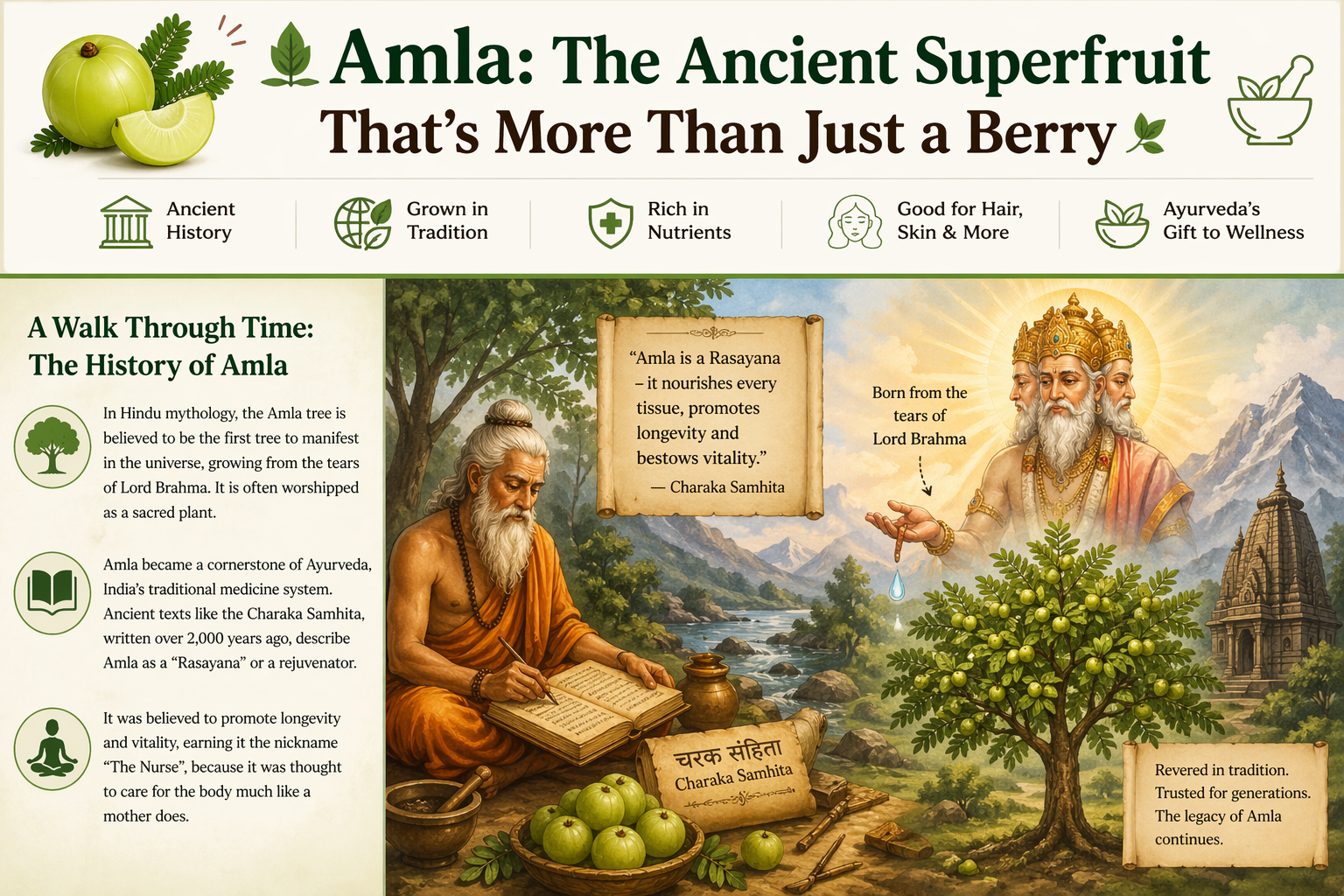
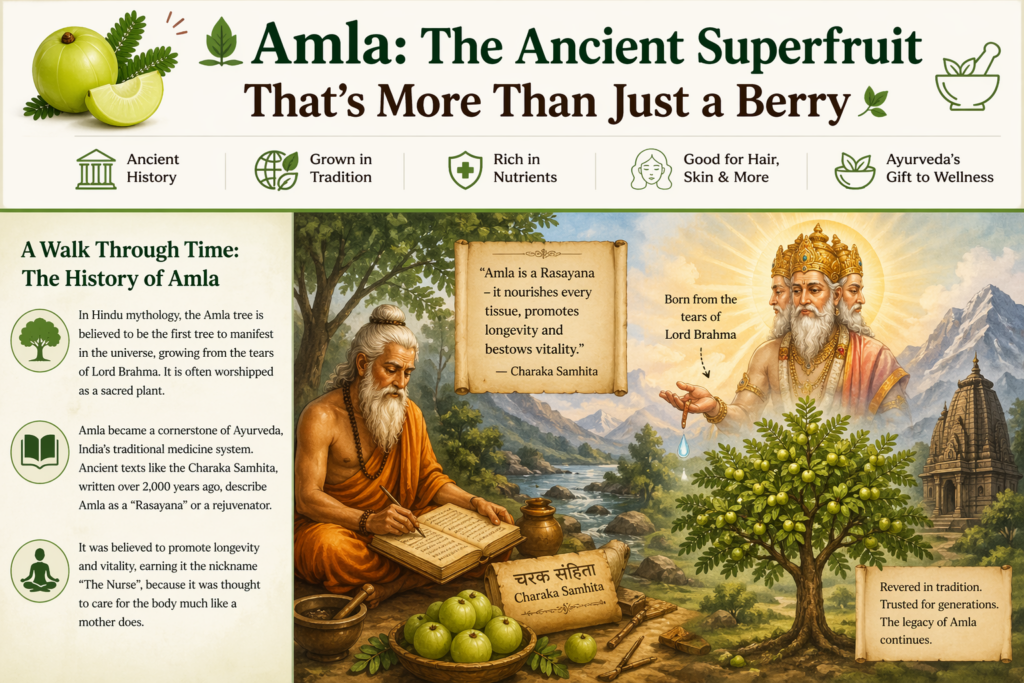
    🕉️ A Walk Through Time: The Legendary History of Amla

    Amla’s story begins not in a lab, but in mythology.

    In Hindu tradition, the Amla tree is believed to be the first tree to exist—born from the tears of Lord Brahma. This origin gives it a sacred place in Indian culture, where it is still revered and even worshipped in some regions.

    Beyond mythology, Amla became a pillar of Ayurveda, India’s ancient healing system. Texts like the Charaka Samhita (over 2,000 years old) describe it as a Rasayana—a rejuvenator believed to nourish the body, promote longevity, and restore balance.

    It was even called “The Nurse”, symbolizing its role in gently supporting and caring for the body over time.

    🌍 Where It Grows: The Geography Behind the Fruit

    Amla may now be found in parts of Southeast Asia, but its true home is the Indian subcontinent.

    The Phyllanthus emblica tree is surprisingly resilient. It thrives in diverse environments—from the cool foothills of the Himalayas to the warm, tropical south.

    What makes it remarkable is its ability to grow in dry, deciduous forests where many other plants struggle. It’s not delicate—it’s built to endure.

    Harvest season typically falls in winter, when the fruit reaches peak potency. Traditionally, this timing aligns with seasonal wellness practices, making Amla a staple during colder months.

    💪 Why Everyone Is Talking About It: Potential Benefits

    Amla’s growing popularity in modern wellness circles isn’t random—it’s rooted in its nutritional profile.

    It’s especially known for its high Vitamin C content, with some sources suggesting that a single Amla can rival multiple oranges.

    Traditionally, Amla has been used for:

    ✨ Hair & Skin Support – Often used in oils and masks for stronger hair and clearer skin
    🛡️ Immune Support – Rich in antioxidants, commonly used in seasonal routines
    🌱 Digestive Health – Dried Amla is often consumed after meals to support digestion

    While modern science continues to explore these uses, its long-standing presence in traditional practices keeps it relevant.

    ⚠️ A Friendly Note on Health

    Amla’s reputation is impressive—but it’s important to stay grounded.

    Natural doesn’t always mean universally suitable. People can respond differently, especially when using concentrated forms like powders or extracts.

    Always do your own research or consult a healthcare professional before adding Amla to your routine—particularly if you have existing health conditions or take medications.

    🥄 How to Add Amla to Your Daily Routine

    Not a fan of intense sour flavors? You’re not alone. Luckily, Amla comes in many easier-to-enjoy forms:

    🥤 Amla Juice – Often diluted with water and honey
    🌿 Amla Powder – Perfect for smoothies or warm drinks
    🍯 Murabba – A sweet Indian preserve that balances its sharpness
    🍬 Dried Amla – A tangy snack, often eaten after meals

    This versatility makes it easy to incorporate into modern lifestyles without sacrificing tradition.

    🌱 A Fruit That Connects Past and Present

    Amla isn’t just a fruit—it’s a bridge between ancient wisdom and modern curiosity.

    From sacred origins and Ayurvedic roots to its place in today’s wellness conversations, it continues to hold its ground across generations.

    Whether you’re drawn to its history, its nutritional value, or simply its uniqueness, one thing is certain:

    Amla may be small—but its story is anything but.

  • The Journey of Carrot

    The Journey of Carrot

    🥕 The Journey of Carrot

    Carrots sit quietly in our kitchens—humble, familiar, and often overlooked. Yet behind this everyday vegetable lies a story that stretches across centuries and continents. It’s a journey of color, cultivation, culture, and quiet transformation.


    🌍 Where It All Began

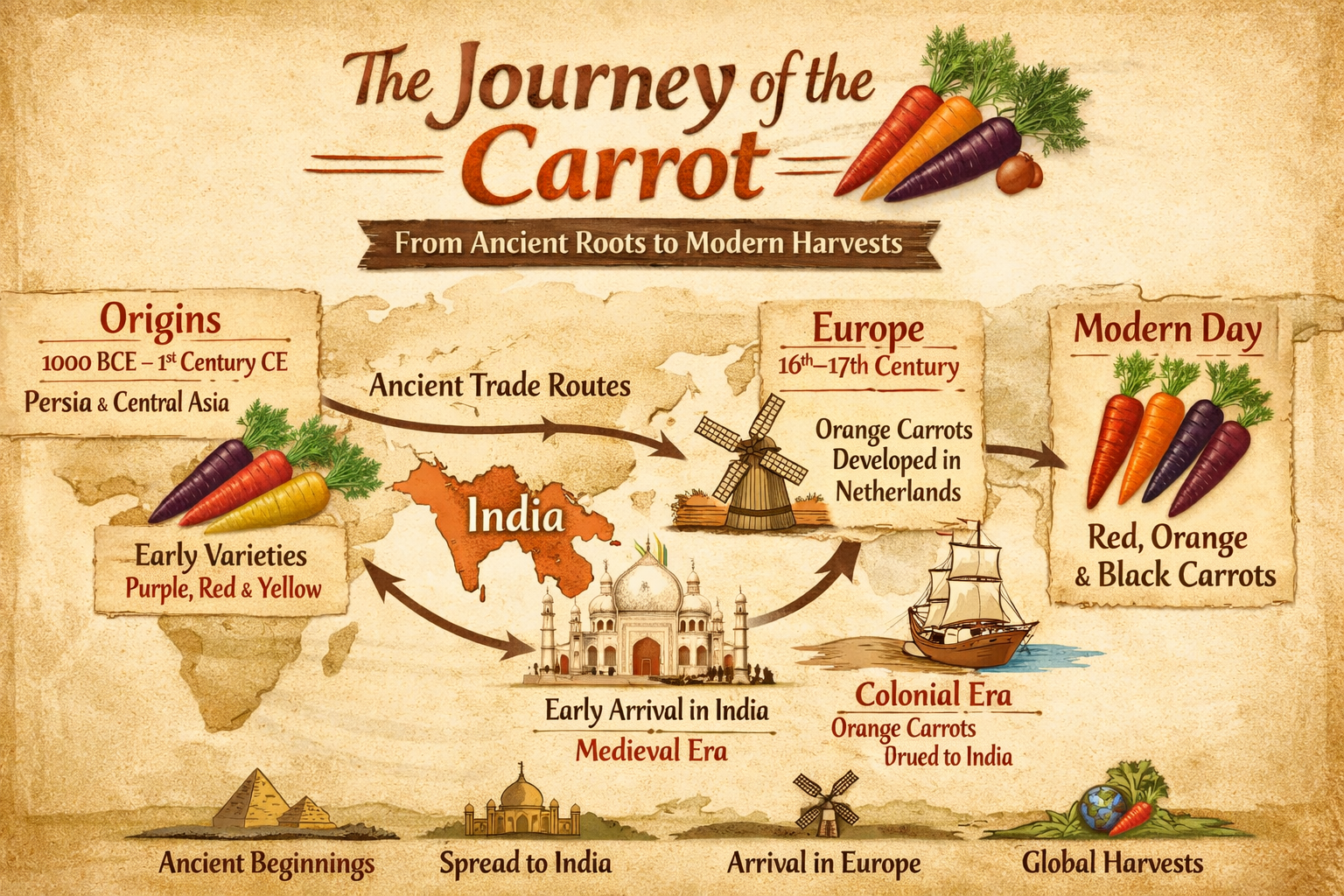
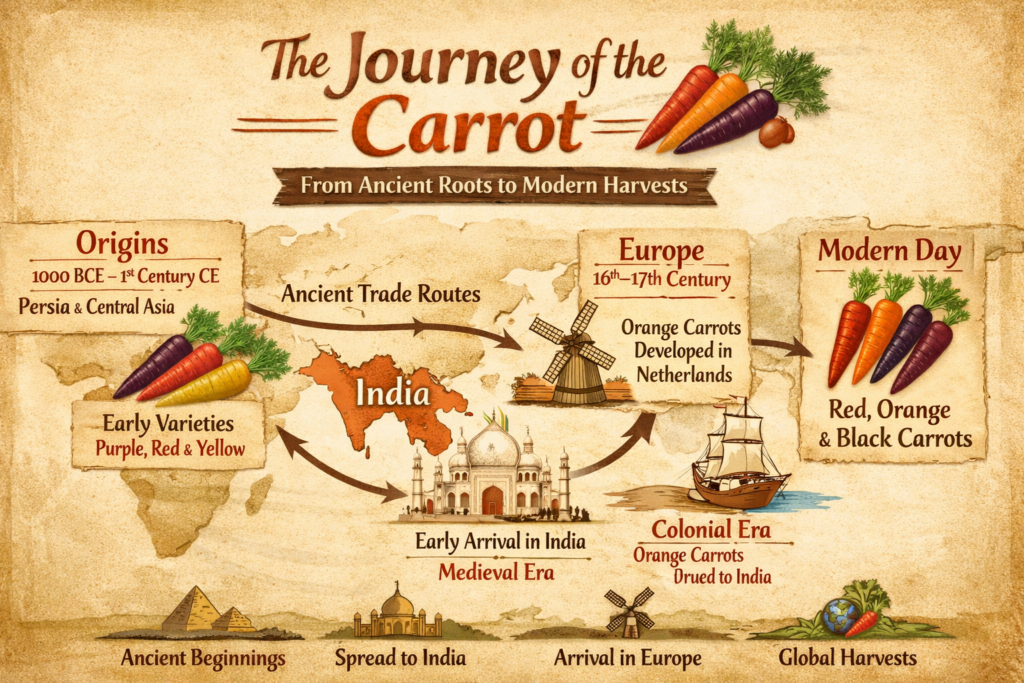
    Long before carrots turned orange, they grew wild in the rugged lands of Persia and Afghanistan. These early carrots looked nothing like the ones we know today. They were slender, often twisted, and came in deep shades of purple, red, and yellow.

    Interestingly, people didn’t grow them for the root at first. It was the leaves and seeds—aromatic and medicinal—that were valued. The root, now the star of countless dishes, was just an afterthought.

    As trade routes expanded, so did the carrot’s journey. Slowly, it traveled eastward, eventually finding its way into the fertile lands of India.


    🇮🇳 Carrots Find a Home in India

    In India, carrots didn’t just arrive—they adapted, evolved, and became part of everyday life.

    The red carrot, in particular, thrived in North India’s winter climate. Juicier, sweeter, and richer in flavor, it became deeply tied to seasonal cooking and tradition. Markets would fill with vibrant red bundles, signaling the arrival of winter.

    Much later, during the colonial period, a new variety appeared—the now-familiar orange carrot, developed in Europe, especially in the Netherlands. Over time, it spread across India, becoming a year-round staple.

    Yet even today, the red carrot holds a special place in Indian hearts and kitchens.


    😋 A Taste That Transforms

    Bite into a raw carrot, and you’ll notice its crisp texture and gentle sweetness, with a hint of earthiness. It’s refreshing, simple, and satisfying.

    But cooking tells a different story.

    Heat softens the carrot, deepens its sweetness, and unlocks a richness that feels almost indulgent. The red carrot, especially, becomes intensely flavorful—perfect for desserts and traditional dishes—while orange carrots remain milder and versatile.

    Then there are the darker varieties, like black or purple carrots, with their bold, earthy tones, often reserved for special preparations.


    🍲 From Kitchen Staple to Cultural Icon

    Across India and beyond, carrots slip effortlessly into both simple meals and celebratory dishes.

    In Indian homes, they shine in:

    • Warm, comforting gajar ka halwa, slow-cooked to perfection
    • Lightly spiced carrot sabzi, served with everyday meals
    • Tangy, bold carrot pickle, rich with spices
    • Traditional kanji, a fermented drink made from black carrots

    Elsewhere in the world, carrots add life to soups, stews, salads, roasted platters, and even desserts like carrot cake.

    Few vegetables move so easily between the ordinary and the festive.


    💪 Nature’s Quiet Healer

    Beyond taste and tradition, carrots carry remarkable nutritional strength.

    Rich in beta-carotene, they help the body produce vitamin A—essential for vision, immunity, and skin health. Their fiber supports digestion, while antioxidants and minerals contribute to heart health and overall well-being.

    In traditional Indian practices, especially, carrots—particularly black ones—are valued for their role in gut health, often consumed in fermented forms.

    It’s nourishment, offered simply.


    Little Secrets Hidden in a Common Root

    Even the most familiar foods carry surprises, and carrots are no exception.

    • They were once grown more for their leaves and seeds than their roots
    • The bright orange carrot is a relatively recent creation, shaped by European cultivation
    • Purple carrots contain powerful antioxidants similar to those found in berries
    • Early carrots were far less appealing—bitter, tough, and woody—before centuries of careful cultivation transformed them
    • Despite India being a major producer today, the most traditional variety here remains red, not orange

    These small details remind us how much history can hide in plain sight.


    🌱 A Story Still Growing

    From wild, colorful roots in ancient lands to the vibrant markets of India, the carrot’s journey is far from ordinary. It has changed shape, color, and purpose—yet remained a constant presence across time.

    Today, whether it’s grated into a rich halwa, stirred into a simple sabzi, or eaten fresh and raw, the carrot continues to connect past and present.

    A quiet vegetable, perhaps—but one with a story worth savoring.

  • The Story of Potato in India

    The Story of Potato in India

    🌍 A Humble Beginning Far Away

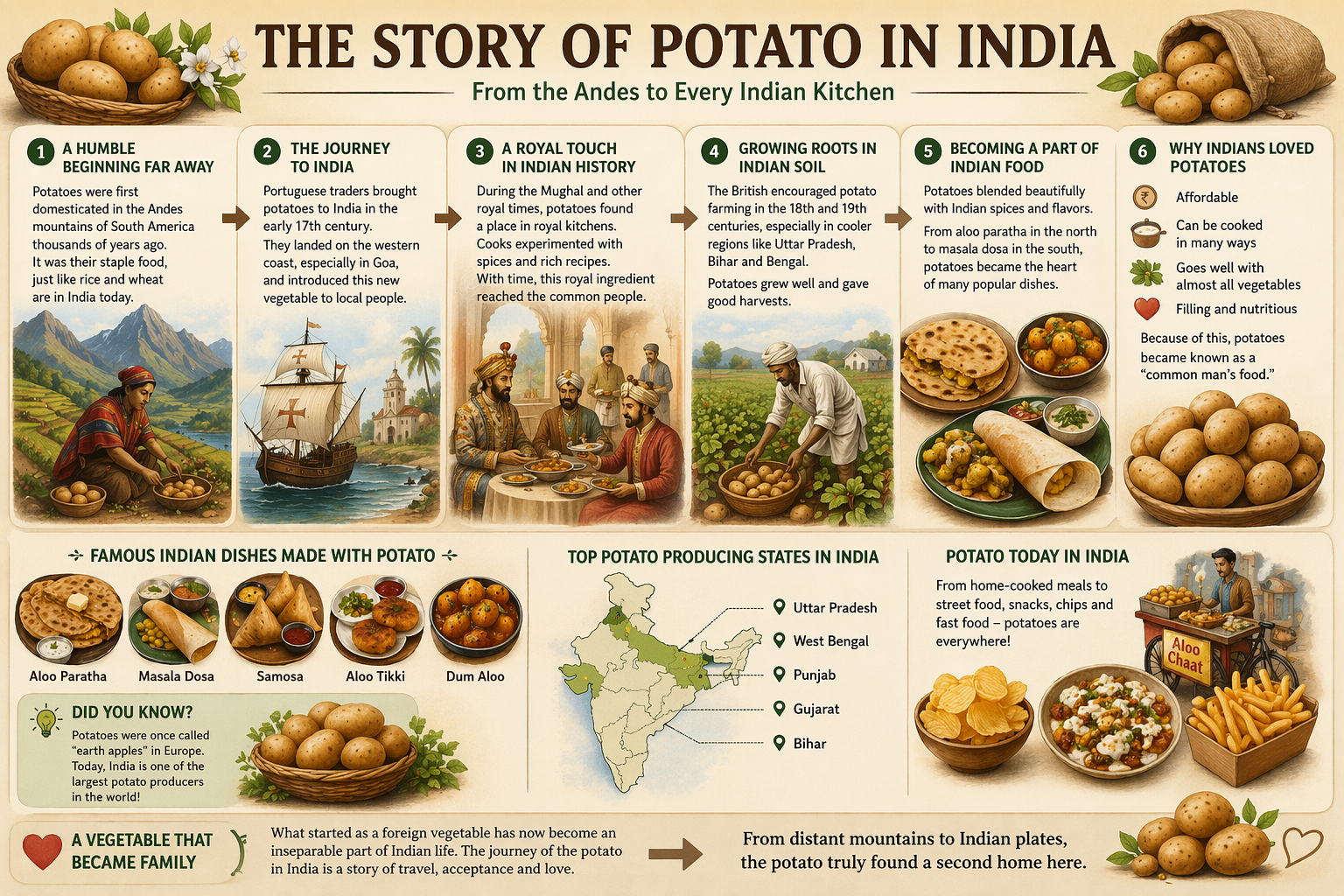
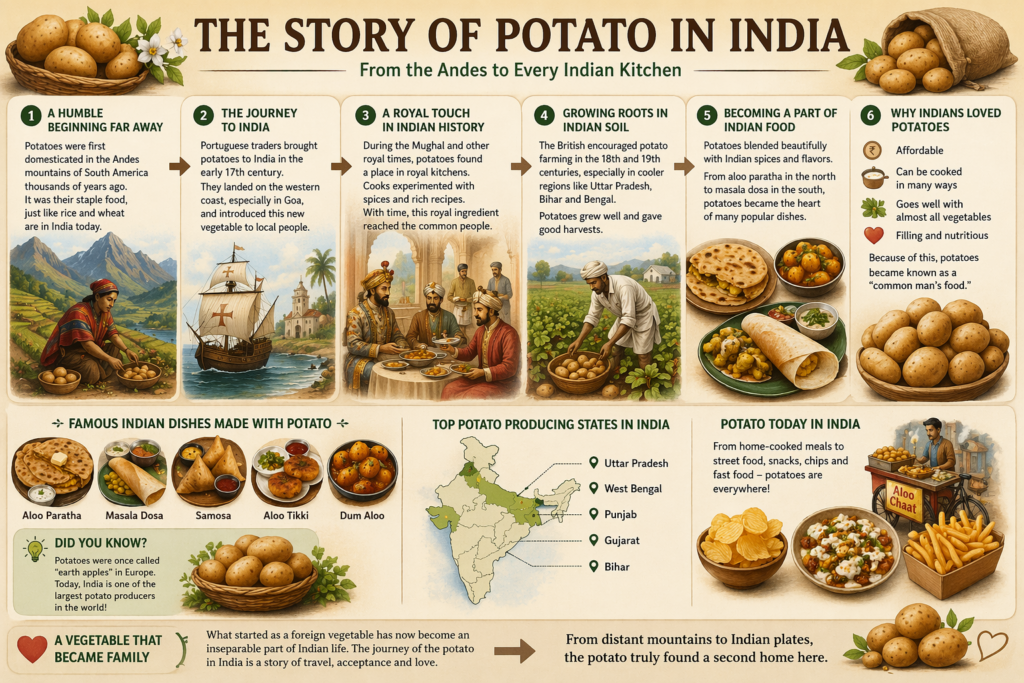
    Long before the potato became a part of Indian kitchens, it was growing quietly in the Andes mountains of South America. People there had been eating potatoes for thousands of years. It was their staple food, just like rice and wheat are in India today.

    🚢 The Journey to India

    The potato did not originally belong to India. It was brought here by Portuguese traders in the early 17th century. They arrived on the western coast, especially in Goa, and introduced this new vegetable to local people.

    At first, many Indians were unsure. A vegetable that grows underground felt strange. Some even avoided it. But slowly, people began to try it, and curiosity turned into acceptance.

    👑 A Royal Touch in Indian History

    There is no strong record of a single king or maharaja introducing potatoes in India, but during the Mughal and later regional kingdoms, new foods were often accepted in royal kitchens first.

    It is believed that in some royal courts, especially in North India, cooks began experimenting with potatoes by mixing them with rich spices, dry fruits, and gravies. Once royal kitchens accepted a food, it often spread to common people.

    Later, during British rule, potatoes became more organized as a crop and were grown in large quantities. This helped them move from royal kitchens to everyday homes.

    🌱 Growing Roots in Indian Soil

    The British played an important role in spreading potatoes across India in the 18th and 19th centuries. They encouraged farming in regions like Uttar Pradesh, Bihar, and Bengal.

    Potatoes grew well in Indian soil. Farmers liked them because they were easy to grow and gave good harvests. Slowly, potato farming became common.

    🍛 Becoming a Part of Indian Food

    Over time, potatoes became a favorite ingredient in Indian cooking. One big reason was their ability to absorb spices and flavors.

    Many famous Indian dishes were either created or improved using potatoes. For example:

    Aloo Paratha – A stuffed flatbread loved in North India
    Masala Dosa – A South Indian dish where spicy potato filling became the heart of the dosa
    Samosa – Originally from Central Asia, but in India, the potato filling made it popular
    Aloo Tikki – A crispy street food snack
    Dum Aloo – A rich curry often linked with Kashmiri and Mughlai styles

    In many of these dishes, potatoes became the main hero.

    💡 Why Indians Loved Potatoes

    There are simple reasons why potatoes became so popular:

    They are affordable
    They can be cooked in many ways
    They mix well with other vegetables
    They are filling and give energy

    Because of this, potatoes became known as the “common man’s food.”

    📈 Potato Today in India

    Today, India is one of the largest producers of potatoes in the world. States like Uttar Pradesh, West Bengal, and Punjab grow huge quantities every year.

    Potatoes are used everywhere—from homemade curries to street food like chaat, and even in chips and fast food.

    ❤️ A Vegetable That Became Family

    What started as a foreign vegetable has now become a part of every Indian kitchen. From royal recipes to simple home meals, potatoes have found a place in every heart.

    The journey of the potato in India is not just about food—it is a story of travel, acceptance, and creativity. From distant mountains to Indian plates, the potato truly found a second home here.