

Category: Health & Nutrition

  • What to Eat for Healthy Hair Growth (Indian Diet) 🌿✨

    What to Eat for Healthy Hair Growth (Indian Diet) 🌿✨

    Hair care used to mean one thing for me—finding the “right” oil or shampoo. Every time hair fall increased, I’d switch products, hoping this one would finally work. But nothing really changed in a lasting way.

    The real shift didn’t happen in my bathroom—it happened in my kitchen.

    At some point, I started noticing a simple pattern: whenever I ate better, I felt better… and slowly, my hair started reflecting that too. It wasn’t dramatic or instant, but it was real. That’s when I understood—healthy hair isn’t just about what you apply, it’s also about what you eat every single day.

    🌱 It Starts with Simple, Everyday Food
    I didn’t follow any strict diet. I just made small changes. One of the biggest ones was adding more protein without overthinking it—moong dal, paneer, chana, sprouts. These are such basic Indian foods, but once I included them regularly, my hair started feeling a bit stronger and less prone to breakage.

    🥜 Adding Good Fats Made a Difference
    I used to avoid fats, assuming they weren’t great. But including almonds, walnuts, and even a little ghee changed how my hair felt—less dry, more manageable. It’s not about adding a lot, just enough to balance things out.

    🥬 Greens That Work Quietly
    Palak, methi, and other leafy vegetables became a regular part of meals. These aren’t the kind of foods that show quick results, but over time, they support your body in a steady way—and that reflects in your hair too.

    🍎 Iron-Rich Foods Help Overall Energy
    When I added beetroot, dates, and a bit of jaggery, I noticed I felt more energetic overall. And somehow, that overall improvement showed up in my hair health as well. It’s all connected more than we think.

    🍋 Amla & Citrus—Simple but Effective
    Amla is one of those traditional ingredients that people have trusted for years. I started having it in different forms, along with simple additions like lemon or oranges. Nothing fancy, just consistent.

    🌻 Small Additions That Add Up
    Flaxseeds and sesame seeds are tiny, but adding them here and there felt like an easy upgrade to everyday meals.


    🧾 Recommended Indian Staples for Hair Health

    Food CategorySpecific ItemsKey Benefit
    🥣 ProteinsMoong Dal, Paneer, ChanaStructural strength (Keratin)
    🥜 Healthy FatsAlmonds, Walnuts, GheeScalp hydration & Vitamin E
    🥬 Iron & FolateSpinach, Beetroot, DatesOxygen supply to follicles
    🍊 Vitamin CAmla, Oranges, LemonCollagen & Iron absorption

    💧 Don’t Skip the Basics
    Drinking enough water turned out to be more important than I expected. Sometimes dryness and dullness aren’t just about food, but hydration too.

    Consistency Is Everything
    What I’ve learned is this—there’s no quick fix. You don’t need to be perfect, just consistent. Small habits, repeated daily, slowly show results.


    Final Thought
    You don’t need complicated routines or expensive products. A lot of what supports healthy hair is already part of an Indian kitchen. It’s just about being a little more mindful and giving your body what it needs regularly.


    Disclaimer:
    These are simple habits and food choices that I’ve personally tried and found helpful. Everyone’s body is different, so it’s important to understand your own health needs and not follow anything blindly.
  • 🌿 How to Improve Digestion Naturally with Indian Foods

    🌿 How to Improve Digestion Naturally with Indian Foods

    Ever felt heavy, bloated, or just off after a meal?

    Digestion isn’t just about what you eat—it’s about how your body processes it. And long before modern diets and supplements, Indian kitchens were already full of ingredients designed to keep digestion smooth and balanced.

    The best part? You probably already have many of them at home.


    🧠 Why Digestion Matters More Than You Think

    Good digestion isn’t just about avoiding discomfort.

    It affects:

    • Energy levels
    • Immunity
    • Skin health
    • Mood

    In traditional Indian practices like Ayurveda, digestion is seen as the foundation of overall health. When it’s strong, everything else tends to fall into place.


    🌿 Indian Foods That Naturally Boost Digestion

    Let’s look at some everyday ingredients that quietly do powerful work inside your body:


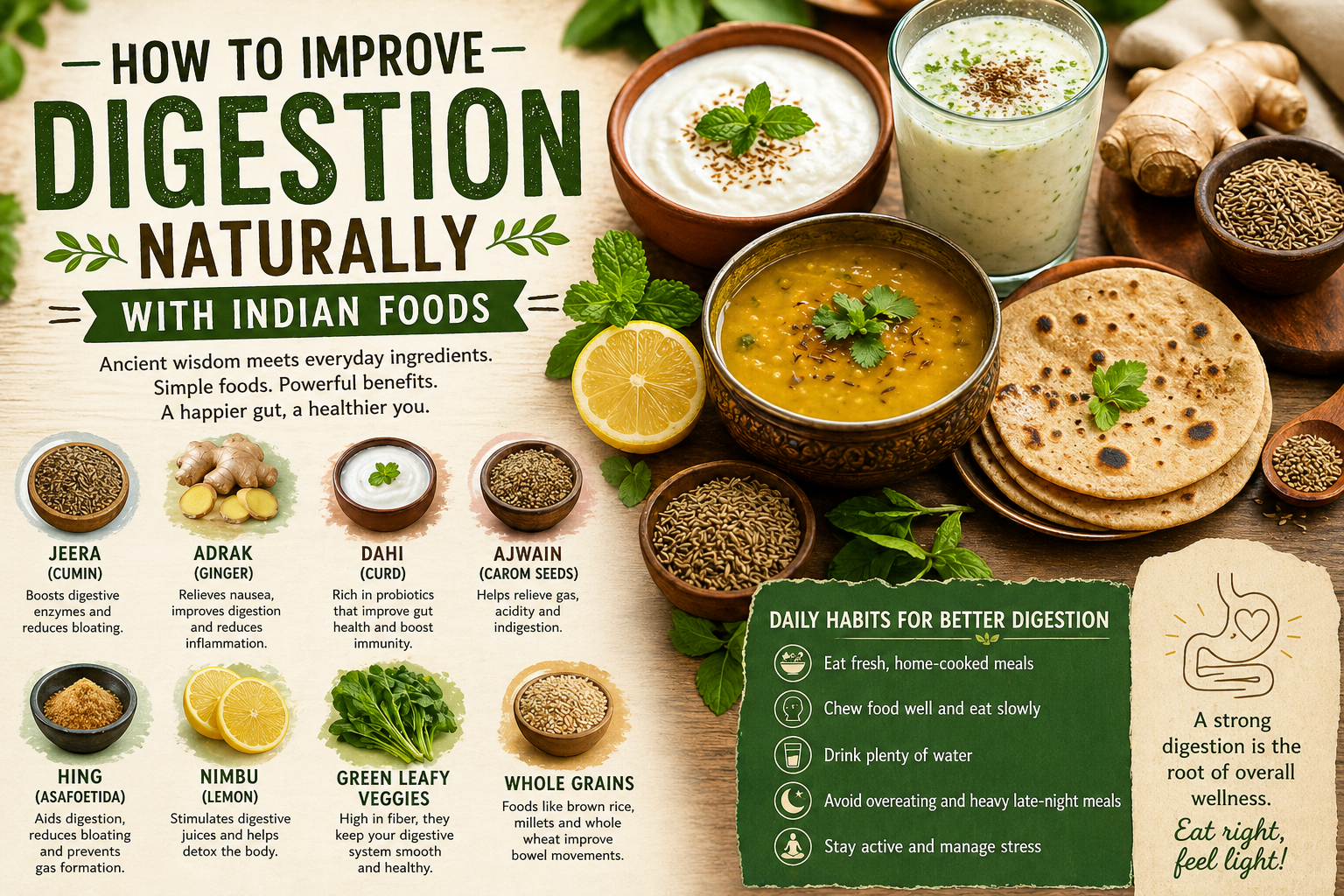
    🧂 1. Jeera (Cumin) – The Everyday Healer

    A simple tadka ingredient, but incredibly effective.

    Cumin helps:

    • Stimulate digestive enzymes
    • Reduce bloating
    • Improve nutrient absorption

    👉 Try this: Drink jeera water (boiled cumin seeds in water) in the morning.


    🍶 2. Dahi (Curd) – Your Gut’s Best Friend

    Curd is rich in probiotics, the good bacteria your gut needs.

    It helps:

    • Balance gut flora
    • Improve digestion
    • Cool the stomach

    👉 A bowl of curd with meals can make a noticeable difference.


    🌿 3. Ginger – Small Root, Big Impact

    Ginger has been used for centuries to treat digestive issues.

    It can:

    • Reduce nausea
    • Improve stomach emptying
    • Ease indigestion

    👉 Add fresh ginger to tea or meals for daily benefits.


    🌱 4. Ajwain (Carom Seeds) – The Quick Fix

    Ajwain is often used as a home remedy—and for good reason.

    It helps:

    • Relieve gas and acidity
    • Improve digestion quickly

    👉 A pinch of ajwain with warm water after meals works wonders.


    🍋 5. Lemon – Simple but Powerful

    Lemon stimulates digestive juices and helps break down food.

    👉 Start your day with warm lemon water to gently wake up your digestive system.


    🌾 6. Whole Grains – Gentle and Filling

    Foods like:

    • Brown rice
    • Whole wheat roti
    • Millets (like ragi, jowar, bajra)

    These are rich in fiber, which keeps digestion smooth and regular.


    🌿 7. Hing (Asafoetida) – The Underrated Ingredient

    Often used in small amounts, hing is powerful for digestion.

    It helps:

    • Reduce bloating
    • Prevent gas formation

    👉 That tiny pinch in dal or sabzi? It’s doing more than you think.


    🍽️ Simple Habits That Make a Big Difference

    Even the best foods won’t help much without the right habits:

    • Eat slowly and mindfully
    • Avoid overeating
    • Stay hydrated
    • Include fresh, home-cooked meals

    Sometimes, digestion improves not by adding more—but by simplifying what you already do.


    ⚖️ A Quick Reality Check

    No single food is a magic fix.

    Digestive health depends on:

    • Consistency
    • Balanced diet
    • Lifestyle habits

    If issues are frequent or severe, it’s worth consulting a professional instead of relying only on home remedies.


    Final Thought

    Indian food isn’t just about taste—it’s built on generations of understanding how the body works.

    From a pinch of hing to a glass of buttermilk, these small additions quietly support your gut every day.

    Sometimes, better digestion doesn’t require something new.

    It just means returning to what was always there.

  • 🌿 Best Foods to Boost Immunity Naturally in India (Complete Guide)

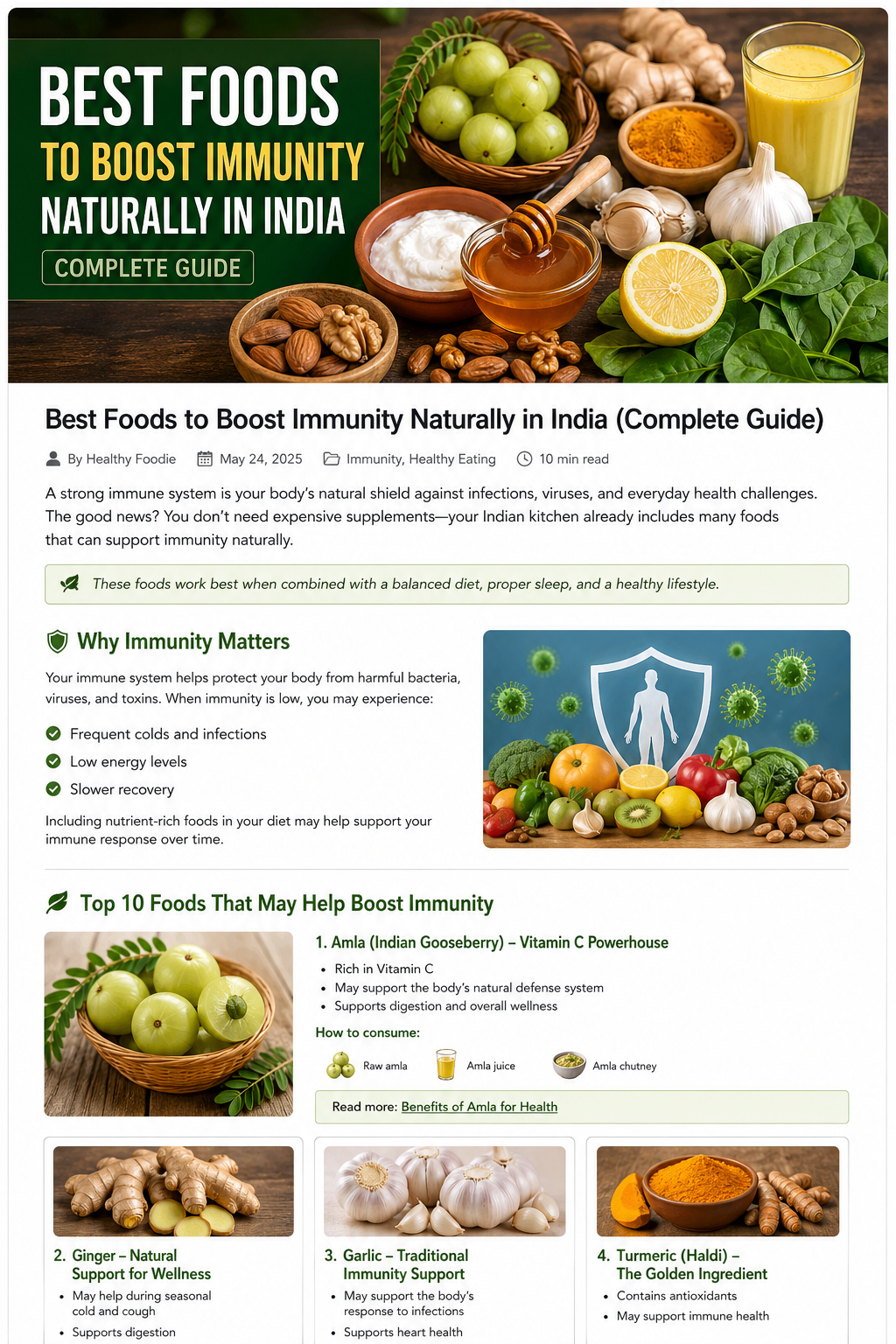
    🌿 Best Foods to Boost Immunity Naturally in India (Complete Guide)

    A strong immune system is your body’s natural shield against infections, viruses, and everyday health challenges. The good news? You don’t need expensive supplements—your Indian kitchen already includes many foods that can support immunity naturally.

    In this guide, you’ll discover the best foods to boost immunity naturally in India, along with simple ways to include them in your daily diet.

    These foods work best when combined with a balanced diet, proper sleep, and a healthy lifestyle.


    🛡️ Why Immunity Matters

    Your immune system helps protect your body from harmful bacteria, viruses, and toxins. When immunity is low, you may experience:

    • Frequent colds and infections
    • Low energy levels
    • Slower recovery

    Including nutrient-rich foods in your diet may help support your immune response over time.


    🌿 1. Amla (Indian Gooseberry) – Vitamin C Powerhouse

    Amla is widely known in India as a natural source of Vitamin C.

    Benefits:

    • Rich in Vitamin C
    • May help support the body’s natural defense system
    • Supports digestion and overall wellness

    How to consume:

    • Raw amla
    • Amla juice in the morning
    • Amla chutney

    👉 You can also read: Benefits of Amla for Health


    🫚 2. Ginger – Natural Support for Wellness

    Ginger has been used in Indian households for generations.

    Benefits:

    • Contains compounds with anti-inflammatory properties
    • May help during seasonal cold and cough
    • Supports digestion

    How to use:

    • Ginger tea
    • Add to curries or soups

    🧄 3. Garlic – Traditional Immunity Support

    Garlic contains a compound called allicin, often associated with health benefits.

    Benefits:

    • May support the body’s response to infections
    • Supports heart health
    • Commonly used in traditional remedies

    Tip: Consume raw or lightly cooked garlic in moderation.


    🌶️ 4. Turmeric (Haldi) – The Golden Ingredient

    Turmeric has long been a part of Indian cooking and Ayurveda.

    Benefits:

    • Contains curcumin, known for antioxidant properties
    • May help reduce inflammation
    • Supports overall immune health

    How to consume:

    • Haldi milk (turmeric milk)
    • Add to vegetables and dals

    👉 Related: Is Turmeric Milk Good Daily? (add link)


    🍊 5. Citrus Fruits – Vitamin C Support

    Fruits like oranges, lemons, and sweet lime are popular for their Vitamin C content.

    Benefits:

    • May support immune response
    • Helps maintain overall health
    • Easy to include in daily diet

    Tip: Start your day with warm lemon water.


    🥬 6. Green Leafy Vegetables – Nutrient Rich

    Spinach, methi, and other greens are rich in essential nutrients.

    Benefits:

    • Provide vitamins A, C, and antioxidants
    • Support overall well-being

    🥜 7. Nuts and Seeds – Healthy Nutrients

    Almonds, walnuts, and seeds are great additions to a balanced diet.

    Benefits:

    • Provide Vitamin E and healthy fats
    • May support immune function

    🍯 8. Honey – Natural Sweetener with Benefits

    Honey is commonly used in home remedies.

    Benefits:

    • Soothes throat
    • May help during mild cough
    • Contains natural antibacterial properties

    How to use:

    • Add to warm water or herbal tea

    🥛 9. Curd (Yogurt) – Gut Health Support

    Gut health plays an important role in overall immunity.

    Benefits:

    • Contains probiotics
    • Supports digestion
    • May contribute to immune balance

    🌾 10. Whole Grains – Daily Nutrition

    Whole grains like oats, brown rice, and millets are staples in many Indian diets.

    Benefits:

    • Support gut health
    • Provide sustained energy

    🥗 Sample Daily Diet for Better Immunity

    • Morning: Warm lemon water + soaked almonds
    • Breakfast: Oats with fruits
    • Lunch: Dal, green vegetables, roti
    • Evening: Ginger tea
    • Dinner: Light khichdi + curd

    💡 Daily Tips to Support Immunity Naturally

    • Stay hydrated
    • Get 7–8 hours of sleep
    • Exercise regularly
    • Limit processed foods
    • Manage stress levels

    ❓ FAQs

    What is the fastest way to support immunity naturally?
    Including Vitamin C-rich foods like amla and citrus fruits, along with proper sleep and hydration, may help support immunity.

    Which Indian food is best for immunity?
    Amla, turmeric, ginger, garlic, and curd are commonly included in diets that support overall immune health.

    Can I support immunity without supplements?
    Yes, a balanced diet with natural foods can help maintain overall health and immune function.


    📝 Final Thoughts

    Supporting your immune system doesn’t require expensive products. By including these natural foods in your daily Indian diet, you can take simple steps toward better health and well-being.

    Consistency matters—small daily habits can make a meaningful difference over time.


    ⚠️ Disclaimer

    This article is for informational purposes only and is not intended as medical advice. It does not replace professional medical guidance, diagnosis, or treatment. Always consult a qualified healthcare professional before making any changes to your diet or health routine.

  • 🌿 Amla: The Ancient Superfruit That’s More Than Just a Berry

    🌿 Amla: The Ancient Superfruit That’s More Than Just a Berry

    🌿 Amla: The Ancient Superfruit That’s More Than Just a Berry

    If fruits had a Hall of Fame, Amla—the Indian gooseberry—would be right at the top. Small, pale green, and easy to overlook, this fruit hides an extraordinary legacy behind its sharp, sour bite.

    But Amla isn’t just another “superfood” trend—it’s a fruit that has quietly shaped traditions, medicine, and daily life for thousands of years.

    So what makes it so special?

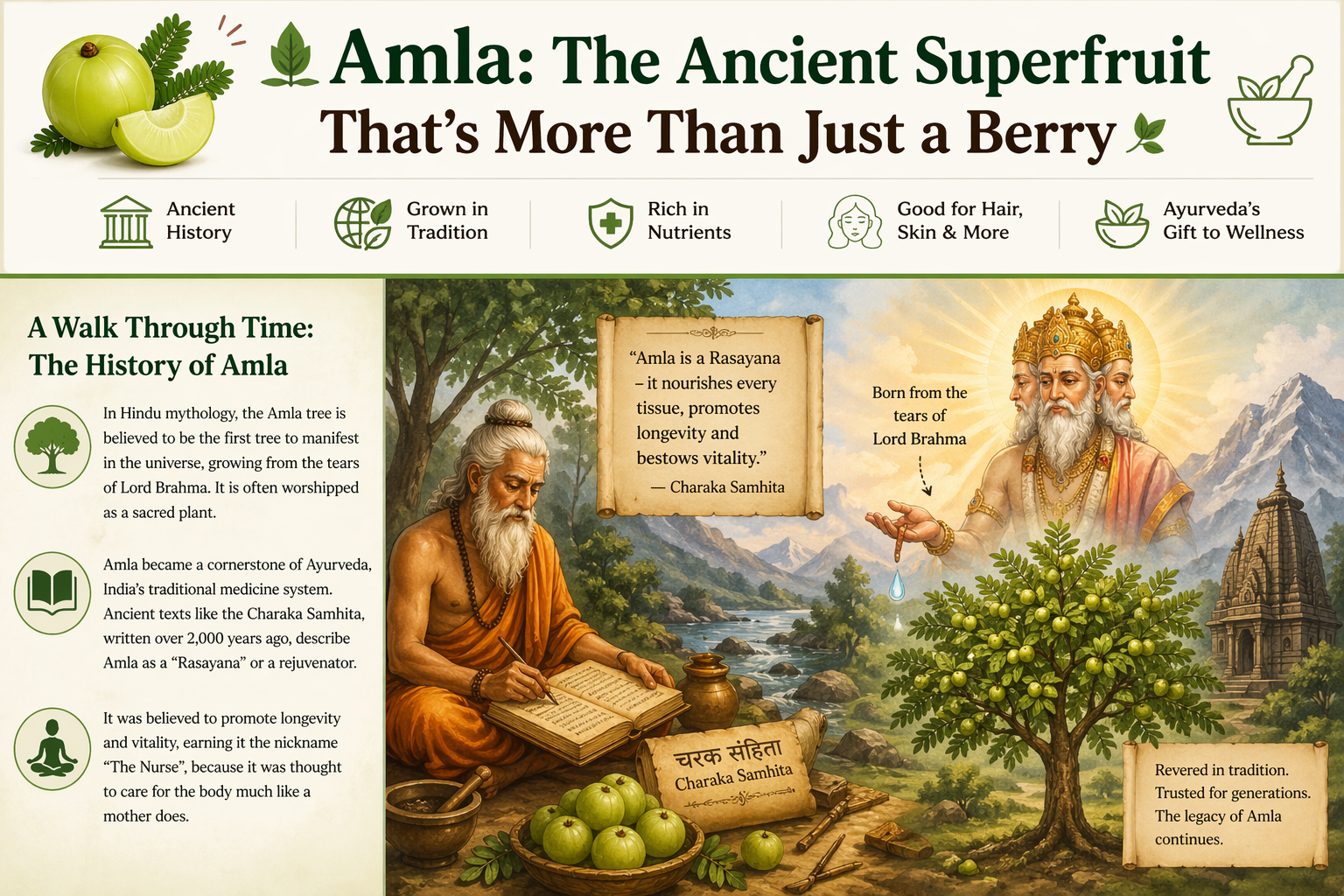
    🕉️ A Walk Through Time: The Legendary History of Amla

    Amla’s story begins not in a lab, but in mythology.

    In Hindu tradition, the Amla tree is believed to be the first tree to exist—born from the tears of Lord Brahma. This origin gives it a sacred place in Indian culture, where it is still revered and even worshipped in some regions.

    Beyond mythology, Amla became a pillar of Ayurveda, India’s ancient healing system. Texts like the Charaka Samhita (over 2,000 years old) describe it as a Rasayana—a rejuvenator believed to nourish the body, promote longevity, and restore balance.

    It was even called “The Nurse”, symbolizing its role in gently supporting and caring for the body over time.

    🌍 Where It Grows: The Geography Behind the Fruit

    Amla may now be found in parts of Southeast Asia, but its true home is the Indian subcontinent.

    The Phyllanthus emblica tree is surprisingly resilient. It thrives in diverse environments—from the cool foothills of the Himalayas to the warm, tropical south.

    What makes it remarkable is its ability to grow in dry, deciduous forests where many other plants struggle. It’s not delicate—it’s built to endure.

    Harvest season typically falls in winter, when the fruit reaches peak potency. Traditionally, this timing aligns with seasonal wellness practices, making Amla a staple during colder months.

    💪 Why Everyone Is Talking About It: Potential Benefits

    Amla’s growing popularity in modern wellness circles isn’t random—it’s rooted in its nutritional profile.

    It’s especially known for its high Vitamin C content, with some sources suggesting that a single Amla can rival multiple oranges.

    Traditionally, Amla has been used for:

    ✨ Hair & Skin Support – Often used in oils and masks for stronger hair and clearer skin
    🛡️ Immune Support – Rich in antioxidants, commonly used in seasonal routines
    🌱 Digestive Health – Dried Amla is often consumed after meals to support digestion

    While modern science continues to explore these uses, its long-standing presence in traditional practices keeps it relevant.

    ⚠️ A Friendly Note on Health

    Amla’s reputation is impressive—but it’s important to stay grounded.

    Natural doesn’t always mean universally suitable. People can respond differently, especially when using concentrated forms like powders or extracts.

    Always do your own research or consult a healthcare professional before adding Amla to your routine—particularly if you have existing health conditions or take medications.

    🥄 How to Add Amla to Your Daily Routine

    Not a fan of intense sour flavors? You’re not alone. Luckily, Amla comes in many easier-to-enjoy forms:

    🥤 Amla Juice – Often diluted with water and honey
    🌿 Amla Powder – Perfect for smoothies or warm drinks
    🍯 Murabba – A sweet Indian preserve that balances its sharpness
    🍬 Dried Amla – A tangy snack, often eaten after meals

    This versatility makes it easy to incorporate into modern lifestyles without sacrificing tradition.

    🌱 A Fruit That Connects Past and Present

    Amla isn’t just a fruit—it’s a bridge between ancient wisdom and modern curiosity.

    From sacred origins and Ayurvedic roots to its place in today’s wellness conversations, it continues to hold its ground across generations.

    Whether you’re drawn to its history, its nutritional value, or simply its uniqueness, one thing is certain:

    Amla may be small—but its story is anything but.

  • The Journey of Carrot

    The Journey of Carrot

    🥕 The Journey of Carrot

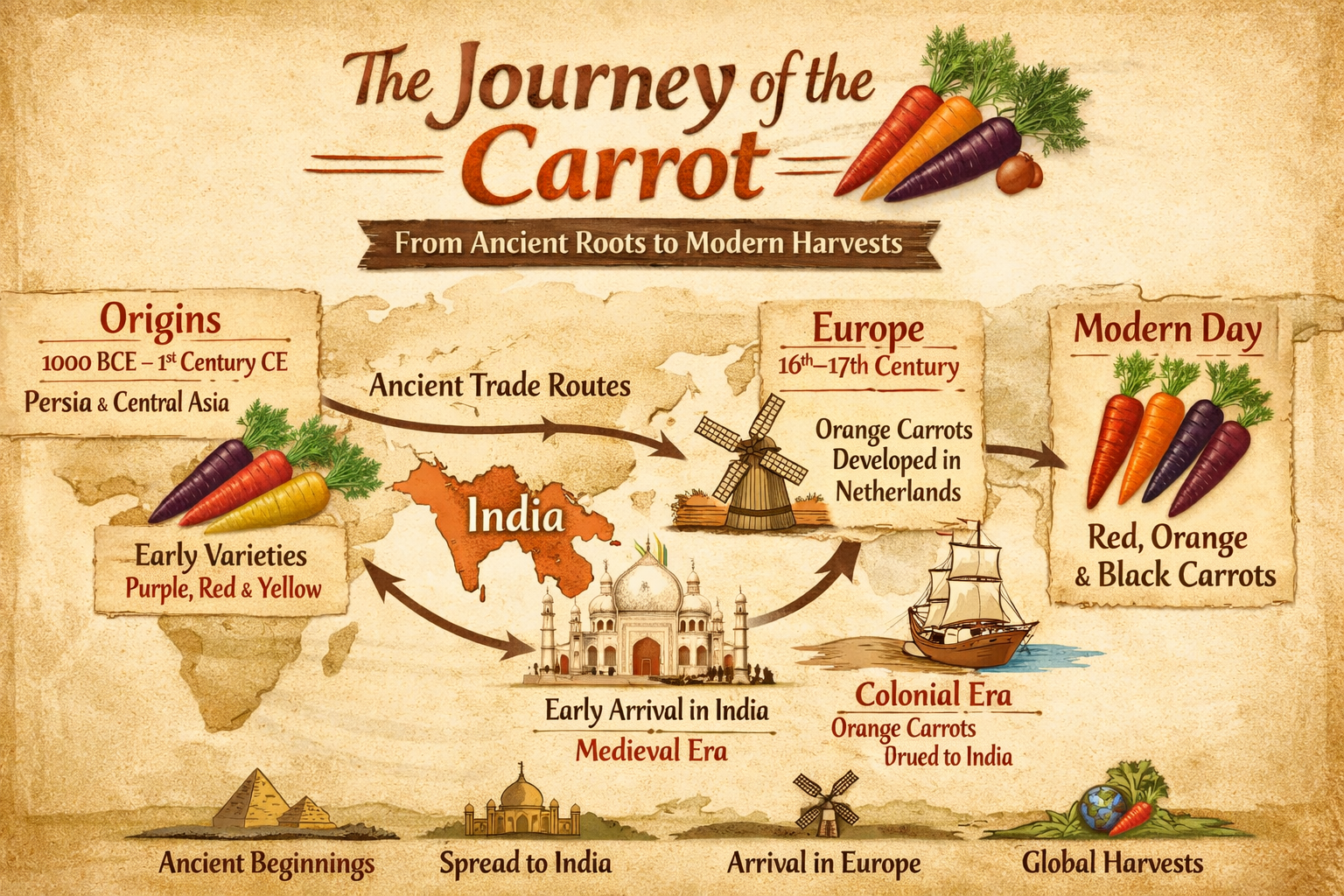
    Carrots sit quietly in our kitchens—humble, familiar, and often overlooked. Yet behind this everyday vegetable lies a story that stretches across centuries and continents. It’s a journey of color, cultivation, culture, and quiet transformation.


    🌍 Where It All Began

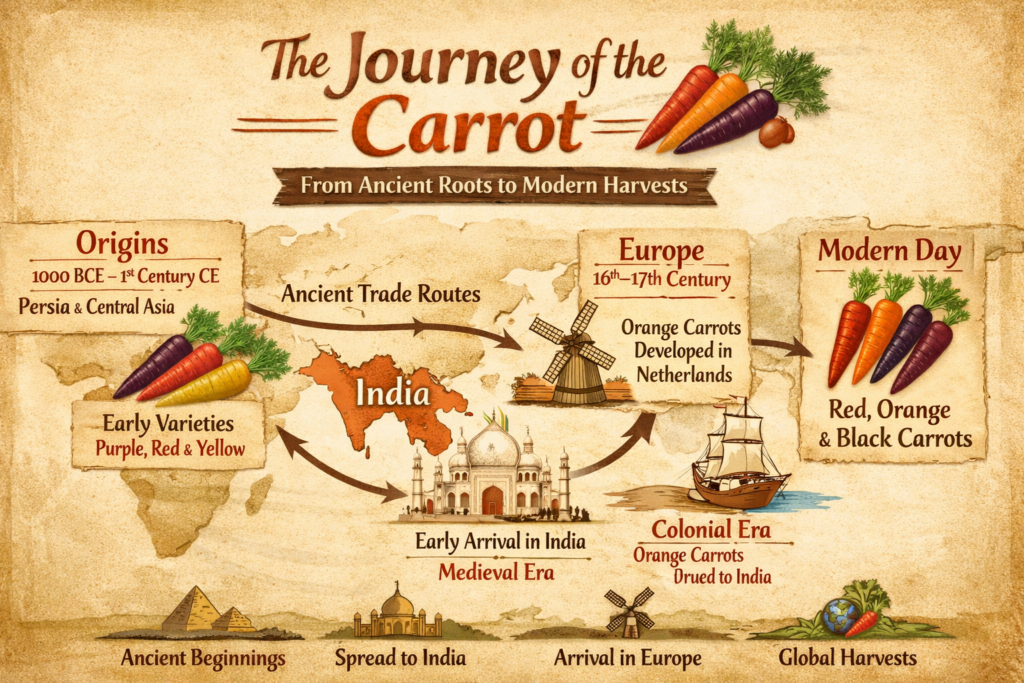
    Long before carrots turned orange, they grew wild in the rugged lands of Persia and Afghanistan. These early carrots looked nothing like the ones we know today. They were slender, often twisted, and came in deep shades of purple, red, and yellow.

    Interestingly, people didn’t grow them for the root at first. It was the leaves and seeds—aromatic and medicinal—that were valued. The root, now the star of countless dishes, was just an afterthought.

    As trade routes expanded, so did the carrot’s journey. Slowly, it traveled eastward, eventually finding its way into the fertile lands of India.


    🇮🇳 Carrots Find a Home in India

    In India, carrots didn’t just arrive—they adapted, evolved, and became part of everyday life.

    The red carrot, in particular, thrived in North India’s winter climate. Juicier, sweeter, and richer in flavor, it became deeply tied to seasonal cooking and tradition. Markets would fill with vibrant red bundles, signaling the arrival of winter.

    Much later, during the colonial period, a new variety appeared—the now-familiar orange carrot, developed in Europe, especially in the Netherlands. Over time, it spread across India, becoming a year-round staple.

    Yet even today, the red carrot holds a special place in Indian hearts and kitchens.


    😋 A Taste That Transforms

    Bite into a raw carrot, and you’ll notice its crisp texture and gentle sweetness, with a hint of earthiness. It’s refreshing, simple, and satisfying.

    But cooking tells a different story.

    Heat softens the carrot, deepens its sweetness, and unlocks a richness that feels almost indulgent. The red carrot, especially, becomes intensely flavorful—perfect for desserts and traditional dishes—while orange carrots remain milder and versatile.

    Then there are the darker varieties, like black or purple carrots, with their bold, earthy tones, often reserved for special preparations.


    🍲 From Kitchen Staple to Cultural Icon

    Across India and beyond, carrots slip effortlessly into both simple meals and celebratory dishes.

    In Indian homes, they shine in:

    • Warm, comforting gajar ka halwa, slow-cooked to perfection
    • Lightly spiced carrot sabzi, served with everyday meals
    • Tangy, bold carrot pickle, rich with spices
    • Traditional kanji, a fermented drink made from black carrots

    Elsewhere in the world, carrots add life to soups, stews, salads, roasted platters, and even desserts like carrot cake.

    Few vegetables move so easily between the ordinary and the festive.


    💪 Nature’s Quiet Healer

    Beyond taste and tradition, carrots carry remarkable nutritional strength.

    Rich in beta-carotene, they help the body produce vitamin A—essential for vision, immunity, and skin health. Their fiber supports digestion, while antioxidants and minerals contribute to heart health and overall well-being.

    In traditional Indian practices, especially, carrots—particularly black ones—are valued for their role in gut health, often consumed in fermented forms.

    It’s nourishment, offered simply.


    Little Secrets Hidden in a Common Root

    Even the most familiar foods carry surprises, and carrots are no exception.

    • They were once grown more for their leaves and seeds than their roots
    • The bright orange carrot is a relatively recent creation, shaped by European cultivation
    • Purple carrots contain powerful antioxidants similar to those found in berries
    • Early carrots were far less appealing—bitter, tough, and woody—before centuries of careful cultivation transformed them
    • Despite India being a major producer today, the most traditional variety here remains red, not orange

    These small details remind us how much history can hide in plain sight.


    🌱 A Story Still Growing

    From wild, colorful roots in ancient lands to the vibrant markets of India, the carrot’s journey is far from ordinary. It has changed shape, color, and purpose—yet remained a constant presence across time.

    Today, whether it’s grated into a rich halwa, stirred into a simple sabzi, or eaten fresh and raw, the carrot continues to connect past and present.

    A quiet vegetable, perhaps—but one with a story worth savoring.

  • The Story of Potato in India

    The Story of Potato in India

    🌍 A Humble Beginning Far Away

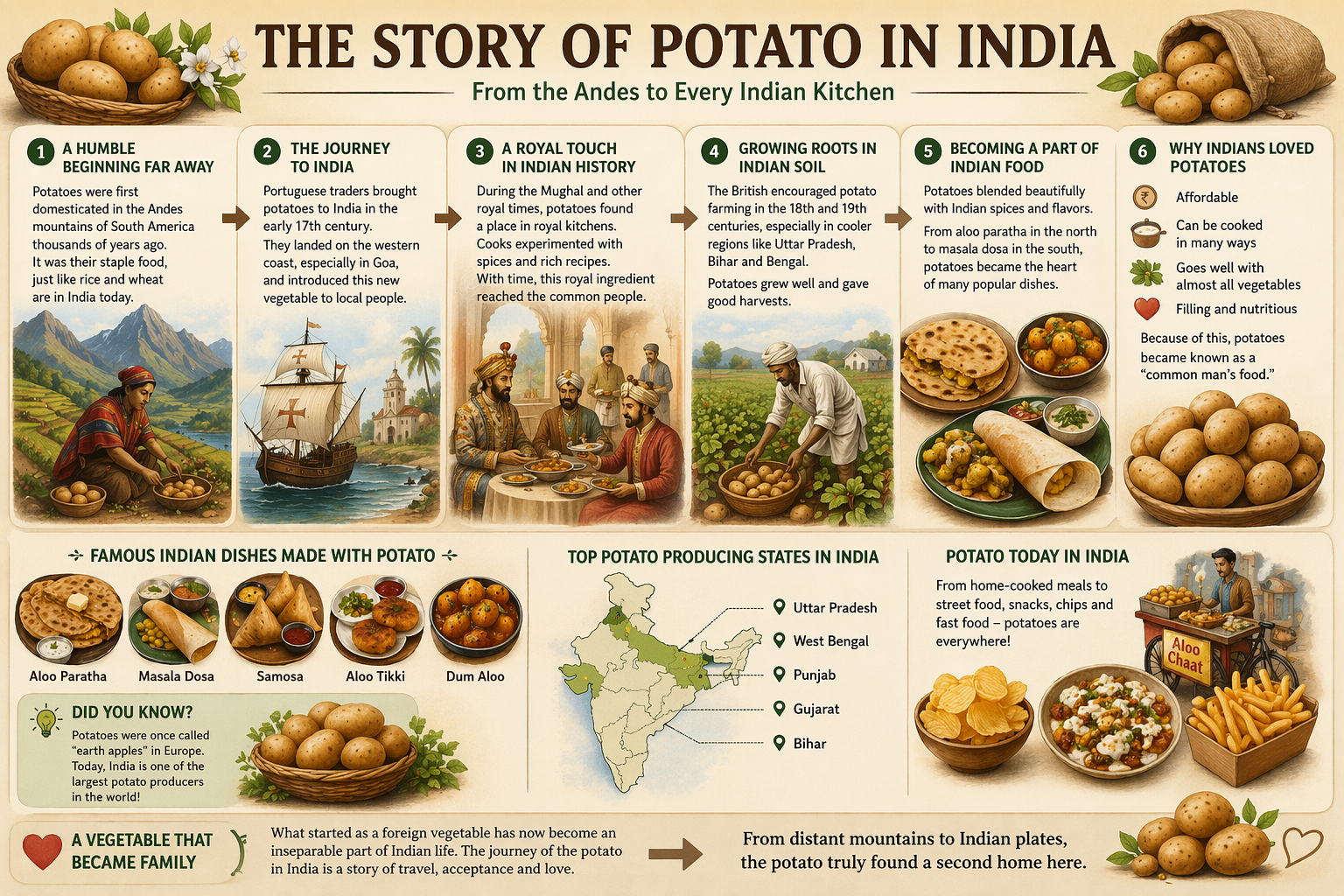
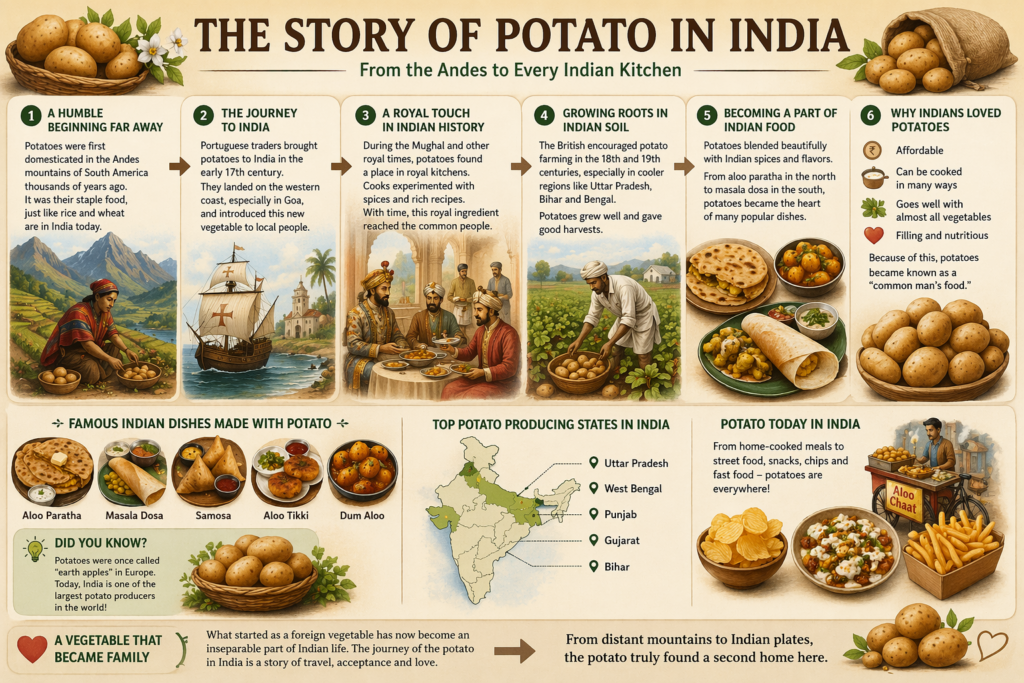
    Long before the potato became a part of Indian kitchens, it was growing quietly in the Andes mountains of South America. People there had been eating potatoes for thousands of years. It was their staple food, just like rice and wheat are in India today.

    🚢 The Journey to India

    The potato did not originally belong to India. It was brought here by Portuguese traders in the early 17th century. They arrived on the western coast, especially in Goa, and introduced this new vegetable to local people.

    At first, many Indians were unsure. A vegetable that grows underground felt strange. Some even avoided it. But slowly, people began to try it, and curiosity turned into acceptance.

    👑 A Royal Touch in Indian History

    There is no strong record of a single king or maharaja introducing potatoes in India, but during the Mughal and later regional kingdoms, new foods were often accepted in royal kitchens first.

    It is believed that in some royal courts, especially in North India, cooks began experimenting with potatoes by mixing them with rich spices, dry fruits, and gravies. Once royal kitchens accepted a food, it often spread to common people.

    Later, during British rule, potatoes became more organized as a crop and were grown in large quantities. This helped them move from royal kitchens to everyday homes.

    🌱 Growing Roots in Indian Soil

    The British played an important role in spreading potatoes across India in the 18th and 19th centuries. They encouraged farming in regions like Uttar Pradesh, Bihar, and Bengal.

    Potatoes grew well in Indian soil. Farmers liked them because they were easy to grow and gave good harvests. Slowly, potato farming became common.

    🍛 Becoming a Part of Indian Food

    Over time, potatoes became a favorite ingredient in Indian cooking. One big reason was their ability to absorb spices and flavors.

    Many famous Indian dishes were either created or improved using potatoes. For example:

    Aloo Paratha – A stuffed flatbread loved in North India
    Masala Dosa – A South Indian dish where spicy potato filling became the heart of the dosa
    Samosa – Originally from Central Asia, but in India, the potato filling made it popular
    Aloo Tikki – A crispy street food snack
    Dum Aloo – A rich curry often linked with Kashmiri and Mughlai styles

    In many of these dishes, potatoes became the main hero.

    💡 Why Indians Loved Potatoes

    There are simple reasons why potatoes became so popular:

    They are affordable
    They can be cooked in many ways
    They mix well with other vegetables
    They are filling and give energy

    Because of this, potatoes became known as the “common man’s food.”

    📈 Potato Today in India

    Today, India is one of the largest producers of potatoes in the world. States like Uttar Pradesh, West Bengal, and Punjab grow huge quantities every year.

    Potatoes are used everywhere—from homemade curries to street food like chaat, and even in chips and fast food.

    ❤️ A Vegetable That Became Family

    What started as a foreign vegetable has now become a part of every Indian kitchen. From royal recipes to simple home meals, potatoes have found a place in every heart.

    The journey of the potato in India is not just about food—it is a story of travel, acceptance, and creativity. From distant mountains to Indian plates, the potato truly found a second home here.

  • Benefits of Guava

    Benefits of Guava

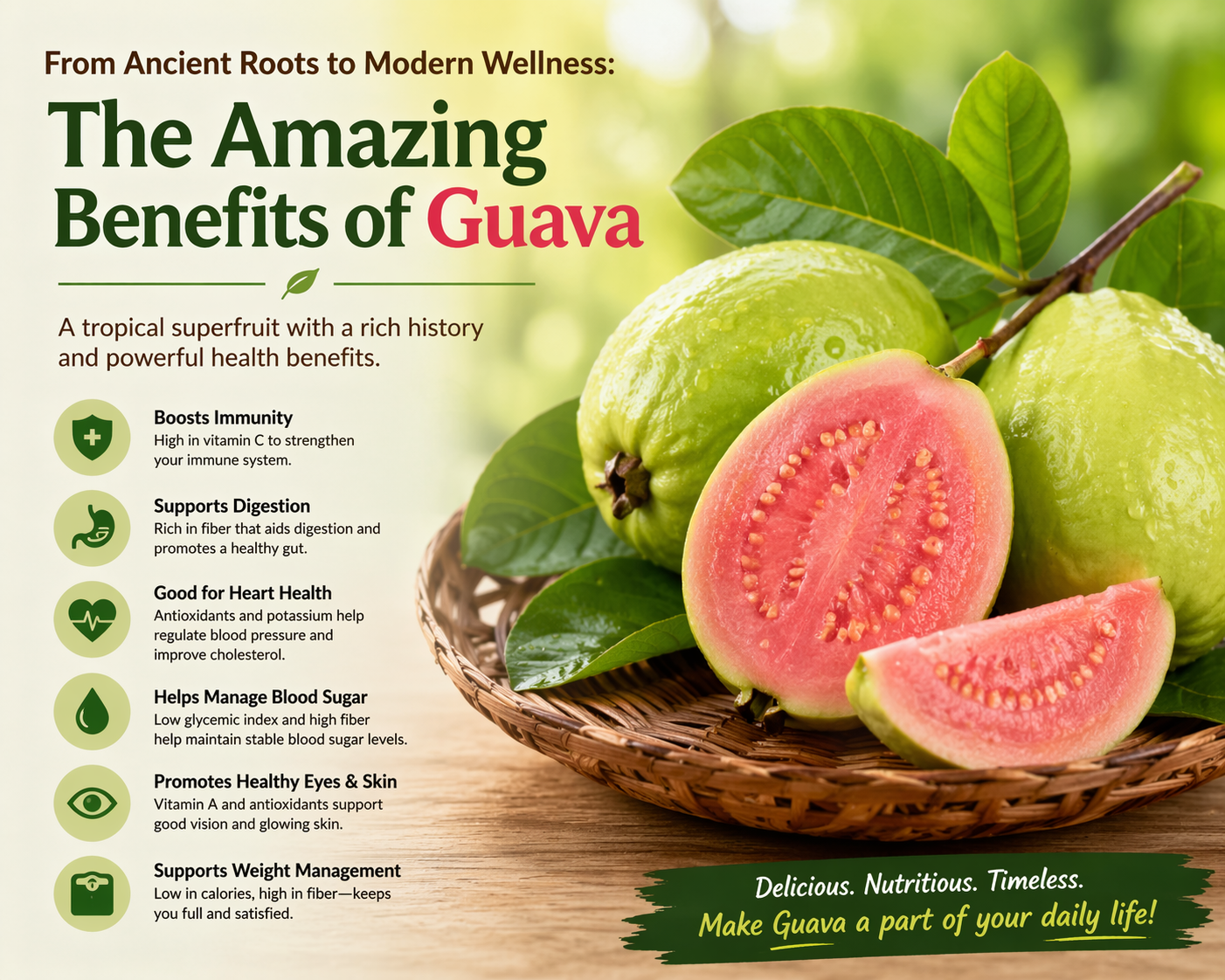
    Guava is more than just a delicious tropical fruit—it carries a rich history that stretches back centuries. Believed to have originated in Central America and southern Mexico, guava was cultivated and consumed by ancient civilizations long before it spread across the globe. Indigenous peoples valued guava not only for its sweet flavor but also for its medicinal properties. When Spanish and Portuguese explorers arrived in the Americas, they quickly recognized its value and helped introduce guava to regions such as Asia, Africa, and the Caribbean. Over time, guava adapted well to tropical and subtropical climates, becoming a staple fruit in many cultures and cuisines around the world.

    Today, guava is widely grown in countries like India, Brazil, Thailand, and Indonesia, and it plays an important role in traditional remedies as well as modern nutrition. Its long journey from a regional fruit to a global favorite speaks to both its versatility and its remarkable health benefits.

    One of guava’s most impressive qualities is its high vitamin C content. In fact, a single guava can provide more than twice the recommended daily intake of this essential nutrient. Vitamin C is crucial for strengthening the immune system, helping the body fight infections, and supporting skin health by promoting collagen production. Regular consumption of guava can contribute to a stronger immune defense and healthier, more radiant skin.

    Guava is also an excellent source of dietary fiber, making it highly beneficial for digestive health. Fiber aids in maintaining regular bowel movements, prevents constipation, and supports a balanced gut microbiome. Including guava in your diet can help keep your digestive system functioning smoothly and efficiently.

    In addition to supporting digestion, guava offers benefits for heart health. It contains powerful antioxidants such as lycopene and flavonoids, which help reduce inflammation and protect the body from oxidative stress. Along with potassium, these compounds can help regulate blood pressure and improve cholesterol levels, reducing the risk of cardiovascular disease.

    For individuals concerned about blood sugar levels, guava is a smart and nutritious option. Its low glycemic index and high fiber content help slow the absorption of sugar in the bloodstream, preventing sudden spikes. This makes guava particularly suitable for people with diabetes or those aiming to maintain stable energy levels throughout the day.

    Guava can also support weight management efforts. It is relatively low in calories but high in fiber, which helps you feel full for longer periods. This can reduce unnecessary snacking and support a balanced diet without sacrificing taste or satisfaction.

    Another benefit of guava is its contribution to eye health. Rich in vitamin A and antioxidants, it helps maintain good vision and may lower the risk of age-related eye issues. Its overall antioxidant profile also supports cellular health and may reduce the risk of chronic diseases.

    With its unique flavor and versatility, guava can be enjoyed in many ways—fresh, juiced, blended into smoothies, or added to salads and desserts. Its combination of taste, history, and nutrition makes it a truly valuable addition to any diet.

    From its ancient roots in the Americas to its global popularity today, guava stands out as a fruit that offers both cultural significance and impressive health benefits. Including it in your daily routine is a simple step toward a healthier lifestyle.