Category: Health & Nutrition

  • Gud (Jaggery): The Traditional Sweetness That Existed Before Modern Sugar

    Gud (Jaggery): The Traditional Sweetness That Existed Before Modern Sugar

    Sugar feels so normal today that it’s difficult to imagine a time when it wasn’t part of everyday life.

    It quietly exists in:

    • tea
    • sweets
    • packaged snacks
    • desserts
    • almost every kitchen shelf

    But while reading more about traditional foods and older eating habits, I came across something interesting:

    Before refined white sugar became widely common, many households across India relied far more on gud (jaggery) for sweetness.

    And the more I explored its history, the more it felt like gud was never just about taste. It was connected with:

    • farming traditions
    • seasonal eating
    • homemade recipes
    • festivals
    • and everyday village life.

    So I thought it would be interesting to bring together some of these details in one place.


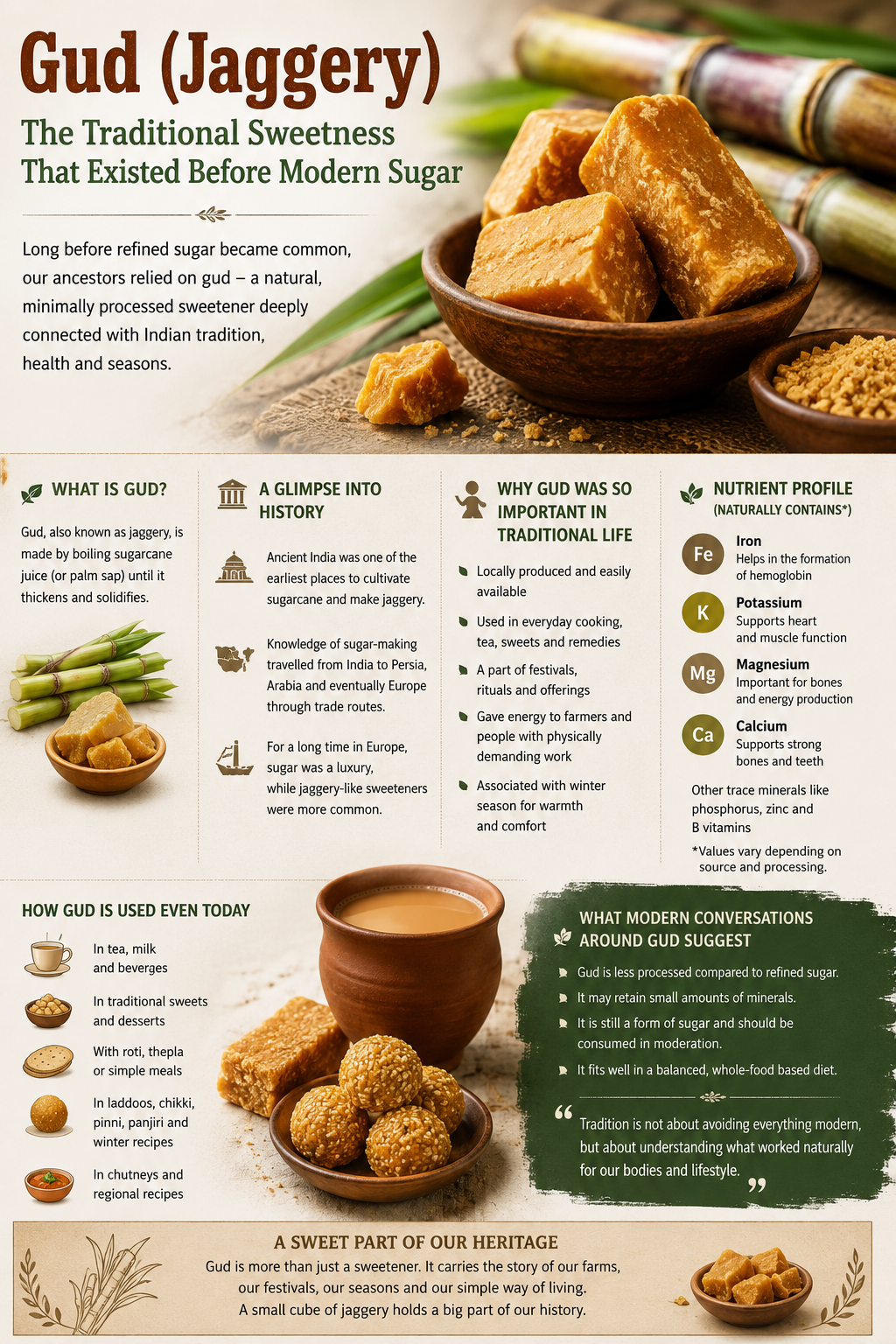
    🌾 What Exactly Is Gud?

    Gud, also known as jaggery, is traditionally made by slowly boiling sugarcane juice until it thickens and solidifies.

    In some regions, jaggery is also prepared from:

    • date palm
    • coconut palm

    Unlike refined sugar, gud usually goes through much less processing.

    That’s why it keeps:

    • its golden or brown color
    • deeper taste
    • slightly earthy flavor

    And maybe that’s one reason older generations often viewed it differently from ordinary sugar.


    🏺 India’s Deep Connection with Sugarcane and Gud

    One detail that really stood out while reading about gud was how strongly India is connected with the early history of sugarcane and sweet-making.

    Historical references suggest that ancient India was among the earliest places where people:

    • cultivated sugarcane extensively
    • extracted sugarcane juice
    • developed early sweeteners like jaggery

    Before modern sugar factories existed, gud was already being prepared and used in everyday life.

    Over time, knowledge of sugar processing gradually spread through:

    • traders
    • travelers
    • trade routes

    moving from India toward:

    • Persia
    • the Arab world
    • and eventually Europe.

    🍬 Before White Sugar Became Common

    Another interesting thing is that refined white sugar was once rare and expensive in many parts of the world.

    For a long time, people depended more on:

    • honey
    • fruits
    • jaggery-like sweeteners

    In India especially, gud naturally became part of:

    • homemade sweets
    • tea
    • winter recipes
    • festive food
    • farming households

    And because it was locally prepared, it stayed closely connected with rural food traditions.


    ❄️ Why Gud Became Closely Linked with Winters

    One pattern I noticed while reading about traditional Indian food habits is how closely foods were connected with seasons.

    Gud often appeared in:

    • til laddoos
    • chikki
    • panjiri
    • winter sweets

    Older traditions frequently described it as:

    • warming
    • comforting
    • satisfying during colder months

    Even today, many families naturally start using gud more during winter.


    🌿 What Nutrients Does Gud Naturally Contain?

    Because jaggery is less refined than white sugar, it may retain small amounts of naturally occurring minerals.

    Depending on the preparation, gud can contain traces of:

    • iron
    • potassium
    • magnesium
    • calcium

    Of course, it is still a sweetener and naturally contains sugar.

    But what I found interesting is that modern discussions often describe gud less as a “miracle food” and more as a traditional ingredient connected with older eating patterns.


    🧠 What Current Conversations Around Gud Seem to Suggest

    While exploring more recent discussions around jaggery, I noticed that the conversation today feels very different from older times.

    Instead of dividing foods strictly into “good” and “bad,” many current discussions seem more focused on:

    • moderation
    • less processed foods
    • traditional preparation methods
    • balanced eating habits

    Gud often appears in these conversations because of:

    • its traditional preparation
    • richer taste
    • connection with homemade food culture

    At the same time, many sources also mention that gud is still a form of sugar and is best understood in balance rather than through extreme claims.

    That balanced perspective honestly felt more realistic and interesting to me.


    🍛 How Gud Quietly Stayed Part of Everyday Life

    What surprised me most is how naturally gud still fits into daily routines in many homes.

    Even today, people continue using it:

    • with roti
    • in tea
    • in homemade sweets
    • after meals
    • during winter evenings

    And despite modern packaged foods becoming more common, gud still somehow feels connected with slower, older styles of eating.


    🌟 A Small Reflection

    Reading about gud made me realize how many traditional foods quietly survived across generations not because they were heavily promoted, but because they naturally fit into people’s lifestyles.

    Sometimes, food history says as much about culture and everyday life as it does about nutrition.


    🍯 Final Thought

    Gud may look simple, but behind it is a long story of sugarcane farming, seasonal eating, village traditions, trade routes, and changing food habits.

    And maybe that’s why it still feels more connected to tradition than ordinary sweetness does.


    📚 References


    ⚠️ Disclaimer

    The information shared here is based on historical references, cultural observations, and general reading from publicly available sources. It is meant for informational purposes only and should not be considered medical or dietary advice.
  • The Story of Mango: How It Became India’s Most Loved Summer Fruit

    The Story of Mango: How It Became India’s Most Loved Summer Fruit

    There’s something different about mango season in India.

    The moment mangoes begin appearing in markets, everything changes a little.

    People start discussing:

    • Which variety arrived first
    • Whether Alphonso is better than Dasheri
    • How sweet this year’s mangoes are
    • And when homemade pickles will finally be ready

    Very few foods create this kind of excitement.

    And while reading more about the history of everyday foods, I realized something interesting:

    👉 Mango is not just a fruit in India.
    It has quietly become part of memories, traditions, festivals, and even emotions across generations.

    So I thought it would be interesting to gather some of these details together in one place.


    🌳 A Fruit That Has Been Around for Thousands of Years

    Mango is believed to have originated around the Indian subcontinent and nearby regions of South Asia.

    Historical references suggest that mangoes were cultivated in India thousands of years ago.

    Which means long before modern supermarkets and fruit packaging existed, mango trees were already part of Indian landscapes.

    Over time, the fruit slowly became connected with:

    • Summer traditions
    • Hospitality
    • Seasonal eating habits
    • Family gatherings

    And somehow, that connection still exists today.


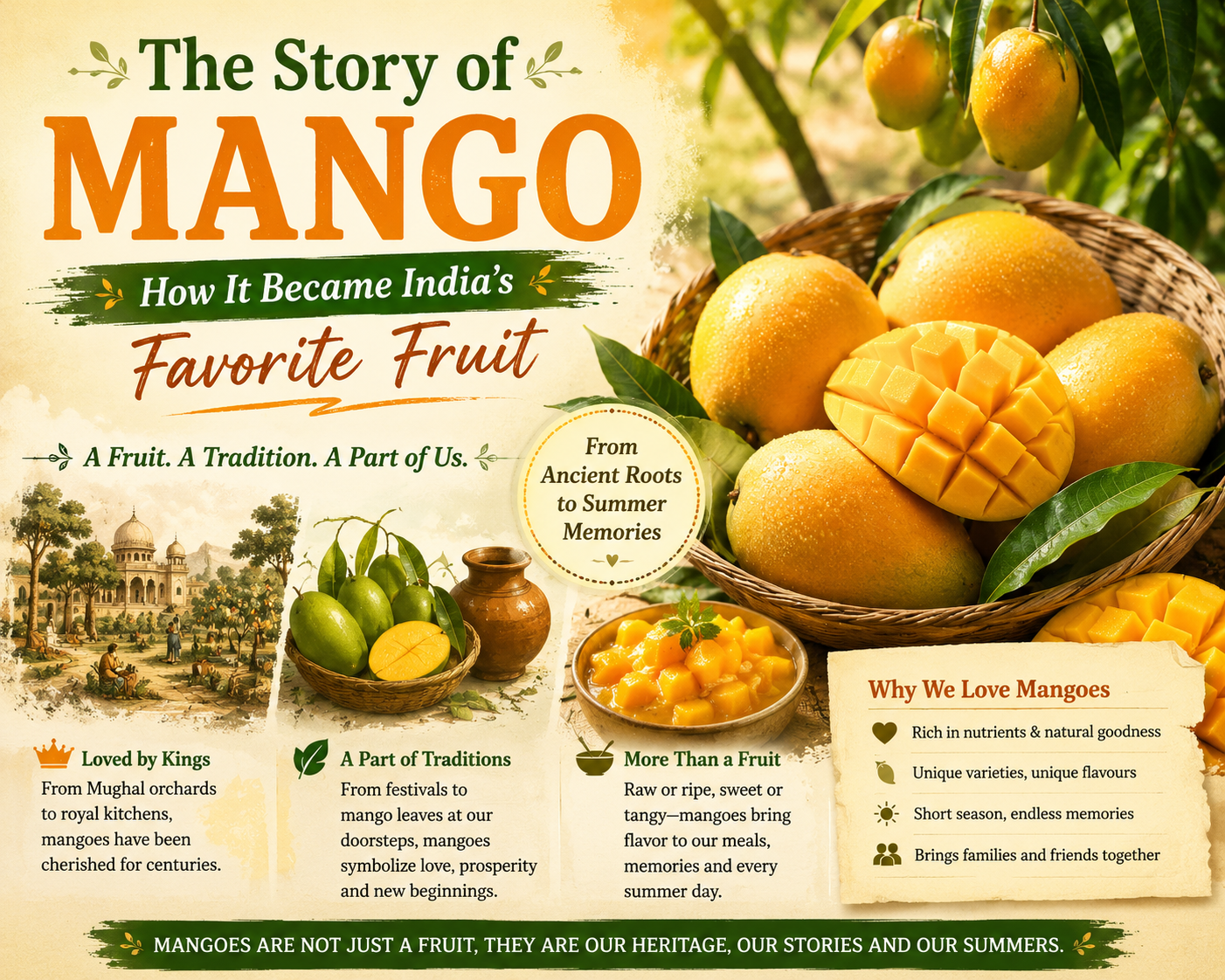
    👑 Even Kings Were Fascinated by Mangoes

    One detail that really stood out to me was how much mangoes were admired during royal times.

    During the Mughal era, mango cultivation became extremely popular.

    Emperor Akbar is believed to have planted a massive mango orchard called Lakhi Bagh, which reportedly had thousands of mango trees.

    It’s interesting to think that a fruit we casually cut and eat today was once so admired by kings and royal courts.


    🥭 India Didn’t Just Grow Mangoes — It Created Mango Personalities

    One of the most fascinating things about mangoes is how every region developed its own favorite variety.

    And people become surprisingly loyal to them.

    Some famous varieties include:

    • Alphonso from Maharashtra
    • Dasheri from Uttar Pradesh
    • Langra from Varanasi
    • Kesar from Gujarat
    • Banganapalli from Andhra Pradesh

    And if you ask people which one is best, the debate can go on for hours.

    Because for many people, mangoes are personal.


    ☀️ Why Mango Season Feels Emotional

    Unlike fruits available throughout the year, mangoes arrive for a limited time.

    Maybe that’s part of what makes them special.

    For many families, summer memories are tied to:

    • Eating chilled mango slices in the afternoon
    • Drinking aam panna during hot days
    • Watching elders prepare mango pickle jars
    • Storing boxes of mangoes wrapped in newspaper at home

    Even the smell of ripe mangoes can remind people of childhood summers.


    🍛 Mango Is More Versatile Than We Realize

    Another thing I found interesting is how differently mango is used across India.

    🥭 Raw Mango

    Used in:

    • Pickles
    • Chutneys
    • Aam panna
    • Tangy summer dishes

    🌞 Ripe Mango

    Used in:

    • Milkshakes
    • Desserts
    • Aamras
    • Homemade sweets
    • Or simply eaten fresh

    Very few fruits fit into both spicy and sweet traditions so naturally.


    🌿 Mango Beyond Food

    Mangoes also became part of Indian traditions beyond eating.

    Even today:

    • Mango leaves are used during festivals
    • They are placed near entrances during celebrations
    • Mango motifs appear in Indian art and fabrics

    Which shows how deeply the fruit entered cultural life over time.


    Simple Benefits People Associate with Mango

    Without making things too technical, mangoes naturally contain:

    • Vitamin C
    • Vitamin A
    • Fiber
    • Natural sweetness

    And because they are seasonal, many people enjoy them as part of balanced summer eating rather than an everyday fruit.


    🧠 Why Mango Still Feels Different From Other Fruits

    Reading about mangoes made me realize something:

    People don’t just “consume” mangoes.

    They wait for them.

    They discuss them.
    Compare them.
    Gift them.
    Remember summers through them.

    And very few foods create that kind of emotional connection across an entire country.


    🌟 A Small Reflection

    From royal orchards to roadside fruit stalls, mango has traveled through centuries while still remaining deeply familiar.

    Maybe that’s why it continues to feel special no matter how common it becomes.


    🥭 Final Thought

    Some foods simply become part of our diet.

    Others slowly become part of culture, memories, and seasons.

    And mango seems to have become all three.


    📚 References


    ⚠️ Disclaimer

    The information shared here is based on commonly available historical references, cultural observations, and general reading. It is meant for informational purposes only and should not be considered medical advice or nutritional guidance.

  • Moringa Leaves: The Traditional Green That Quietly Supported Skin, Hair, and Everyday Wellness

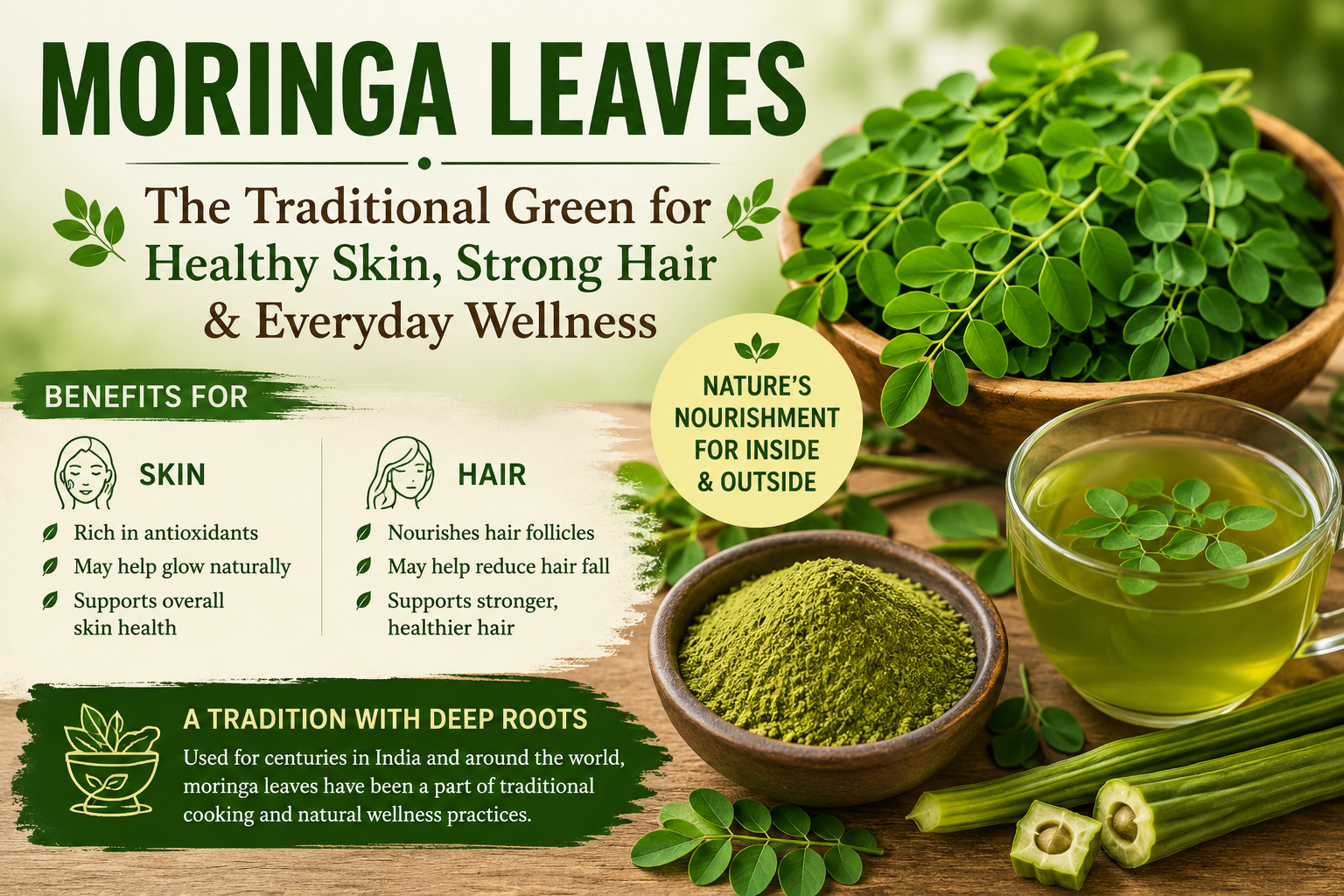
    Moringa Leaves: The Traditional Green That Quietly Supported Skin, Hair, and Everyday Wellness

    There are some ingredients that stay part of traditional food culture for generations without needing much attention.

    Moringa leaves are one of them.

    Today, many people know moringa as a modern “superfood,” but while reading more about it, I realized that it had already been part of everyday cooking long before wellness trends began talking about it.

    In many Indian homes—especially in the South—moringa wasn’t treated as something fancy or rare. It was simply used in regular meals, often without much discussion around its “benefits.”

    And maybe that’s what makes it interesting.

    So I thought it would be nice to gather together some details about its history and why moringa leaves have remained valued for generations.


    🌳 What Exactly Are Moringa Leaves?

    Moringa comes from the Moringa oleifera tree, commonly known as:

    • Drumstick tree
    • Sajjan tree
    • Miracle tree

    Almost every part of the tree has traditionally been used:

    • Pods (drumsticks)
    • Leaves
    • Seeds

    But the leaves especially became popular because they were easy to cook and naturally rich in nutrients.


    🏺 A Long History in Traditional Food Culture

    Moringa has been used for centuries in:

    • India
    • Africa
    • Southeast Asia

    In India, moringa leaves were commonly added to:

    • Dal
    • Soups
    • Vegetable dishes
    • Homemade recipes

    What stood out to me was that older generations didn’t consume moringa as a “health supplement.”

    It was simply treated as nourishing everyday food.


    🌿 Why Moringa Leaves Stayed Important

    One reason moringa leaves remained part of traditional diets is because they naturally contain:

    • Iron
    • Calcium
    • Vitamin C
    • Plant-based nutrients

    And since they were easy to grow in many regions, they became part of practical home cooking.


    How Moringa Leaves May Support Skin

    Skin often reflects what’s happening inside the body.

    And traditional foods that support overall nourishment sometimes quietly reflect on the skin too.


    💧 1. May Help Skin Feel Fresher

    Moringa leaves contain natural vitamins and antioxidants.

    Because of this, many people feel that regularly including nourishing greens in meals helps the skin appear:

    • Less dull
    • More refreshed
    • Better balanced over time

    🌿 2. Supports Overall Nourishment

    When the body feels undernourished or imbalanced, skin is often one of the first places where it shows.

    Moringa leaves have traditionally been valued because they provide plant-based nourishment in a simple way.


    3. Traditionally Associated with Healthy-Looking Skin

    In many traditional food practices, leafy greens like moringa were included regularly because they were believed to support overall wellness—including skin appearance.

    Not as a quick fix, but as part of a balanced lifestyle.


    🌱 How Moringa Leaves May Support Hair

    Hair health is often connected with:

    • Nutrition
    • Overall wellness
    • Daily food habits

    And this is one reason moringa leaves became valued in traditional diets.


    🌿 1. Naturally Contains Iron and Nutrients

    Moringa leaves contain nutrients that are important for overall nourishment.

    This is why they have often been linked with:

    • Supporting healthy hair
    • Maintaining scalp nourishment
    • General wellness from within

    💧 2. Traditionally Used in Hair Practices

    In some traditional home practices, moringa leaves and oils made from the tree were also connected with hair care routines.

    The idea was simple:
    👉 nourishment from inside and outside together.


    🌱 3. Part of Everyday Food, Not a Trend

    One interesting thing is that moringa was never traditionally promoted as a “hair solution.”

    It was simply included regularly in meals, which reflects a very different approach compared to modern quick-fix trends.


    🍛 How Moringa Leaves Were Traditionally Eaten

    Moringa leaves were usually cooked in very simple ways:

    • Mixed into dal
    • Added to stir-fries
    • Used in soups
    • Combined with coconut in South Indian dishes

    Nothing complicated—just part of regular food.


    🧠 Why Moringa Is Becoming Popular Again

    Interestingly, ingredients like moringa are now being rediscovered globally.

    What older generations quietly used in homemade meals is now often packaged into:

    • Powders
    • Capsules
    • Wellness products

    But traditionally, it was simply fresh food.


    🌿 A Small Reflection

    Reading about moringa made me realize how many traditional ingredients quietly carried nutritional value without being marketed heavily.

    Sometimes, older food habits focused less on trends and more on simple nourishment.


    🌟 Final Thought

    Moringa leaves are a reminder that not every useful ingredient needs to feel modern or complicated.

    Sometimes, simple foods that stayed part of traditional kitchens for generations continue to remain relevant for a reason.


    📚 References


    ⚠️ Disclaimer

    The information shared here is based on commonly available historical references, traditional usage, and general reading. It is meant for informational purposes only and should not be considered medical advice. Food habits and nutritional needs may vary from person to person.

  • The Journey of Tomato: From a Wild Fruit to an Everyday Ingredient

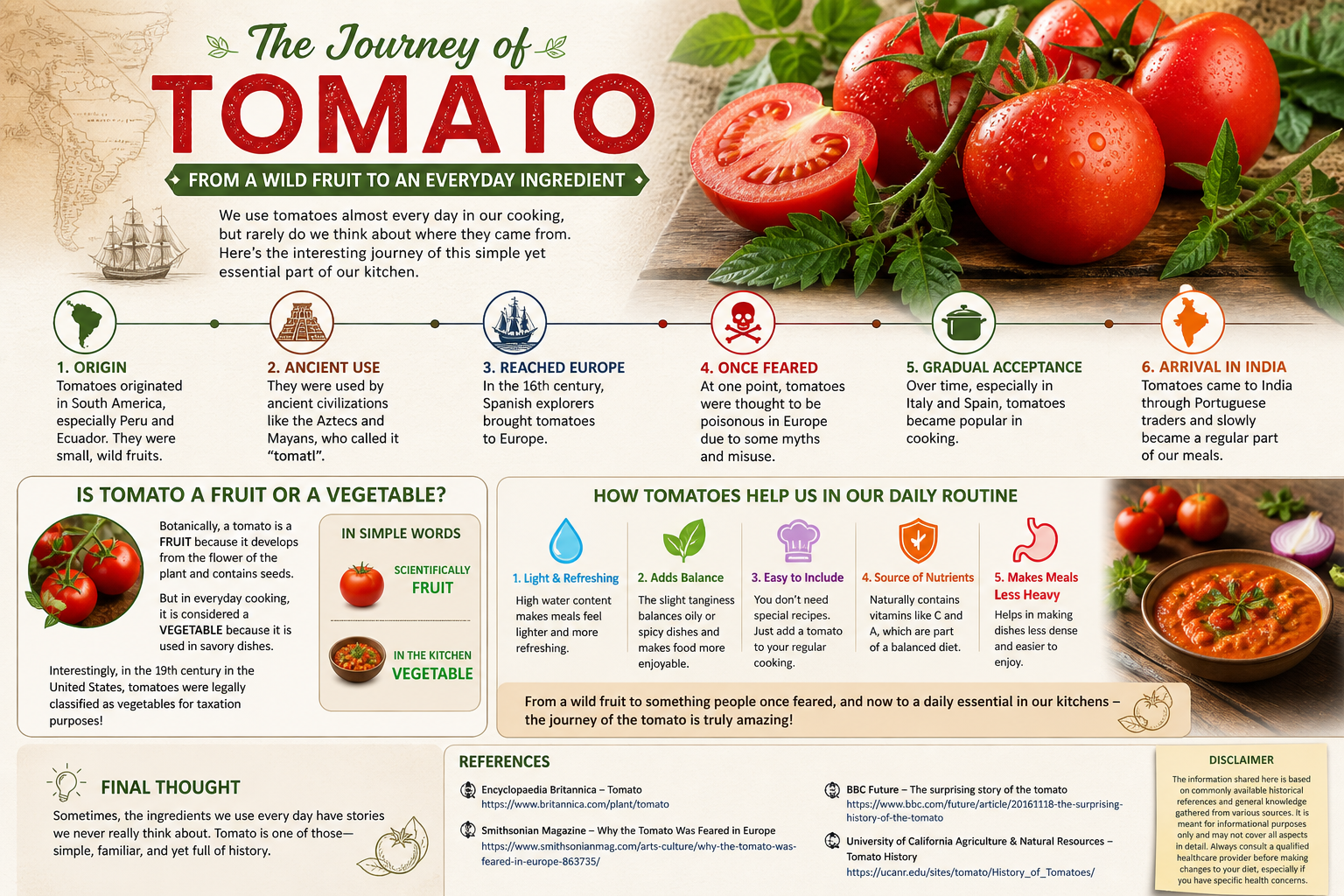
    The Journey of Tomato: From a Wild Fruit to an Everyday Ingredient

    We use tomatoes almost every day—whether it’s in dal, sabzi, or chutney.

    But rarely do we stop and think about where they actually came from.

    While exploring more about everyday foods, I came across some interesting details about tomatoes. It made me realize that something so common in our kitchen has had quite an unexpected journey.

    So I thought it would be nice to bring these details together in one place.

    🌎 Tomatoes Didn’t Originate in India

    One of the most surprising things is that tomatoes are not originally from India.

    They come from parts of South America, especially regions like Peru and Ecuador.

    In their early form, they were small, wild fruits—not exactly like the tomatoes we see today.

    🏺 Used by Ancient Civilizations

    Before spreading across the world, tomatoes were used by ancient civilizations like the Aztecs and Mayans.

    They even had a word for it—“tomatl”—which is believed to be the origin of the word tomato.

    🚢 How Tomatoes Reached Europe

    In the 16th century, Spanish explorers brought tomatoes to Europe.

    But instead of being accepted immediately, tomatoes were viewed with hesitation.

    People were unsure about this unfamiliar fruit.

    ⚠️ When Tomatoes Were Considered Harmful

    At one point, tomatoes were believed to be poisonous in Europe.

    This belief came from their resemblance to certain toxic plants. In some cases, people also fell sick after eating them—later it was understood that it had more to do with the utensils used at the time rather than the tomato itself.

    Still, this idea stayed for quite a while.

    🍝 Gradual Acceptance Over Time

    Slowly, countries like Italy and Spain started using tomatoes in cooking.

    Over time, they became an essential part of many cuisines—especially in dishes like sauces and gravies.

    🇮🇳 Arrival of Tomato in India

    Tomatoes were introduced to India by Portuguese traders.

    Initially, they were not commonly used.

    But gradually, they became part of everyday cooking—especially in:

    Curries
    Gravies
    Chutneys

    Today, it’s hard to imagine Indian food without them.

    🍅 Is Tomato a Fruit or a Vegetable?

    This is one of those questions that often comes up.

    From a botanical point of view, a tomato is actually a fruit because it develops from the flower of the plant and contains seeds.

    But in everyday cooking, it is treated as a vegetable because of how it’s used—mostly in savory dishes rather than sweet ones.

    Interestingly, this confusion even led to a legal case in the United States in the 19th century, where tomatoes were officially classified as vegetables for taxation purposes.

    👉 So in a simple way:

    🌿 Scientifically → Fruit
    🍛 In the kitchen → Vegetable
    🍛 How Tomatoes Fit Into Our Daily Routine

    What makes tomatoes interesting is how easily they fit into daily meals.

    They are already part of:

    Breakfast dishes like poha or upma
    Lunch dals and sabzis
    Simple salads or snacks

    They don’t feel heavy and blend naturally into food, which makes them easy to include regularly.

    Simple Benefits of Tomatoes in Daily Life

    Without going into anything complex, tomatoes offer a few simple, noticeable benefits:

    💧 1. Feel Light and Refreshing

    Tomatoes have a high water content, which can make meals feel lighter.

    🌿 2. Add Balance to Food

    Their slight tanginess helps balance oily or spicy dishes, making meals feel more complete.

    🥗 3. Easy to Include

    You don’t need special recipes—just adding a tomato to your regular cooking is enough.

    🍅 4. Naturally Provide Nutrients

    Tomatoes contain vitamins like C and A, which are part of a balanced diet.

    ⚖️ 5. Make Meals Feel Less Heavy

    When added to dishes, they often make food feel less dense and easier to enjoy.

    🌿 A Small Reflection

    Reading about this made me look at something as simple as a tomato a little differently.

    It’s interesting how something that once traveled across continents—and was even avoided at one point—has now become such a regular part of our meals.

    🌟 Final Thought

    Sometimes, the ingredients we use daily have stories we never really think about.

    Tomato is one of those—simple, familiar, and yet full of history.

    📚 References
    Encyclopedia Britannica – Tomato
    https://www.britannica.com/plant/tomato
    Smithsonian Magazine – Why the Tomato Was Feared in Europe
    https://www.smithsonianmag.com/arts-culture/why-the-tomato-was-feared-in-europe-863735/

    ⚠️ Disclaimer

    The information shared here is based on commonly available historical references and general knowledge gathered from various sources. It is meant for informational purposes only and may not cover all aspects in detail. Always consult a qualified healthcare provider before making changes to your diet, especially if you have specific health concerns.

  • Why Do You Feel Tired Even After Sleeping?

    Why Do You Feel Tired Even After Sleeping?


    Waking up tired after what seems like a full night’s sleep can feel confusing.

    You go to bed on time, get enough hours of sleep, and still wake up feeling low on energy. It almost feels like your body hasn’t fully rested—even though technically, it should have.

    This is something many people experience, and often the reason isn’t just about how long you sleep. It’s usually a mix of small, everyday factors that quietly affect how your body feels.

    💭 It’s Not Always About How Long You Sleep

    We often assume that sleeping more automatically means feeling more energetic.

    But in reality, sleep is not just about duration—it’s also about how restful it is. If your sleep is light, interrupted, or not deep enough, your body may not feel fully restored in the morning.

    So even after 7–8 hours, you might still wake up feeling tired.

    🧠 Small Everyday Factors That Can Affect Your Energy
    😴 Sleep That Doesn’t Feel Restful

    Sometimes you’re asleep, but not in a deep, restorative way.

    This can happen when:

    Your sleep cycle is irregular
    You wake up multiple times
    Your body doesn’t fully relax

    In such cases, sleep happens—but rest doesn’t fully happen.

    🍛 When Dinner Feels Too Heavy

    What you eat at night can quietly influence how you feel the next morning.

    Heavy or late meals may keep your digestion active for longer than usual. Instead of your body settling into rest, it stays slightly engaged.

    This can leave you waking up with a sense of heaviness rather than freshness.

    📱 Evening Screen Time

    Using phones or laptops before bed has become very normal.

    But this habit can delay how easily your body transitions into deeper sleep. Even if you fall asleep on time, the quality of rest may not feel the same.

    💧 Not Enough Hydration

    Sometimes tiredness isn’t complex—it can be something as simple as not drinking enough water.

    Even mild dehydration can make you feel:

    Low on energy
    Slightly dull
    Less focused

    And it often goes unnoticed.

    🥗 What You Eat During the Day

    Food doesn’t just fill you—it fuels you.

    If your meals are:

    Low in balance
    Missing key nutrients
    Irregular

    Your body may not feel as energized, even if you’ve eaten enough.

    🍽️ Foods That May Affect Energy Levels

    Some foods, especially at certain times, can make you feel more sluggish than energized.

    For example:

    Heavy or oily meals late in the day
    Sugary snacks that give quick energy but don’t last
    Too much caffeine in the evening

    These don’t always feel like a problem in the moment—but over time, they can affect how rested you feel.

    😓 A Mind That Doesn’t Fully Rest

    Even when the body is still, the mind can stay active.

    Thinking, planning, worrying—these don’t always stop when you go to bed.

    So while you’re technically sleeping, your mind may still be processing things, which can leave you feeling tired the next day.

    🧠 The Role of Digestion

    This is something that’s often overlooked.

    If digestion feels off:

    Food may not be processed smoothly
    Nutrients may not be absorbed well

    And over time, this can reflect as low energy.

    Sometimes, tiredness is less about sleep and more about how the body is handling what we eat.

    🪑 Low Movement During the Day

    When the body stays inactive for long periods, it can start to feel sluggish.

    Movement doesn’t just affect physical health—it also influences how energized you feel overall.

    🕰️ An Irregular Daily Rhythm

    Sleeping and waking at different times every day can confuse your body’s natural rhythm.

    Over time, this can affect how rested you feel, even if you’re getting enough hours of sleep.

    🌿 Looking at the Bigger Picture

    Feeling tired isn’t always caused by one single factor.

    It’s often a combination of:

    Daily habits
    Food patterns
    Sleep quality
    Mental state

    Each of these may seem small on their own, but together they shape how your body feels.

    🌟 Final Thought

    Sometimes, the body doesn’t need more sleep—it needs better balance.

    Understanding these small patterns can make it easier to notice what might be affecting your energy, without needing to make sudden or drastic changes.

    ⚠️ Disclaimer

    Always consult a qualified healthcare provider or Ayurvedic practitioner before making significant changes to your diet or lifestyle, especially if you have any existing health concerns. The information shared here is based on general experiences and simple lifestyle choices, and may not work the same way for everyone. It’s important to understand your body’s individual needs and make informed decisions rather than following anything blindly.

  • Jeera Water: A Simple Morning Habit That May Support Better Digestion

    Jeera Water: A Simple Morning Habit That May Support Better Digestion

    Sometimes, the most effective habits don’t come from complicated routines—they come from simple things we already have at home.

    For me, jeera (cumin) water became one of those small, easy additions.

    No strict rules.
    No pressure to follow it daily.
    Just something that fits naturally into the morning.


    💧 Why Start the Day with Something Light

    Mornings are when your body is just getting into rhythm.

    What you consume first can affect how your stomach feels for the rest of the day.

    Heavy or strong drinks can sometimes feel like too much too soon.
    But something warm and simple—like jeera water—feels gentler.

    It doesn’t overload your system. It just gives it a soft start.


    🌿 What Makes Jeera Different

    Jeera is already a part of everyday Indian cooking, but when taken as water, it feels different.

    It contains natural compounds that support digestion and help the body process food more smoothly.

    Not in a dramatic way—but in a steady, supportive way over time.


    🧠 How Jeera Supports Digestion (Simply Explained)

    🔬 Helps Your Body Break Down Food

    Jeera supports digestive enzymes, which help your body process food better.

    👉 When food is broken down properly:

    • It feels lighter
    • There’s less heaviness after meals

    💨 May Help Reduce Gas & Bloating

    Jeera is known for its carminative properties, meaning it may help reduce gas formation.

    👉 This can help:

    • Ease bloating
    • Make your stomach feel more comfortable

    ⏳ Helps Reduce Chances of Fermentation

    Gas and bloating often happen when food is not properly digested and stays in the gut for longer.

    When that happens, it starts fermenting—which leads to discomfort.

    Jeera helps your body process food more efficiently, so it doesn’t sit in the gut for too long.

    👉 When digestion is smoother:
    ✔ Less chance of fermentation
    ✔ Less bloating over time


    🔥 Supports a Gentle Digestive Flow

    Warm jeera water feels soothing and helps your system ease into the day.

    Instead of overwhelming your stomach, it supports a smoother start.


    Does It Help Skin Too? (A Simple Note)

    Jeera water is mainly known for digestion, but some people notice their skin feels fresher over time.

    👉 This is usually indirect:

    • Better digestion → better nutrient use
    • Less bloating → lighter feeling overall
    • Good hydration → fresher appearance

    It’s not a skincare solution—but it supports your body from within.


    🥤 How to Prepare Jeera Water

    Keep it simple:

    • Boil 1 teaspoon jeera in water
    • Let it cool until it’s warm (not too hot)
    • Drink it in the morning

    Optional:

    • Soak jeera overnight and boil in the morning

    What I Noticed Personally

    Nothing extreme—but small, noticeable changes:

    • Mornings felt lighter
    • Less bloating after meals
    • A more settled feeling in the stomach

    And honestly, that’s enough.


    🧾 Why People Include Jeera Water in Their Routine

    Benefit AreaHow It Helps
    🌿 DigestionSupports breakdown of food
    💨 BloatingMay help reduce gas formation
    ⚖️ LightnessFeels easy on the stomach
    🔥 Morning StartGentle way to begin the day
    ✨ Skin (Indirect)May support fresher look over time

    ⚠️ A Few Things to Keep in Mind

    Jeera water is simple and commonly used, but it may not suit everyone in the same way.

    • Avoid excess consumption
      Too much may cause discomfort instead of helping.
    • If you have a sensitive stomach
      Start with a small amount and observe.
    • During pregnancy or specific health conditions
      It’s better to be cautious before adding new habits.
    • If you notice any discomfort
      Stop and see how your body reacts.

    🌿 A Simple Approach That Works Best

    Instead of making it a strict daily routine:

    👉 Try it a few times a week
    👉 Keep the quantity moderate
    👉 Pay attention to how your body feels

    Because what works for one person may not feel the same for someone else.


    Consistency Over Perfection

    You don’t need to do it every day.

    Small, consistent habits often work better than trying to follow something perfectly and then stopping.


    🌟 Final Thought

    Jeera water is one of those habits that doesn’t demand much—but quietly fits into your routine.

    And sometimes, the simplest habits are the ones that actually stay.


    ⚠️ Disclaimer

    Always consult a qualified healthcare provider or Ayurvedic practitioner before making significant changes to your diet, especially if you have any existing health concerns. The information shared here is based on general experiences and simple lifestyle choices, and may not work the same way for everyone. It’s important to understand your body’s individual needs and make informed decisions rather than following anything blindly.

  • Cucumber: The Simplest Way to Feel Fresh, Hydrated & Light Naturally

    Cucumber: The Simplest Way to Feel Fresh, Hydrated & Light Naturally

    Sometimes, we look for complicated solutions to feel better—new diets, new routines, new products.

    But what if something as simple as cucumber could make a difference?

    Not in a dramatic, overnight way.
    But in a slow, natural, everyday kind of way.


    💧 Why Cucumber Just Feels Right

    There’s something about cucumber that instantly feels refreshing.

    It’s light, cooling, and easy on the stomach. Especially on days when you feel heavy or low on energy, adding cucumber to your meals can make things feel a little more balanced.

    It doesn’t try too hard—it just works quietly.


    🌿 A Small Change That Adds Up

    I didn’t make any big changes.

    I just started including cucumber in small ways:

    • With lunch
    • As an evening snack
    • Along with simple salads

    Over time, it became one of those habits you don’t think about—but still benefit from.


    🥤 A Fresh Start with Cucumber Smoothie

    One of the easiest ways I include cucumber is through a simple morning smoothie.

    On days when I don’t feel like eating something heavy, this feels just right.

    You only need:

    • Cucumber
    • A pinch of salt
    • A squeeze of lemon

    Blend it, and you have something refreshing to start your day.

    It’s not meant to replace your full breakfast—just something light to begin with.


    🥗 Easy Ways to Add Cucumber to Your Day

    Keeping things simple works best:

    • Slice it with a bit of salt and lemon
    • Add it to curd for quick raita
    • Mix it with onion and tomato for a simple salad
    • Or just eat it as it is

    No recipes needed.


    What You May Notice Over Time

    Nothing extreme—but small, real changes:

    • You feel more refreshed
    • Meals feel lighter
    • You snack less unnecessarily

    And honestly, that’s enough.


    🧾 Why People Include Cucumber Regularly

    Benefit AreaHow It Helps
    💧 HydrationHigh water content
    🌿 DigestionLight and easy on stomach
    ✨ SkinSupports a fresh feeling from within
    ⚖️ Daily EatingLight and filling option

    It’s About Consistency, Not Quantity

    You don’t need to eat a lot of it.

    Just including it regularly in small amounts is enough to feel the difference over time.


    🌟 Final Thought

    Cucumber is one of those things we often ignore because it feels too simple.

    But sometimes, the simplest habits are the ones that actually stay.


    ⚠️ Disclaimer

    Always consult a qualified healthcare provider or Ayurvedic practitioner before making significant changes to your diet, especially if you have any existing health concerns. The information shared here is based on general experiences and simple lifestyle choices, and may not work the same way for everyone. It’s important to understand your body’s individual needs and make informed decisions rather than following anything blindly.

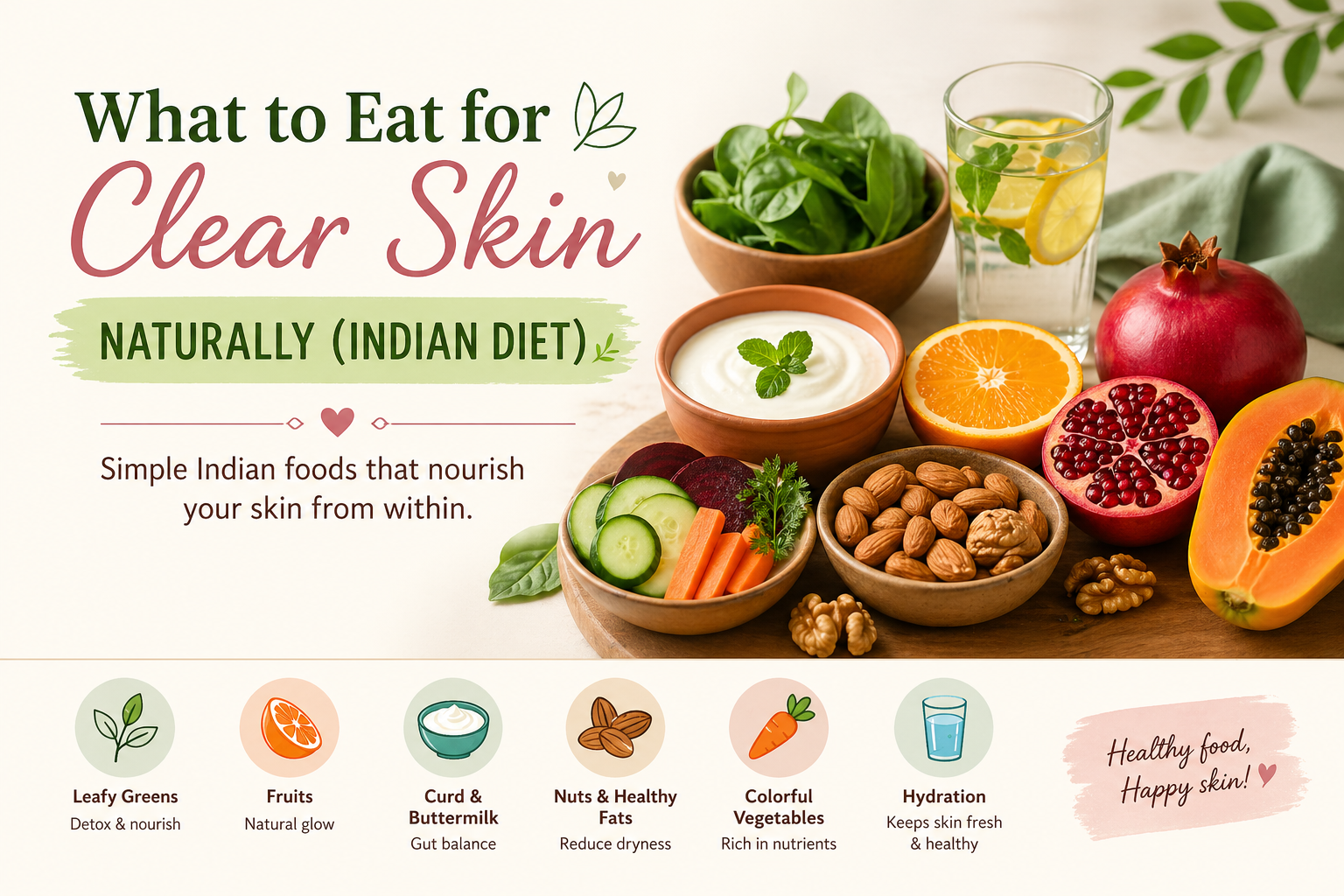
  • What to Eat for Clear Skin Naturally (Indian Diet)

    What to Eat for Clear Skin Naturally (Indian Diet)

    Clear skin always feels like something we need to “fix” from the outside—new face wash, new cream, new routine. I used to think the same way. Every time my skin acted up, I’d change products, hoping something would finally work.

    But over time, I noticed something interesting.

    On days when I was eating better—simple, home-cooked food, more balanced meals—my skin looked calmer. Not perfect, but healthier. That’s when I started paying attention to what I was eating, not just what I was applying.

    And honestly, small changes made more difference than I expected.


    🌱 It Starts with Everyday Food
    I didn’t follow any strict diet. I just began including foods that felt nourishing instead of heavy or overly processed. Indian kitchens already have so many simple options—we just don’t always notice them.


    🥬 Leafy Greens – Quietly Effective
    Palak, methi, and other greens became a regular part of meals. These don’t give instant results, but over time, they support your body in a steady way—and that shows on your skin.


    🍎 Fruits That Feel Light & Refreshing
    Fruits like papaya, orange, and pomegranate started becoming part of my routine. They’re easy to include and feel light, especially when you don’t want something heavy early in the day.


    🥣 Curd (Dahi) – Simple but Helpful
    Adding a bowl of curd or a glass of chaas felt like a small habit, but it made a difference. It just feels soothing and balanced, especially with regular meals.


    🌰 Healthy Fats – Don’t Skip Them
    Almonds, walnuts, and even a little ghee helped my skin feel less dry. It’s not about adding too much—just enough to balance your meals.


    🥕 Colorful Vegetables Matter
    Carrots, beetroot, and other colorful vegetables became more regular. They don’t feel like “effort,” but they add variety and nutrition to everyday meals.


    💧 Hydration is More Important Than It Seems
    This was the simplest change—but also one of the most noticeable. Drinking enough water made my skin feel less dull over time.


    🧾 Recommended Indian Staples for Skin Health

    Food CategorySpecific ItemsKey Benefit
    🥬 GreensSpinach, MethiSupports overall skin health
    🍊 FruitsPapaya, Orange, PomegranateFreshness & natural glow
    🥣 ProbioticsCurd, ButtermilkGut balance
    🌰 Healthy FatsAlmonds, Walnuts, GheeHelps with dryness
    🥕 VegetablesCarrot, BeetrootAdds nutrients & color

    Consistency Over Quick Fixes
    This is something I learned slowly—there’s no instant result. Skin changes take time. But when you stay consistent with simple habits, you start noticing small improvements that actually last.


    Final Thought
    You don’t need complicated diets or expensive products. Most of what your skin needs is already part of your daily food—you just need to be a little more mindful about it.


    Disclaimer:
    Always consult a qualified healthcare provider or Ayurvedic practitioner before making significant changes to your diet, especially if you have any existing health concerns. The information shared here is based on general experiences and simple lifestyle choices, and may not work the same way for everyone. It’s important to understand your body’s individual needs and make informed decisions rather than following anything blindly.

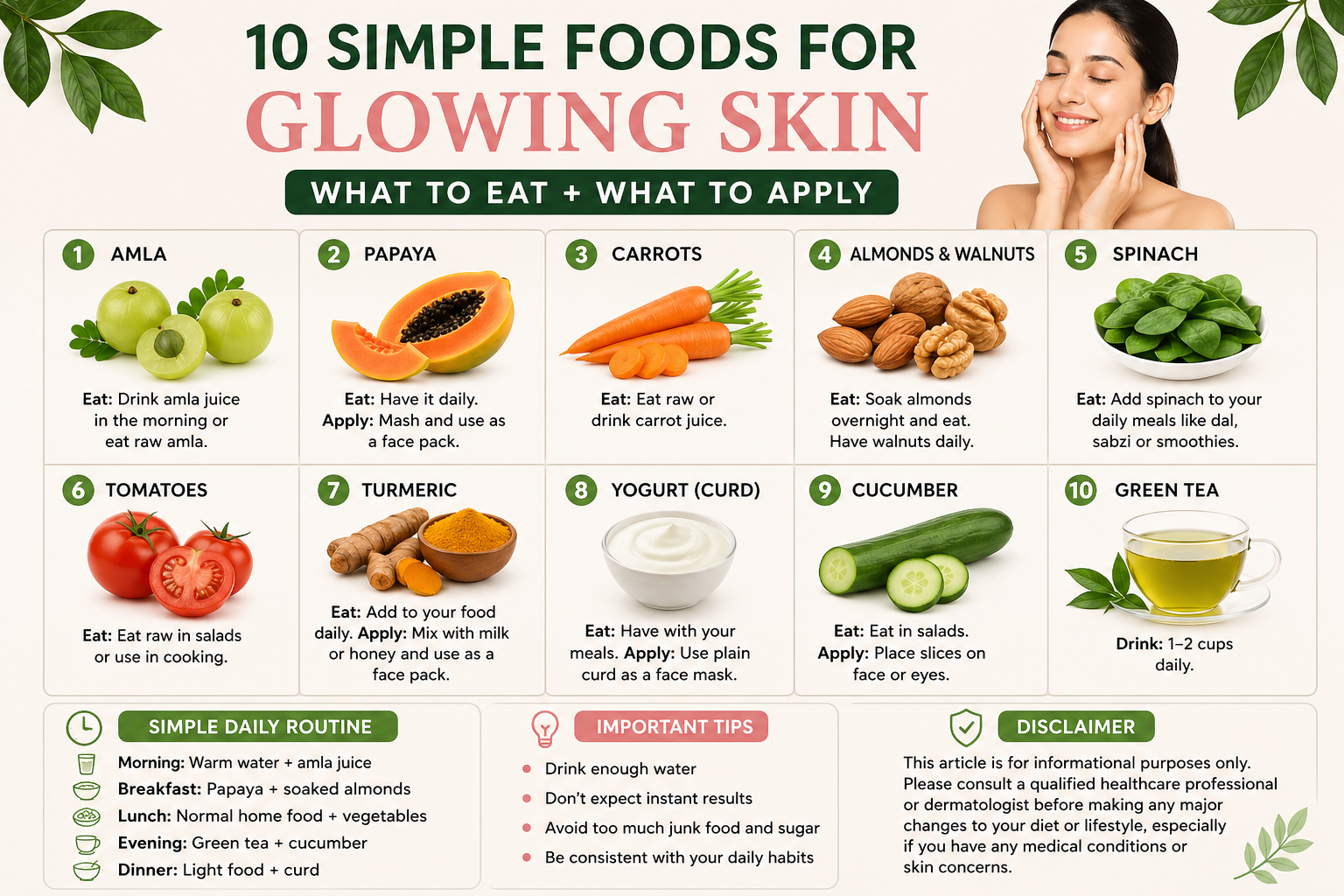
  • 10 Simple Foods for Glowing Skin

    10 Simple Foods for Glowing Skin

    If you want clear and glowing skin, you don’t always need expensive products. The biggest difference comes from what you eat daily.

    Many people get confused—should you eat these foods or apply them?
    👉 Simple answer: Focus more on eating. Applying is optional.

    Let’s go step by step.


    1. Amla (Indian Gooseberry)

    What to do: Eat

    Amla helps make your skin look fresh and bright.

    How to use:

    • Drink amla juice in the morning
    • Or eat raw amla

    2. Papaya

    What to do: Eat + Apply (optional)

    Eat: Helps clean your stomach and improve skin
    Apply: Mash papaya and use as a face pack for soft skin


    3. Carrots

    What to do: Eat

    Carrots help your skin look healthy and add a natural glow.

    How to use:

    • Eat raw
    • Or drink carrot juice

    4. Almonds and Walnuts

    What to do: Eat

    They help keep your skin soft and prevent dryness.

    How to use:

    • Soak 5–6 almonds overnight and eat in the morning
    • Eat 1–2 walnuts daily

    5. Spinach (Palak)

    What to do: Eat

    Spinach helps keep your skin clean from inside.

    How to use:

    • Add to your daily meals like dal or sabzi

    6. Tomatoes

    What to do: Eat

    Tomatoes help keep your skin fresh and support it from everyday damage.

    How to use:

    • Eat raw in salads
    • Use in cooking

    7. Turmeric (Haldi)

    What to do: Eat + Apply

    Eat: Helps keep your skin calm from inside
    Apply: Mix a pinch of turmeric with milk or honey and use as a face pack (1–2 times a week)


    8. Yogurt (Curd)

    What to do: Eat + Apply

    Eat: Helps with digestion, which can improve skin
    Apply: Use plain curd as a face mask for soft skin


    9. Cucumber

    What to do: Eat + Apply

    Eat: Keeps your body and skin hydrated
    Apply: Place slices on your face or eyes for a fresh feel


    10. Green Tea

    What to do: Drink

    Green tea helps keep your skin clear and healthy.

    How to use:

    • Drink 1–2 cups daily

    Simple Daily Routine

    • Morning: Warm water + amla juice
    • Breakfast: Papaya + soaked almonds
    • Lunch: Normal home food + vegetables
    • Evening: Green tea + cucumber
    • Dinner: Light food + curd

    Important Tips

    • Drink enough water
    • Don’t expect instant results
    • Avoid too much junk food and sugar

    Disclaimer

    This article is for informational purposes only. Please consult a qualified healthcare professional or dermatologist before making any major changes to your diet or lifestyle, especially if you have any medical conditions or skin concerns.


    Final Thought

    If you stay consistent with simple foods, your skin will slowly start improving.
    👉 Focus on daily habits, not quick results.

  • Healthy Morning Drinks for Energy & Immunity 🌞✨

    Healthy Morning Drinks for Energy & Immunity 🌞✨

    Mornings quietly shape the rest of the day. I didn’t always notice it, but on days when I started with something light and nourishing—even something small—I felt more steady, more active, and less drained as the day went on.

    Earlier, my mornings were rushed and inconsistent. Sometimes just tea, sometimes nothing at all. And by mid-morning, that low-energy feeling would kick in. That’s when I began experimenting with simple morning drinks using everyday Indian ingredients. Nothing fancy, nothing complicated—just small habits that felt easy to follow.

    Over time, these small changes started to make a difference. Not instantly, not dramatically—but in a way that felt natural and sustainable.

    🌿 Warm Lemon Water – A Fresh, Gentle Start
    A glass of warm water with a few drops of lemon is one of the easiest ways to begin the day. It feels light, refreshing, and helps you ease into your morning without feeling heavy.

    🌱 Jeera Water – Simple and Traditional
    Jeera (cumin) water is something I started including on days when I felt a bit sluggish. It’s light, easy to prepare, and has been part of traditional routines for years.

    🍋 Amla Drink – Tangy but Worth Trying
    Amla has a strong taste, but diluting it with water makes it much easier to enjoy. It took me some time to get used to it, but it now feels like a refreshing addition to my mornings.

    🌿 Ginger Tulsi Tea – Warm & Calming
    On some days, I switch from regular tea to ginger and tulsi. It gives a gentle warmth and helps me feel awake without feeling too strong or heavy.

    🌿 Cinnamon Water – Mild & Comforting
    Warm water with a pinch of cinnamon is a simple option when you want something slightly different. It’s subtle, soothing, and easy to include in your routine.

    You might have seen people add honey to this, but I personally avoid mixing honey in hot water. If you choose to add it, make sure the water is only lukewarm—not hot.

    🥒 Infused Water – Light & Refreshing
    Some mornings, I keep it very simple by adding cucumber, mint, or basil leaves to water. It’s not complicated, but it makes hydration feel more refreshing and enjoyable.


    💧 What Changed for Me
    The biggest difference wasn’t a sudden burst of energy—it was consistency. I started feeling fewer energy dips, and my mornings became calmer instead of rushed. Beginning the day with something light just felt better overall.

    Keep It Simple
    You don’t need to try everything at once. Even choosing one drink and sticking with it regularly can make a difference. It’s less about doing more and more about doing it consistently.


    Final Thought
    Healthy morning habits don’t need to be complicated. Some of the simplest ingredients in your kitchen can help you build a routine that feels good and is easy to maintain.


    Disclaimer: Always consult a qualified healthcare provider or Ayurvedic practitioner before making significant changes to your diet, especially if you have any existing health concerns.