
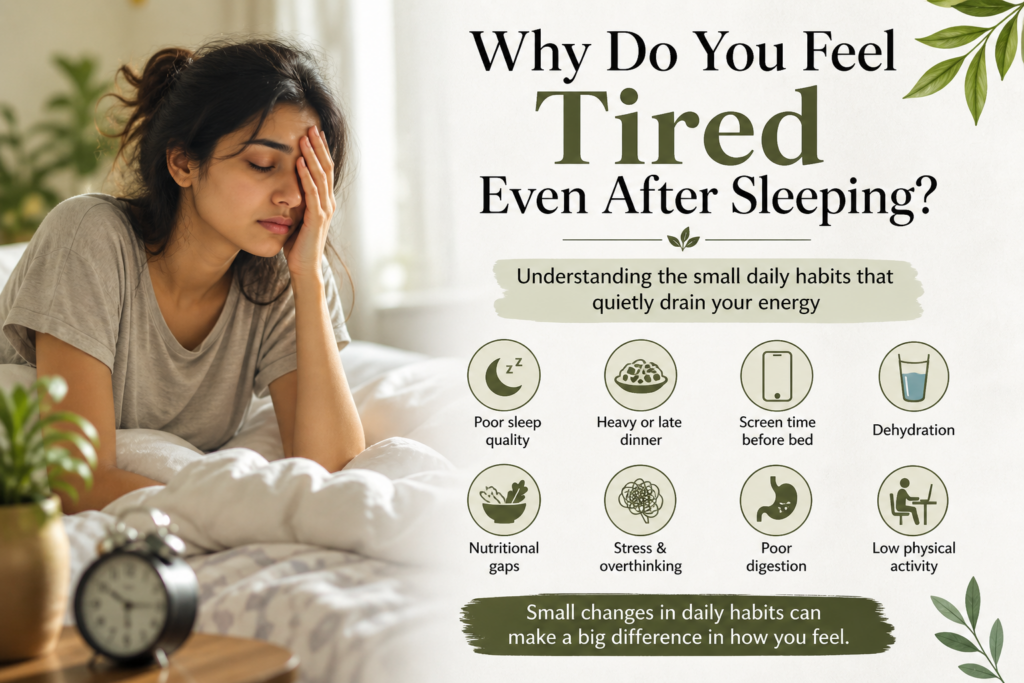
Waking up tired after what seems like a full night’s sleep can feel confusing.
You go to bed on time, get enough hours of sleep, and still wake up feeling low on energy. It almost feels like your body hasn’t fully rested—even though technically, it should have.
This is something many people experience, and often the reason isn’t just about how long you sleep. It’s usually a mix of small, everyday factors that quietly affect how your body feels.
💭 It’s Not Always About How Long You Sleep
We often assume that sleeping more automatically means feeling more energetic.
But in reality, sleep is not just about duration—it’s also about how restful it is. If your sleep is light, interrupted, or not deep enough, your body may not feel fully restored in the morning.
So even after 7–8 hours, you might still wake up feeling tired.
🧠 Small Everyday Factors That Can Affect Your Energy
😴 Sleep That Doesn’t Feel Restful
Sometimes you’re asleep, but not in a deep, restorative way.
This can happen when:
Your sleep cycle is irregular
You wake up multiple times
Your body doesn’t fully relax
In such cases, sleep happens—but rest doesn’t fully happen.
🍛 When Dinner Feels Too Heavy
What you eat at night can quietly influence how you feel the next morning.
Heavy or late meals may keep your digestion active for longer than usual. Instead of your body settling into rest, it stays slightly engaged.
This can leave you waking up with a sense of heaviness rather than freshness.
📱 Evening Screen Time
Using phones or laptops before bed has become very normal.
But this habit can delay how easily your body transitions into deeper sleep. Even if you fall asleep on time, the quality of rest may not feel the same.
💧 Not Enough Hydration
Sometimes tiredness isn’t complex—it can be something as simple as not drinking enough water.
Even mild dehydration can make you feel:
Low on energy
Slightly dull
Less focused
And it often goes unnoticed.
🥗 What You Eat During the Day
Food doesn’t just fill you—it fuels you.
If your meals are:
Low in balance
Missing key nutrients
Irregular
Your body may not feel as energized, even if you’ve eaten enough.
🍽️ Foods That May Affect Energy Levels
Some foods, especially at certain times, can make you feel more sluggish than energized.
For example:
Heavy or oily meals late in the day
Sugary snacks that give quick energy but don’t last
Too much caffeine in the evening
These don’t always feel like a problem in the moment—but over time, they can affect how rested you feel.
😓 A Mind That Doesn’t Fully Rest
Even when the body is still, the mind can stay active.
Thinking, planning, worrying—these don’t always stop when you go to bed.
So while you’re technically sleeping, your mind may still be processing things, which can leave you feeling tired the next day.
🧠 The Role of Digestion
This is something that’s often overlooked.
If digestion feels off:
Food may not be processed smoothly
Nutrients may not be absorbed well
And over time, this can reflect as low energy.
Sometimes, tiredness is less about sleep and more about how the body is handling what we eat.
🪑 Low Movement During the Day
When the body stays inactive for long periods, it can start to feel sluggish.
Movement doesn’t just affect physical health—it also influences how energized you feel overall.
🕰️ An Irregular Daily Rhythm
Sleeping and waking at different times every day can confuse your body’s natural rhythm.
Over time, this can affect how rested you feel, even if you’re getting enough hours of sleep.
🌿 Looking at the Bigger Picture
Feeling tired isn’t always caused by one single factor.
It’s often a combination of:
Daily habits
Food patterns
Sleep quality
Mental state
Each of these may seem small on their own, but together they shape how your body feels.
🌟 Final Thought
Sometimes, the body doesn’t need more sleep—it needs better balance.
Understanding these small patterns can make it easier to notice what might be affecting your energy, without needing to make sudden or drastic changes.
⚠️ Disclaimer
Always consult a qualified healthcare provider or Ayurvedic practitioner before making significant changes to your diet or lifestyle, especially if you have any existing health concerns. The information shared here is based on general experiences and simple lifestyle choices, and may not work the same way for everyone. It’s important to understand your body’s individual needs and make informed decisions rather than following anything blindly.