Tag: #IndianDiet

  • The Journey of Tomato: From a Wild Fruit to an Everyday Ingredient

    The Journey of Tomato: From a Wild Fruit to an Everyday Ingredient

    We use tomatoes almost every day—whether it’s in dal, sabzi, or chutney.

    But rarely do we stop and think about where they actually came from.

    While exploring more about everyday foods, I came across some interesting details about tomatoes. It made me realize that something so common in our kitchen has had quite an unexpected journey.

    So I thought it would be nice to bring these details together in one place.

    🌎 Tomatoes Didn’t Originate in India

    One of the most surprising things is that tomatoes are not originally from India.

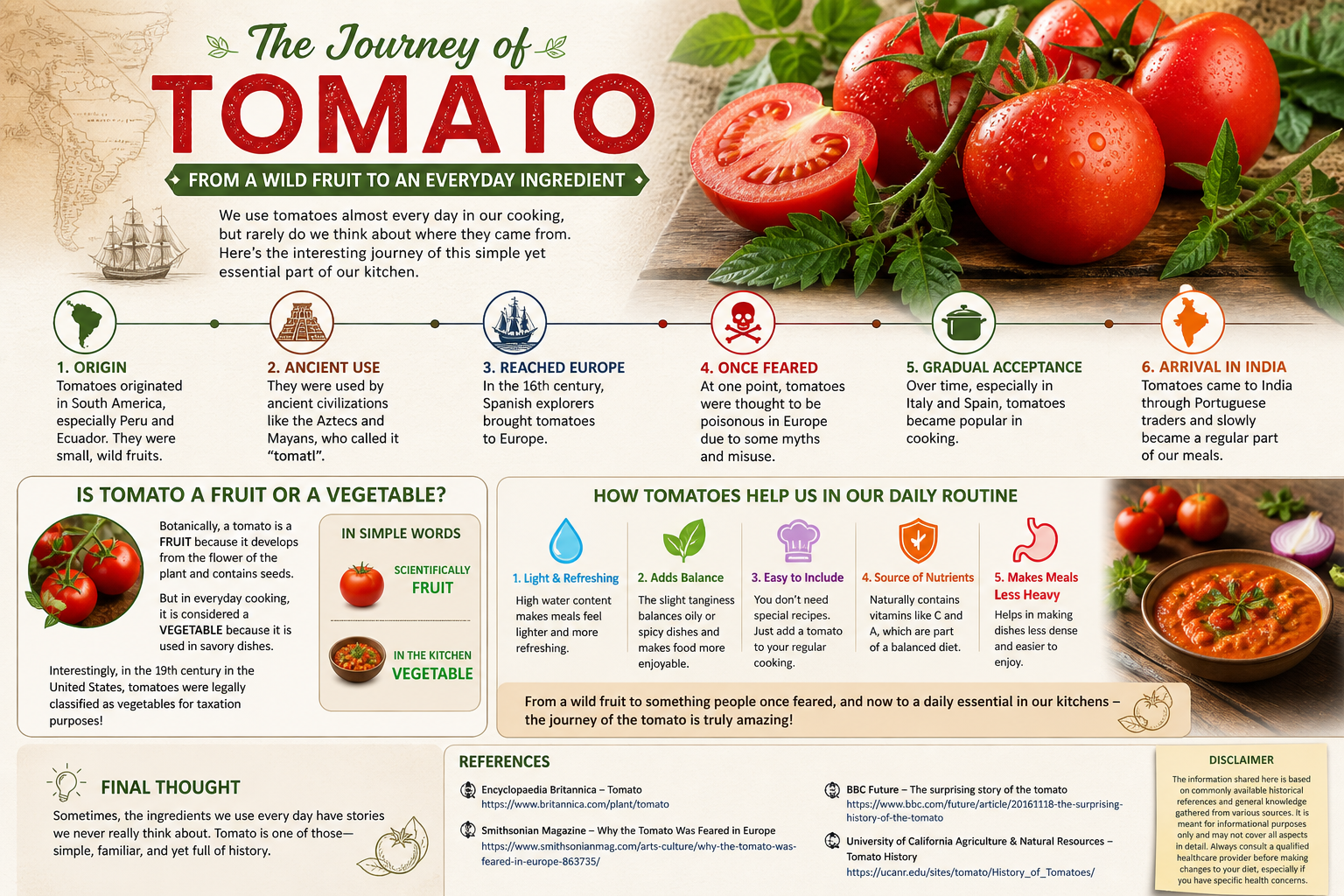
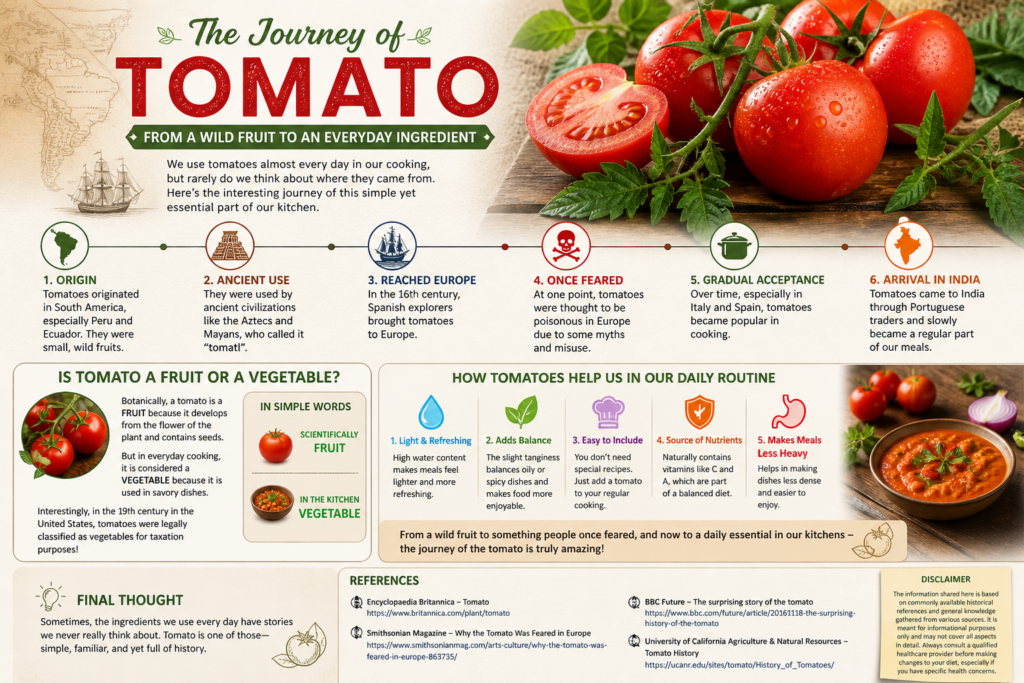
    They come from parts of South America, especially regions like Peru and Ecuador.

    In their early form, they were small, wild fruits—not exactly like the tomatoes we see today.

    🏺 Used by Ancient Civilizations

    Before spreading across the world, tomatoes were used by ancient civilizations like the Aztecs and Mayans.

    They even had a word for it—“tomatl”—which is believed to be the origin of the word tomato.

    🚢 How Tomatoes Reached Europe

    In the 16th century, Spanish explorers brought tomatoes to Europe.

    But instead of being accepted immediately, tomatoes were viewed with hesitation.

    People were unsure about this unfamiliar fruit.

    ⚠️ When Tomatoes Were Considered Harmful

    At one point, tomatoes were believed to be poisonous in Europe.

    This belief came from their resemblance to certain toxic plants. In some cases, people also fell sick after eating them—later it was understood that it had more to do with the utensils used at the time rather than the tomato itself.

    Still, this idea stayed for quite a while.

    🍝 Gradual Acceptance Over Time

    Slowly, countries like Italy and Spain started using tomatoes in cooking.

    Over time, they became an essential part of many cuisines—especially in dishes like sauces and gravies.

    🇮🇳 Arrival of Tomato in India

    Tomatoes were introduced to India by Portuguese traders.

    Initially, they were not commonly used.

    But gradually, they became part of everyday cooking—especially in:

    Curries
    Gravies
    Chutneys

    Today, it’s hard to imagine Indian food without them.

    🍅 Is Tomato a Fruit or a Vegetable?

    This is one of those questions that often comes up.

    From a botanical point of view, a tomato is actually a fruit because it develops from the flower of the plant and contains seeds.

    But in everyday cooking, it is treated as a vegetable because of how it’s used—mostly in savory dishes rather than sweet ones.

    Interestingly, this confusion even led to a legal case in the United States in the 19th century, where tomatoes were officially classified as vegetables for taxation purposes.

    👉 So in a simple way:

    🌿 Scientifically → Fruit
    🍛 In the kitchen → Vegetable
    🍛 How Tomatoes Fit Into Our Daily Routine

    What makes tomatoes interesting is how easily they fit into daily meals.

    They are already part of:

    Breakfast dishes like poha or upma
    Lunch dals and sabzis
    Simple salads or snacks

    They don’t feel heavy and blend naturally into food, which makes them easy to include regularly.

    Simple Benefits of Tomatoes in Daily Life

    Without going into anything complex, tomatoes offer a few simple, noticeable benefits:

    💧 1. Feel Light and Refreshing

    Tomatoes have a high water content, which can make meals feel lighter.

    🌿 2. Add Balance to Food

    Their slight tanginess helps balance oily or spicy dishes, making meals feel more complete.

    🥗 3. Easy to Include

    You don’t need special recipes—just adding a tomato to your regular cooking is enough.

    🍅 4. Naturally Provide Nutrients

    Tomatoes contain vitamins like C and A, which are part of a balanced diet.

    ⚖️ 5. Make Meals Feel Less Heavy

    When added to dishes, they often make food feel less dense and easier to enjoy.

    🌿 A Small Reflection

    Reading about this made me look at something as simple as a tomato a little differently.

    It’s interesting how something that once traveled across continents—and was even avoided at one point—has now become such a regular part of our meals.

    🌟 Final Thought

    Sometimes, the ingredients we use daily have stories we never really think about.

    Tomato is one of those—simple, familiar, and yet full of history.

    📚 References
    Encyclopedia Britannica – Tomato
    https://www.britannica.com/plant/tomato
    Smithsonian Magazine – Why the Tomato Was Feared in Europe
    https://www.smithsonianmag.com/arts-culture/why-the-tomato-was-feared-in-europe-863735/

    ⚠️ Disclaimer

    The information shared here is based on commonly available historical references and general knowledge gathered from various sources. It is meant for informational purposes only and may not cover all aspects in detail. Always consult a qualified healthcare provider before making changes to your diet, especially if you have specific health concerns.
  • Cucumber: The Simplest Way to Feel Fresh, Hydrated & Light Naturally

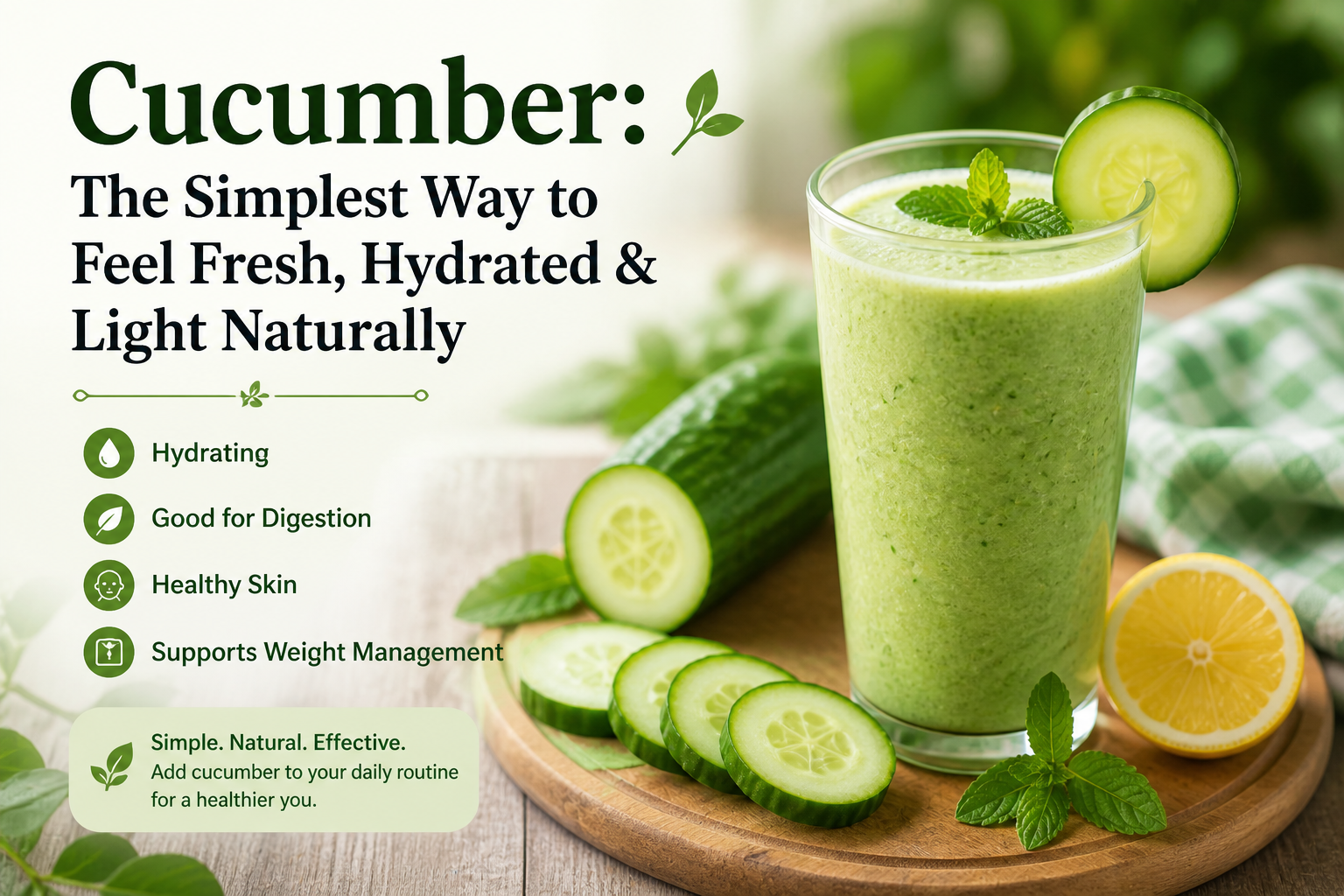
    Cucumber: The Simplest Way to Feel Fresh, Hydrated & Light Naturally

    Sometimes, we look for complicated solutions to feel better—new diets, new routines, new products.

    But what if something as simple as cucumber could make a difference?

    Not in a dramatic, overnight way.
    But in a slow, natural, everyday kind of way.


    💧 Why Cucumber Just Feels Right

    There’s something about cucumber that instantly feels refreshing.

    It’s light, cooling, and easy on the stomach. Especially on days when you feel heavy or low on energy, adding cucumber to your meals can make things feel a little more balanced.

    It doesn’t try too hard—it just works quietly.


    🌿 A Small Change That Adds Up

    I didn’t make any big changes.

    I just started including cucumber in small ways:

    • With lunch
    • As an evening snack
    • Along with simple salads

    Over time, it became one of those habits you don’t think about—but still benefit from.


    🥤 A Fresh Start with Cucumber Smoothie

    One of the easiest ways I include cucumber is through a simple morning smoothie.

    On days when I don’t feel like eating something heavy, this feels just right.

    You only need:

    • Cucumber
    • A pinch of salt
    • A squeeze of lemon

    Blend it, and you have something refreshing to start your day.

    It’s not meant to replace your full breakfast—just something light to begin with.


    🥗 Easy Ways to Add Cucumber to Your Day

    Keeping things simple works best:

    • Slice it with a bit of salt and lemon
    • Add it to curd for quick raita
    • Mix it with onion and tomato for a simple salad
    • Or just eat it as it is

    No recipes needed.


    What You May Notice Over Time

    Nothing extreme—but small, real changes:

    • You feel more refreshed
    • Meals feel lighter
    • You snack less unnecessarily

    And honestly, that’s enough.


    🧾 Why People Include Cucumber Regularly

    Benefit AreaHow It Helps
    💧 HydrationHigh water content
    🌿 DigestionLight and easy on stomach
    ✨ SkinSupports a fresh feeling from within
    ⚖️ Daily EatingLight and filling option

    It’s About Consistency, Not Quantity

    You don’t need to eat a lot of it.

    Just including it regularly in small amounts is enough to feel the difference over time.


    🌟 Final Thought

    Cucumber is one of those things we often ignore because it feels too simple.

    But sometimes, the simplest habits are the ones that actually stay.


    ⚠️ Disclaimer

    Always consult a qualified healthcare provider or Ayurvedic practitioner before making significant changes to your diet, especially if you have any existing health concerns. The information shared here is based on general experiences and simple lifestyle choices, and may not work the same way for everyone. It’s important to understand your body’s individual needs and make informed decisions rather than following anything blindly.

  • What to Eat for Clear Skin Naturally (Indian Diet)

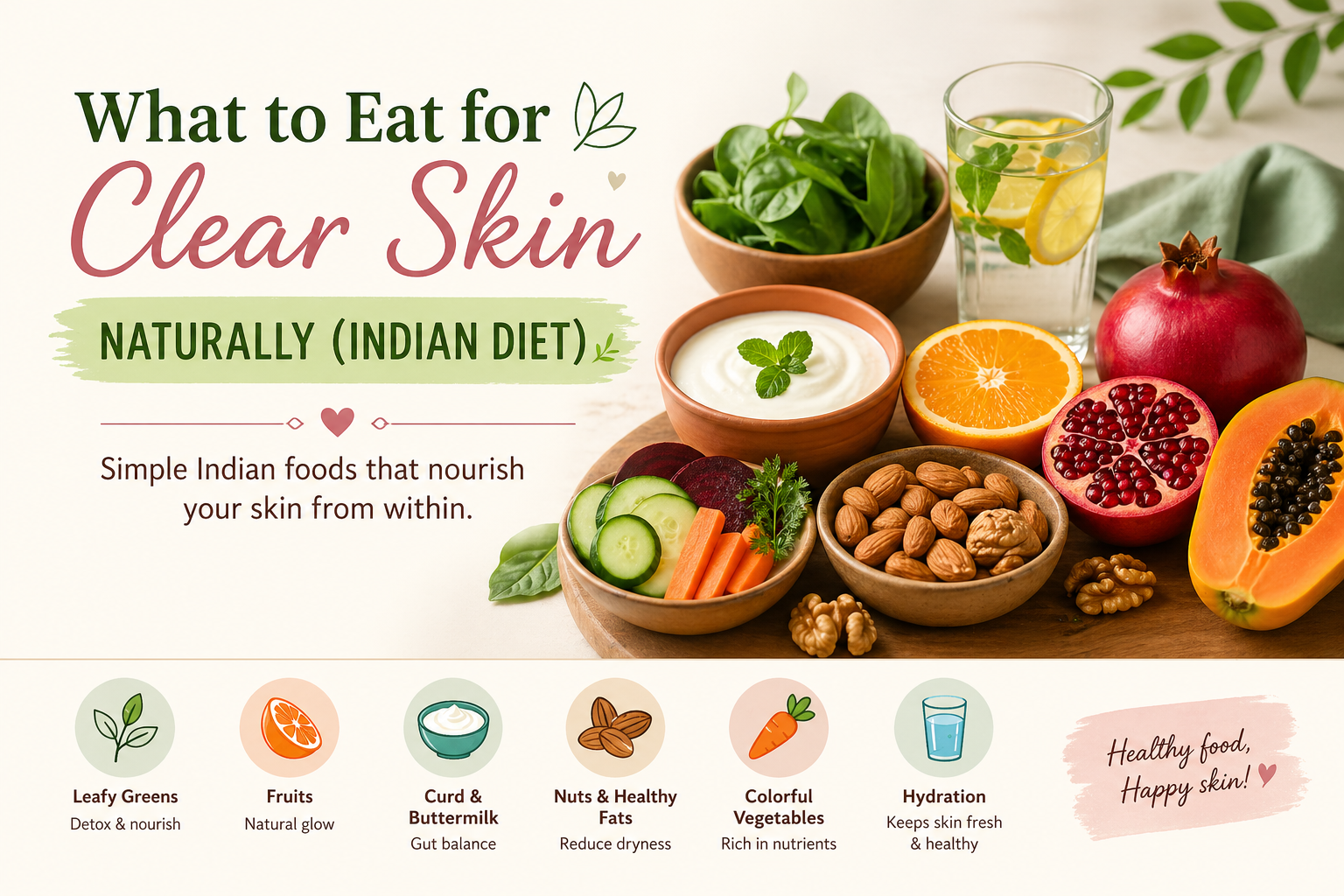
    What to Eat for Clear Skin Naturally (Indian Diet)

    Clear skin always feels like something we need to “fix” from the outside—new face wash, new cream, new routine. I used to think the same way. Every time my skin acted up, I’d change products, hoping something would finally work.

    But over time, I noticed something interesting.

    On days when I was eating better—simple, home-cooked food, more balanced meals—my skin looked calmer. Not perfect, but healthier. That’s when I started paying attention to what I was eating, not just what I was applying.

    And honestly, small changes made more difference than I expected.


    🌱 It Starts with Everyday Food
    I didn’t follow any strict diet. I just began including foods that felt nourishing instead of heavy or overly processed. Indian kitchens already have so many simple options—we just don’t always notice them.


    🥬 Leafy Greens – Quietly Effective
    Palak, methi, and other greens became a regular part of meals. These don’t give instant results, but over time, they support your body in a steady way—and that shows on your skin.


    🍎 Fruits That Feel Light & Refreshing
    Fruits like papaya, orange, and pomegranate started becoming part of my routine. They’re easy to include and feel light, especially when you don’t want something heavy early in the day.


    🥣 Curd (Dahi) – Simple but Helpful
    Adding a bowl of curd or a glass of chaas felt like a small habit, but it made a difference. It just feels soothing and balanced, especially with regular meals.


    🌰 Healthy Fats – Don’t Skip Them
    Almonds, walnuts, and even a little ghee helped my skin feel less dry. It’s not about adding too much—just enough to balance your meals.


    🥕 Colorful Vegetables Matter
    Carrots, beetroot, and other colorful vegetables became more regular. They don’t feel like “effort,” but they add variety and nutrition to everyday meals.


    💧 Hydration is More Important Than It Seems
    This was the simplest change—but also one of the most noticeable. Drinking enough water made my skin feel less dull over time.


    🧾 Recommended Indian Staples for Skin Health

    Food CategorySpecific ItemsKey Benefit
    🥬 GreensSpinach, MethiSupports overall skin health
    🍊 FruitsPapaya, Orange, PomegranateFreshness & natural glow
    🥣 ProbioticsCurd, ButtermilkGut balance
    🌰 Healthy FatsAlmonds, Walnuts, GheeHelps with dryness
    🥕 VegetablesCarrot, BeetrootAdds nutrients & color

    Consistency Over Quick Fixes
    This is something I learned slowly—there’s no instant result. Skin changes take time. But when you stay consistent with simple habits, you start noticing small improvements that actually last.


    Final Thought
    You don’t need complicated diets or expensive products. Most of what your skin needs is already part of your daily food—you just need to be a little more mindful about it.


    Disclaimer:
    Always consult a qualified healthcare provider or Ayurvedic practitioner before making significant changes to your diet, especially if you have any existing health concerns. The information shared here is based on general experiences and simple lifestyle choices, and may not work the same way for everyone. It’s important to understand your body’s individual needs and make informed decisions rather than following anything blindly.

  • 10 Simple Foods for Glowing Skin

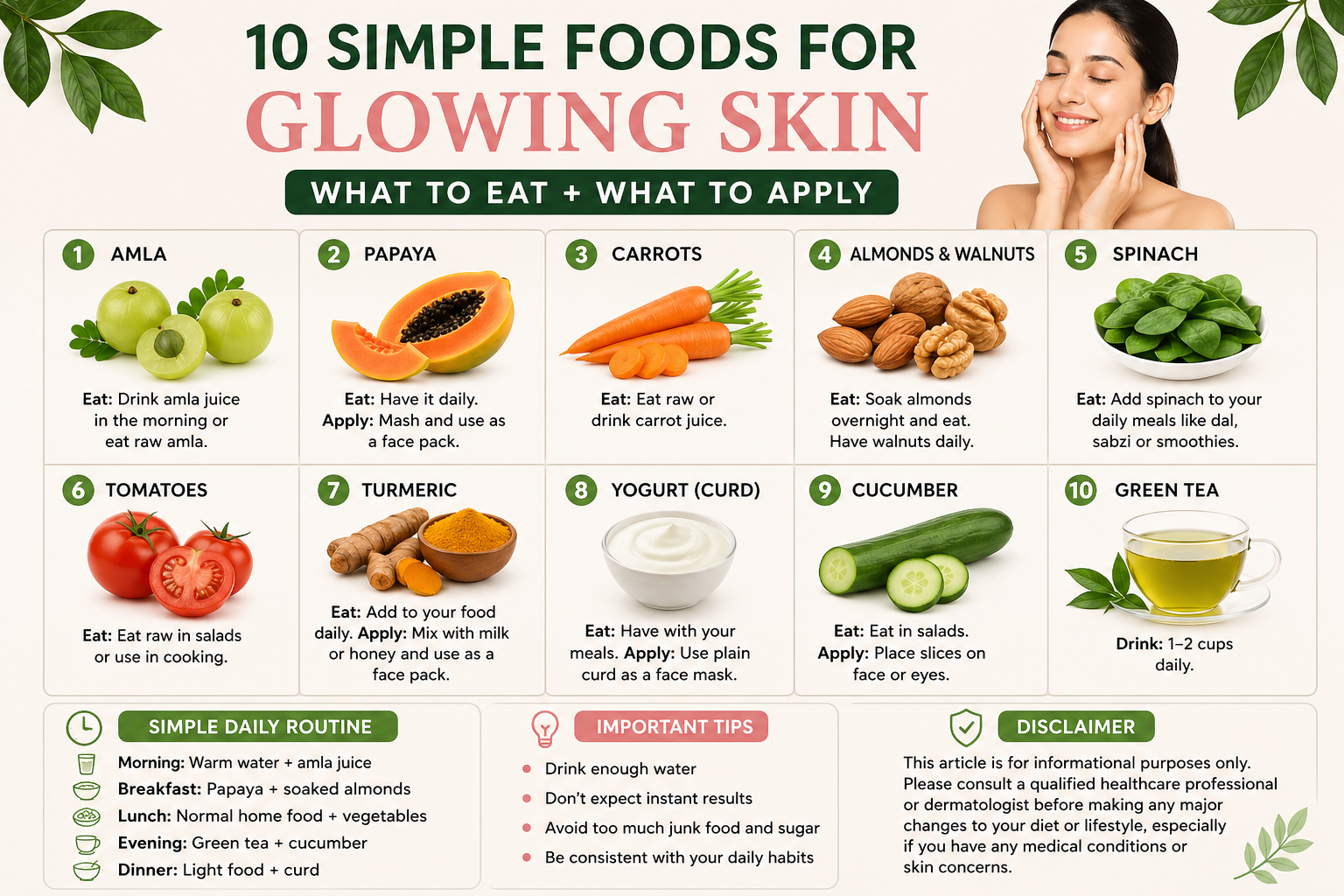
    10 Simple Foods for Glowing Skin

    If you want clear and glowing skin, you don’t always need expensive products. The biggest difference comes from what you eat daily.

    Many people get confused—should you eat these foods or apply them?
    👉 Simple answer: Focus more on eating. Applying is optional.

    Let’s go step by step.


    1. Amla (Indian Gooseberry)

    What to do: Eat

    Amla helps make your skin look fresh and bright.

    How to use:

    • Drink amla juice in the morning
    • Or eat raw amla

    2. Papaya

    What to do: Eat + Apply (optional)

    Eat: Helps clean your stomach and improve skin
    Apply: Mash papaya and use as a face pack for soft skin


    3. Carrots

    What to do: Eat

    Carrots help your skin look healthy and add a natural glow.

    How to use:

    • Eat raw
    • Or drink carrot juice

    4. Almonds and Walnuts

    What to do: Eat

    They help keep your skin soft and prevent dryness.

    How to use:

    • Soak 5–6 almonds overnight and eat in the morning
    • Eat 1–2 walnuts daily

    5. Spinach (Palak)

    What to do: Eat

    Spinach helps keep your skin clean from inside.

    How to use:

    • Add to your daily meals like dal or sabzi

    6. Tomatoes

    What to do: Eat

    Tomatoes help keep your skin fresh and support it from everyday damage.

    How to use:

    • Eat raw in salads
    • Use in cooking

    7. Turmeric (Haldi)

    What to do: Eat + Apply

    Eat: Helps keep your skin calm from inside
    Apply: Mix a pinch of turmeric with milk or honey and use as a face pack (1–2 times a week)


    8. Yogurt (Curd)

    What to do: Eat + Apply

    Eat: Helps with digestion, which can improve skin
    Apply: Use plain curd as a face mask for soft skin


    9. Cucumber

    What to do: Eat + Apply

    Eat: Keeps your body and skin hydrated
    Apply: Place slices on your face or eyes for a fresh feel


    10. Green Tea

    What to do: Drink

    Green tea helps keep your skin clear and healthy.

    How to use:

    • Drink 1–2 cups daily

    Simple Daily Routine

    • Morning: Warm water + amla juice
    • Breakfast: Papaya + soaked almonds
    • Lunch: Normal home food + vegetables
    • Evening: Green tea + cucumber
    • Dinner: Light food + curd

    Important Tips

    • Drink enough water
    • Don’t expect instant results
    • Avoid too much junk food and sugar

    Disclaimer

    This article is for informational purposes only. Please consult a qualified healthcare professional or dermatologist before making any major changes to your diet or lifestyle, especially if you have any medical conditions or skin concerns.


    Final Thought

    If you stay consistent with simple foods, your skin will slowly start improving.
    👉 Focus on daily habits, not quick results.

  • What to Eat for Healthy Hair Growth (Indian Diet) 🌿✨

    What to Eat for Healthy Hair Growth (Indian Diet) 🌿✨

    Hair care used to mean one thing for me—finding the “right” oil or shampoo. Every time hair fall increased, I’d switch products, hoping this one would finally work. But nothing really changed in a lasting way.

    The real shift didn’t happen in my bathroom—it happened in my kitchen.

    At some point, I started noticing a simple pattern: whenever I ate better, I felt better… and slowly, my hair started reflecting that too. It wasn’t dramatic or instant, but it was real. That’s when I understood—healthy hair isn’t just about what you apply, it’s also about what you eat every single day.

    🌱 It Starts with Simple, Everyday Food
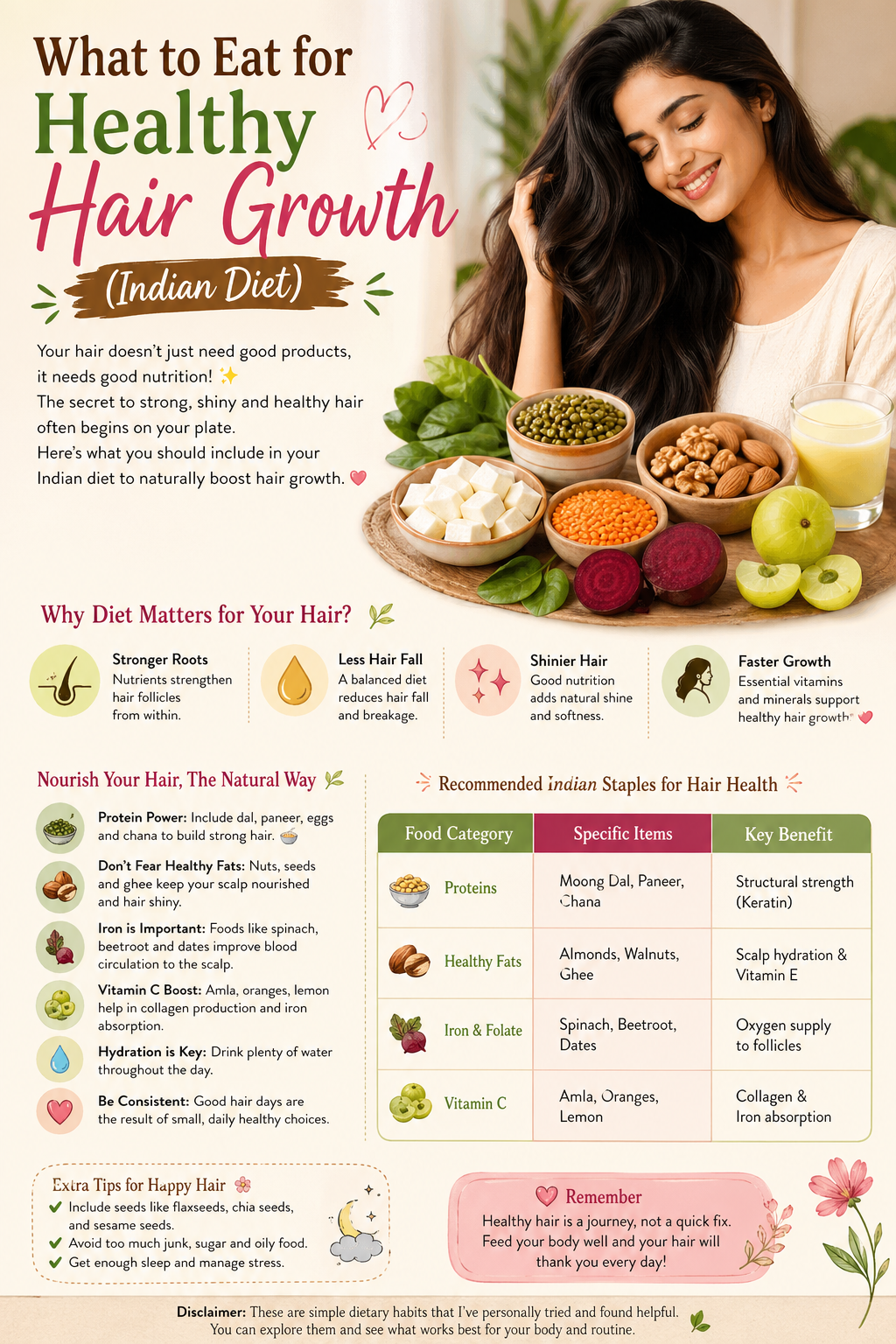
    I didn’t follow any strict diet. I just made small changes. One of the biggest ones was adding more protein without overthinking it—moong dal, paneer, chana, sprouts. These are such basic Indian foods, but once I included them regularly, my hair started feeling a bit stronger and less prone to breakage.

    🥜 Adding Good Fats Made a Difference
    I used to avoid fats, assuming they weren’t great. But including almonds, walnuts, and even a little ghee changed how my hair felt—less dry, more manageable. It’s not about adding a lot, just enough to balance things out.

    🥬 Greens That Work Quietly
    Palak, methi, and other leafy vegetables became a regular part of meals. These aren’t the kind of foods that show quick results, but over time, they support your body in a steady way—and that reflects in your hair too.

    🍎 Iron-Rich Foods Help Overall Energy
    When I added beetroot, dates, and a bit of jaggery, I noticed I felt more energetic overall. And somehow, that overall improvement showed up in my hair health as well. It’s all connected more than we think.

    🍋 Amla & Citrus—Simple but Effective
    Amla is one of those traditional ingredients that people have trusted for years. I started having it in different forms, along with simple additions like lemon or oranges. Nothing fancy, just consistent.

    🌻 Small Additions That Add Up
    Flaxseeds and sesame seeds are tiny, but adding them here and there felt like an easy upgrade to everyday meals.


    🧾 Recommended Indian Staples for Hair Health

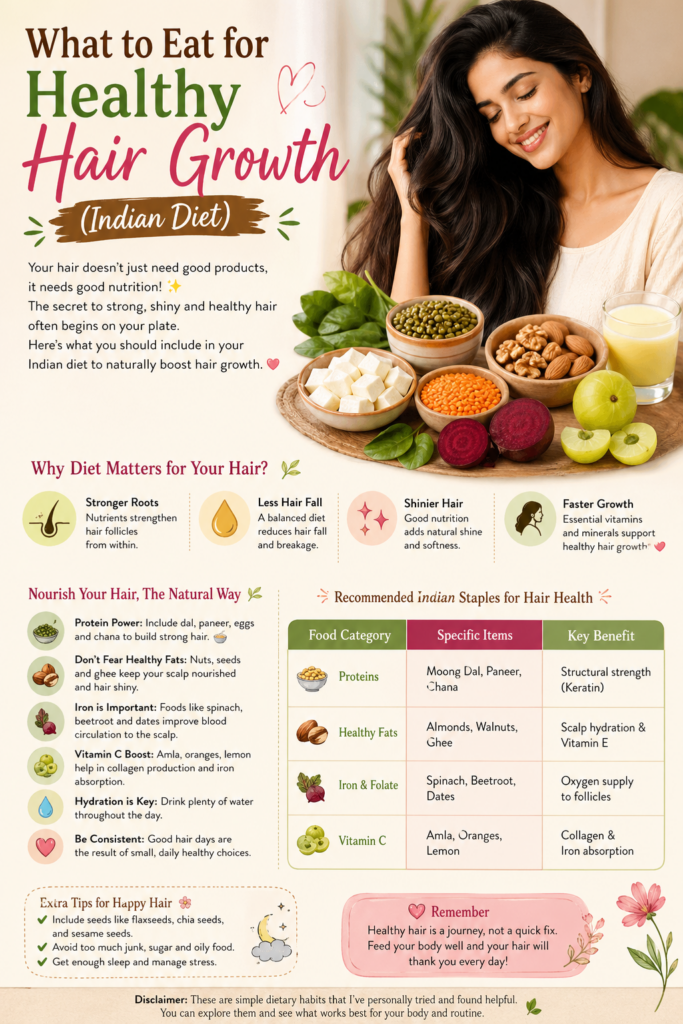
    Food CategorySpecific ItemsKey Benefit
    🥣 ProteinsMoong Dal, Paneer, ChanaStructural strength (Keratin)
    🥜 Healthy FatsAlmonds, Walnuts, GheeScalp hydration & Vitamin E
    🥬 Iron & FolateSpinach, Beetroot, DatesOxygen supply to follicles
    🍊 Vitamin CAmla, Oranges, LemonCollagen & Iron absorption

    💧 Don’t Skip the Basics
    Drinking enough water turned out to be more important than I expected. Sometimes dryness and dullness aren’t just about food, but hydration too.

    Consistency Is Everything
    What I’ve learned is this—there’s no quick fix. You don’t need to be perfect, just consistent. Small habits, repeated daily, slowly show results.


    Final Thought
    You don’t need complicated routines or expensive products. A lot of what supports healthy hair is already part of an Indian kitchen. It’s just about being a little more mindful and giving your body what it needs regularly.


    Disclaimer:
    These are simple habits and food choices that I’ve personally tried and found helpful. Everyone’s body is different, so it’s important to understand your own health needs and not follow anything blindly.