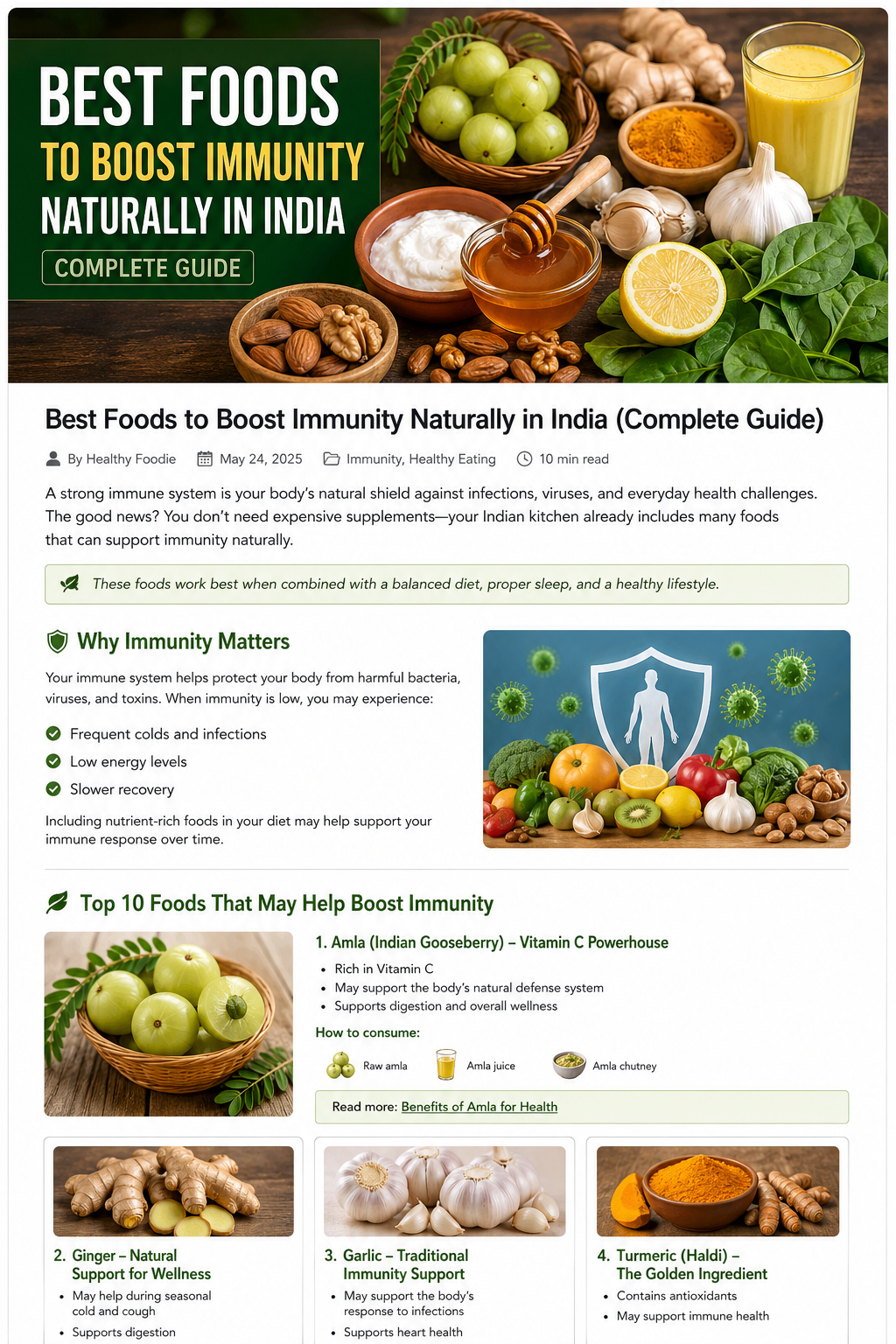
A strong immune system is your body’s natural shield against infections, viruses, and everyday health challenges. The good news? You don’t need expensive supplements—your Indian kitchen already includes many foods that can support immunity naturally.
In this guide, you’ll discover the best foods to boost immunity naturally in India, along with simple ways to include them in your daily diet.
These foods work best when combined with a balanced diet, proper sleep, and a healthy lifestyle.
🛡️ Why Immunity Matters
Your immune system helps protect your body from harmful bacteria, viruses, and toxins. When immunity is low, you may experience:
- Frequent colds and infections
- Low energy levels
- Slower recovery
Including nutrient-rich foods in your diet may help support your immune response over time.
🌿 1. Amla (Indian Gooseberry) – Vitamin C Powerhouse
Amla is widely known in India as a natural source of Vitamin C.
Benefits:
- Rich in Vitamin C
- May help support the body’s natural defense system
- Supports digestion and overall wellness
How to consume:
- Raw amla
- Amla juice in the morning
- Amla chutney
👉 You can also read: Benefits of Amla for Health
🫚 2. Ginger – Natural Support for Wellness
Ginger has been used in Indian households for generations.
Benefits:
- Contains compounds with anti-inflammatory properties
- May help during seasonal cold and cough
- Supports digestion
How to use:
- Ginger tea
- Add to curries or soups
🧄 3. Garlic – Traditional Immunity Support
Garlic contains a compound called allicin, often associated with health benefits.
Benefits:
- May support the body’s response to infections
- Supports heart health
- Commonly used in traditional remedies
Tip: Consume raw or lightly cooked garlic in moderation.
🌶️ 4. Turmeric (Haldi) – The Golden Ingredient
Turmeric has long been a part of Indian cooking and Ayurveda.
Benefits:
- Contains curcumin, known for antioxidant properties
- May help reduce inflammation
- Supports overall immune health
How to consume:
- Haldi milk (turmeric milk)
- Add to vegetables and dals
👉 Related: Is Turmeric Milk Good Daily? (add link)
🍊 5. Citrus Fruits – Vitamin C Support
Fruits like oranges, lemons, and sweet lime are popular for their Vitamin C content.
Benefits:
- May support immune response
- Helps maintain overall health
- Easy to include in daily diet
Tip: Start your day with warm lemon water.
🥬 6. Green Leafy Vegetables – Nutrient Rich
Spinach, methi, and other greens are rich in essential nutrients.
Benefits:
- Provide vitamins A, C, and antioxidants
- Support overall well-being
🥜 7. Nuts and Seeds – Healthy Nutrients
Almonds, walnuts, and seeds are great additions to a balanced diet.
Benefits:
- Provide Vitamin E and healthy fats
- May support immune function
🍯 8. Honey – Natural Sweetener with Benefits
Honey is commonly used in home remedies.
Benefits:
- Soothes throat
- May help during mild cough
- Contains natural antibacterial properties
How to use:
- Add to warm water or herbal tea
🥛 9. Curd (Yogurt) – Gut Health Support
Gut health plays an important role in overall immunity.
Benefits:
- Contains probiotics
- Supports digestion
- May contribute to immune balance
🌾 10. Whole Grains – Daily Nutrition
Whole grains like oats, brown rice, and millets are staples in many Indian diets.
Benefits:
- Support gut health
- Provide sustained energy
🥗 Sample Daily Diet for Better Immunity
- Morning: Warm lemon water + soaked almonds
- Breakfast: Oats with fruits
- Lunch: Dal, green vegetables, roti
- Evening: Ginger tea
- Dinner: Light khichdi + curd
💡 Daily Tips to Support Immunity Naturally
- Stay hydrated
- Get 7–8 hours of sleep
- Exercise regularly
- Limit processed foods
- Manage stress levels
❓ FAQs
What is the fastest way to support immunity naturally?
Including Vitamin C-rich foods like amla and citrus fruits, along with proper sleep and hydration, may help support immunity.
Which Indian food is best for immunity?
Amla, turmeric, ginger, garlic, and curd are commonly included in diets that support overall immune health.
Can I support immunity without supplements?
Yes, a balanced diet with natural foods can help maintain overall health and immune function.
📝 Final Thoughts
Supporting your immune system doesn’t require expensive products. By including these natural foods in your daily Indian diet, you can take simple steps toward better health and well-being.
Consistency matters—small daily habits can make a meaningful difference over time.
⚠️ Disclaimer
This article is for informational purposes only and is not intended as medical advice. It does not replace professional medical guidance, diagnosis, or treatment. Always consult a qualified healthcare professional before making any changes to your diet or health routine.