


Tag: #ImmunityBoost

  • Healthy Morning Drinks for Energy & Immunity 🌞✨

    Healthy Morning Drinks for Energy & Immunity 🌞✨

    Mornings quietly shape the rest of the day. I didn’t always notice it, but on days when I started with something light and nourishing—even something small—I felt more steady, more active, and less drained as the day went on.

    Earlier, my mornings were rushed and inconsistent. Sometimes just tea, sometimes nothing at all. And by mid-morning, that low-energy feeling would kick in. That’s when I began experimenting with simple morning drinks using everyday Indian ingredients. Nothing fancy, nothing complicated—just small habits that felt easy to follow.

    Over time, these small changes started to make a difference. Not instantly, not dramatically—but in a way that felt natural and sustainable.

    🌿 Warm Lemon Water – A Fresh, Gentle Start
    A glass of warm water with a few drops of lemon is one of the easiest ways to begin the day. It feels light, refreshing, and helps you ease into your morning without feeling heavy.

    🌱 Jeera Water – Simple and Traditional
    Jeera (cumin) water is something I started including on days when I felt a bit sluggish. It’s light, easy to prepare, and has been part of traditional routines for years.

    🍋 Amla Drink – Tangy but Worth Trying
    Amla has a strong taste, but diluting it with water makes it much easier to enjoy. It took me some time to get used to it, but it now feels like a refreshing addition to my mornings.

    🌿 Ginger Tulsi Tea – Warm & Calming
    On some days, I switch from regular tea to ginger and tulsi. It gives a gentle warmth and helps me feel awake without feeling too strong or heavy.

    🌿 Cinnamon Water – Mild & Comforting
    Warm water with a pinch of cinnamon is a simple option when you want something slightly different. It’s subtle, soothing, and easy to include in your routine.

    You might have seen people add honey to this, but I personally avoid mixing honey in hot water. If you choose to add it, make sure the water is only lukewarm—not hot.

    🥒 Infused Water – Light & Refreshing
    Some mornings, I keep it very simple by adding cucumber, mint, or basil leaves to water. It’s not complicated, but it makes hydration feel more refreshing and enjoyable.


    💧 What Changed for Me
    The biggest difference wasn’t a sudden burst of energy—it was consistency. I started feeling fewer energy dips, and my mornings became calmer instead of rushed. Beginning the day with something light just felt better overall.

    Keep It Simple
    You don’t need to try everything at once. Even choosing one drink and sticking with it regularly can make a difference. It’s less about doing more and more about doing it consistently.


    Final Thought
    Healthy morning habits don’t need to be complicated. Some of the simplest ingredients in your kitchen can help you build a routine that feels good and is easy to maintain.


    Disclaimer: Always consult a qualified healthcare provider or Ayurvedic practitioner before making significant changes to your diet, especially if you have any existing health concerns.
  • 🌿 Amla: The Ancient Superfruit That’s More Than Just a Berry

    🌿 Amla: The Ancient Superfruit That’s More Than Just a Berry

    🌿 Amla: The Ancient Superfruit That’s More Than Just a Berry

    If fruits had a Hall of Fame, Amla—the Indian gooseberry—would be right at the top. Small, pale green, and easy to overlook, this fruit hides an extraordinary legacy behind its sharp, sour bite.

    But Amla isn’t just another “superfood” trend—it’s a fruit that has quietly shaped traditions, medicine, and daily life for thousands of years.

    So what makes it so special?

    🕉️ A Walk Through Time: The Legendary History of Amla

    Amla’s story begins not in a lab, but in mythology.

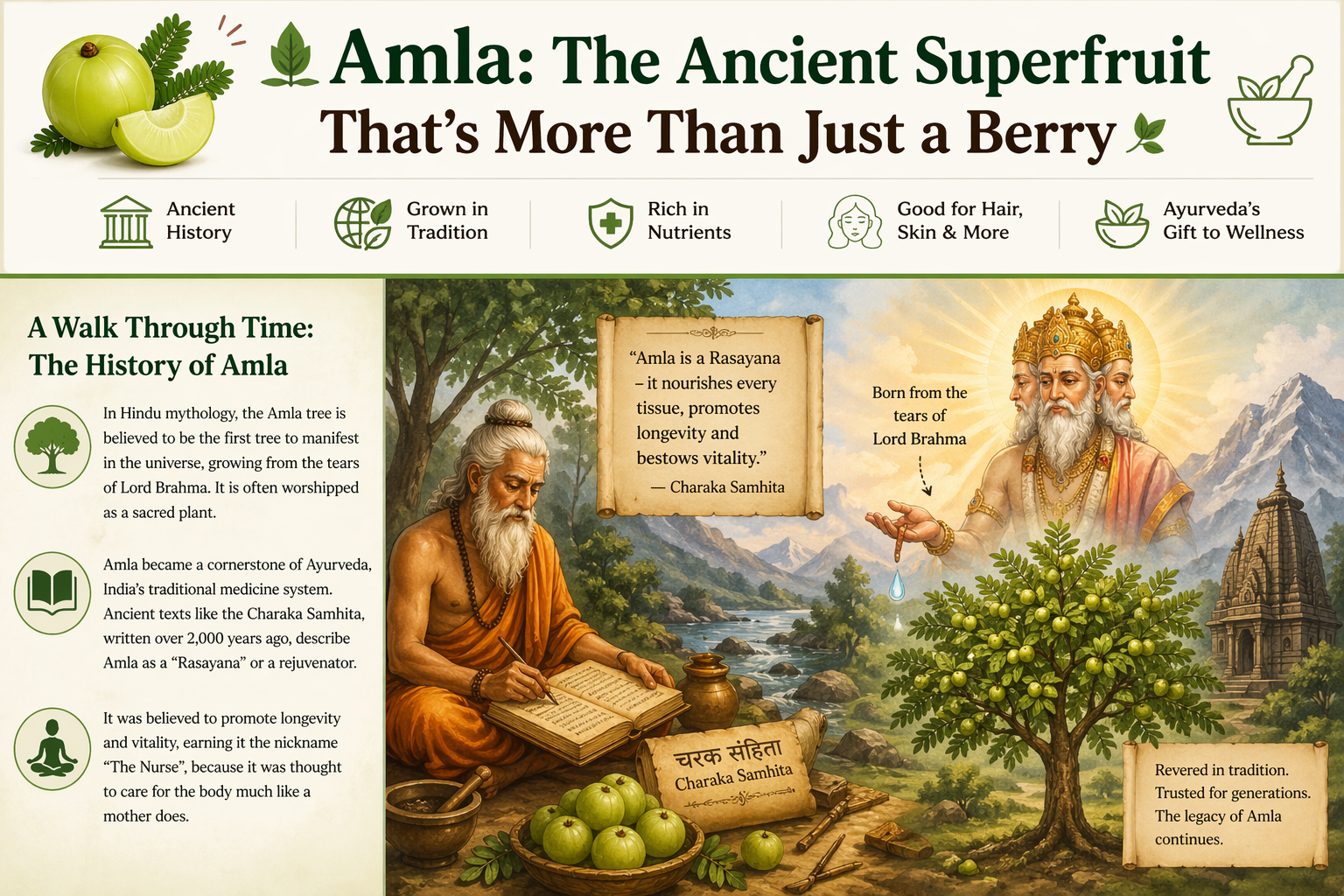
    In Hindu tradition, the Amla tree is believed to be the first tree to exist—born from the tears of Lord Brahma. This origin gives it a sacred place in Indian culture, where it is still revered and even worshipped in some regions.

    Beyond mythology, Amla became a pillar of Ayurveda, India’s ancient healing system. Texts like the Charaka Samhita (over 2,000 years old) describe it as a Rasayana—a rejuvenator believed to nourish the body, promote longevity, and restore balance.

    It was even called “The Nurse”, symbolizing its role in gently supporting and caring for the body over time.

    🌍 Where It Grows: The Geography Behind the Fruit

    Amla may now be found in parts of Southeast Asia, but its true home is the Indian subcontinent.

    The Phyllanthus emblica tree is surprisingly resilient. It thrives in diverse environments—from the cool foothills of the Himalayas to the warm, tropical south.

    What makes it remarkable is its ability to grow in dry, deciduous forests where many other plants struggle. It’s not delicate—it’s built to endure.

    Harvest season typically falls in winter, when the fruit reaches peak potency. Traditionally, this timing aligns with seasonal wellness practices, making Amla a staple during colder months.

    💪 Why Everyone Is Talking About It: Potential Benefits

    Amla’s growing popularity in modern wellness circles isn’t random—it’s rooted in its nutritional profile.

    It’s especially known for its high Vitamin C content, with some sources suggesting that a single Amla can rival multiple oranges.

    Traditionally, Amla has been used for:

    ✨ Hair & Skin Support – Often used in oils and masks for stronger hair and clearer skin
    🛡️ Immune Support – Rich in antioxidants, commonly used in seasonal routines
    🌱 Digestive Health – Dried Amla is often consumed after meals to support digestion

    While modern science continues to explore these uses, its long-standing presence in traditional practices keeps it relevant.

    ⚠️ A Friendly Note on Health

    Amla’s reputation is impressive—but it’s important to stay grounded.

    Natural doesn’t always mean universally suitable. People can respond differently, especially when using concentrated forms like powders or extracts.

    Always do your own research or consult a healthcare professional before adding Amla to your routine—particularly if you have existing health conditions or take medications.

    🥄 How to Add Amla to Your Daily Routine

    Not a fan of intense sour flavors? You’re not alone. Luckily, Amla comes in many easier-to-enjoy forms:

    🥤 Amla Juice – Often diluted with water and honey
    🌿 Amla Powder – Perfect for smoothies or warm drinks
    🍯 Murabba – A sweet Indian preserve that balances its sharpness
    🍬 Dried Amla – A tangy snack, often eaten after meals

    This versatility makes it easy to incorporate into modern lifestyles without sacrificing tradition.

    🌱 A Fruit That Connects Past and Present

    Amla isn’t just a fruit—it’s a bridge between ancient wisdom and modern curiosity.

    From sacred origins and Ayurvedic roots to its place in today’s wellness conversations, it continues to hold its ground across generations.

    Whether you’re drawn to its history, its nutritional value, or simply its uniqueness, one thing is certain:

    Amla may be small—but its story is anything but.