
There are some ingredients that stay part of traditional food culture for generations without needing much attention.
Moringa leaves are one of them.
Today, many people know moringa as a modern “superfood,” but while reading more about it, I realized that it had already been part of everyday cooking long before wellness trends began talking about it.
In many Indian homes—especially in the South—moringa wasn’t treated as something fancy or rare. It was simply used in regular meals, often without much discussion around its “benefits.”
And maybe that’s what makes it interesting.
So I thought it would be nice to gather together some details about its history and why moringa leaves have remained valued for generations.
🌳 What Exactly Are Moringa Leaves?
Moringa comes from the Moringa oleifera tree, commonly known as:
- Drumstick tree
- Sajjan tree
- Miracle tree
Almost every part of the tree has traditionally been used:
- Pods (drumsticks)
- Leaves
- Seeds
But the leaves especially became popular because they were easy to cook and naturally rich in nutrients.
🏺 A Long History in Traditional Food Culture
Moringa has been used for centuries in:
- India
- Africa
- Southeast Asia
In India, moringa leaves were commonly added to:
- Dal
- Soups
- Vegetable dishes
- Homemade recipes
What stood out to me was that older generations didn’t consume moringa as a “health supplement.”
It was simply treated as nourishing everyday food.
🌿 Why Moringa Leaves Stayed Important
One reason moringa leaves remained part of traditional diets is because they naturally contain:
- Iron
- Calcium
- Vitamin C
- Plant-based nutrients
And since they were easy to grow in many regions, they became part of practical home cooking.
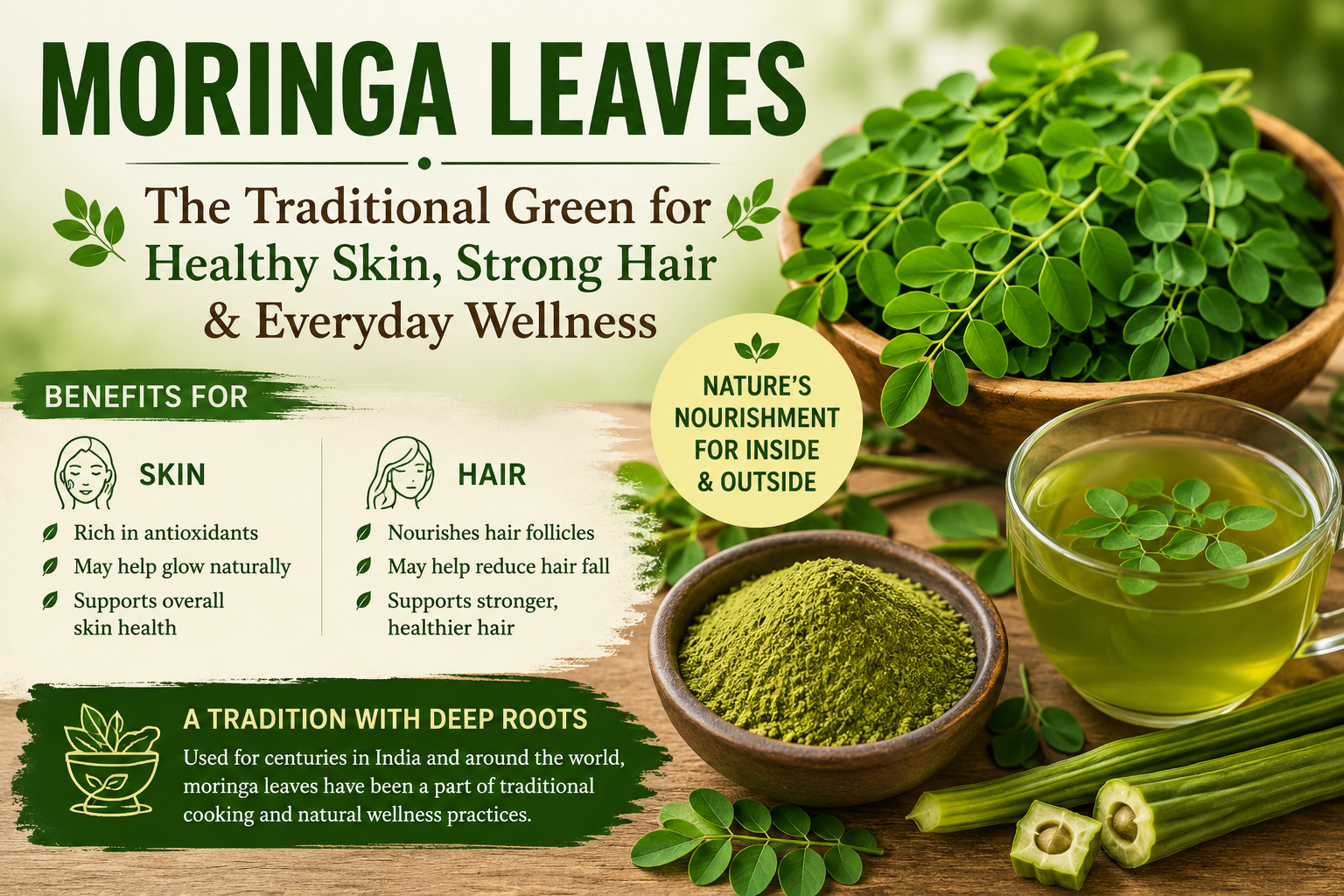
✨ How Moringa Leaves May Support Skin
Skin often reflects what’s happening inside the body.
And traditional foods that support overall nourishment sometimes quietly reflect on the skin too.
💧 1. May Help Skin Feel Fresher
Moringa leaves contain natural vitamins and antioxidants.
Because of this, many people feel that regularly including nourishing greens in meals helps the skin appear:
- Less dull
- More refreshed
- Better balanced over time
🌿 2. Supports Overall Nourishment
When the body feels undernourished or imbalanced, skin is often one of the first places where it shows.
Moringa leaves have traditionally been valued because they provide plant-based nourishment in a simple way.
✨ 3. Traditionally Associated with Healthy-Looking Skin
In many traditional food practices, leafy greens like moringa were included regularly because they were believed to support overall wellness—including skin appearance.
Not as a quick fix, but as part of a balanced lifestyle.
🌱 How Moringa Leaves May Support Hair
Hair health is often connected with:
- Nutrition
- Overall wellness
- Daily food habits
And this is one reason moringa leaves became valued in traditional diets.
🌿 1. Naturally Contains Iron and Nutrients
Moringa leaves contain nutrients that are important for overall nourishment.
This is why they have often been linked with:
- Supporting healthy hair
- Maintaining scalp nourishment
- General wellness from within
💧 2. Traditionally Used in Hair Practices
In some traditional home practices, moringa leaves and oils made from the tree were also connected with hair care routines.
The idea was simple:
👉 nourishment from inside and outside together.
🌱 3. Part of Everyday Food, Not a Trend
One interesting thing is that moringa was never traditionally promoted as a “hair solution.”
It was simply included regularly in meals, which reflects a very different approach compared to modern quick-fix trends.
🍛 How Moringa Leaves Were Traditionally Eaten
Moringa leaves were usually cooked in very simple ways:
- Mixed into dal
- Added to stir-fries
- Used in soups
- Combined with coconut in South Indian dishes
Nothing complicated—just part of regular food.
🧠 Why Moringa Is Becoming Popular Again
Interestingly, ingredients like moringa are now being rediscovered globally.
What older generations quietly used in homemade meals is now often packaged into:
- Powders
- Capsules
- Wellness products
But traditionally, it was simply fresh food.
🌿 A Small Reflection
Reading about moringa made me realize how many traditional ingredients quietly carried nutritional value without being marketed heavily.
Sometimes, older food habits focused less on trends and more on simple nourishment.
🌟 Final Thought
Moringa leaves are a reminder that not every useful ingredient needs to feel modern or complicated.
Sometimes, simple foods that stayed part of traditional kitchens for generations continue to remain relevant for a reason.
📚 References
- Encyclopaedia Britannica – Moringa
https://www.britannica.com/plant/moringa - National Center for Biotechnology Information (NCBI) – Moringa oleifera: Nutritional and traditional uses
https://www.ncbi.nlm.nih.gov/pmc/articles/PMC3475755/ - Food and Agriculture Organization (FAO) – Moringa and traditional nutrition
https://www.fao.org/
⚠️ Disclaimer
The information shared here is based on commonly available historical references, traditional usage, and general reading. It is meant for informational purposes only and should not be considered medical advice. Food habits and nutritional needs may vary from person to person.