
Tag: #cleaneating

  • 🌿 How to Improve Digestion Naturally with Indian Foods

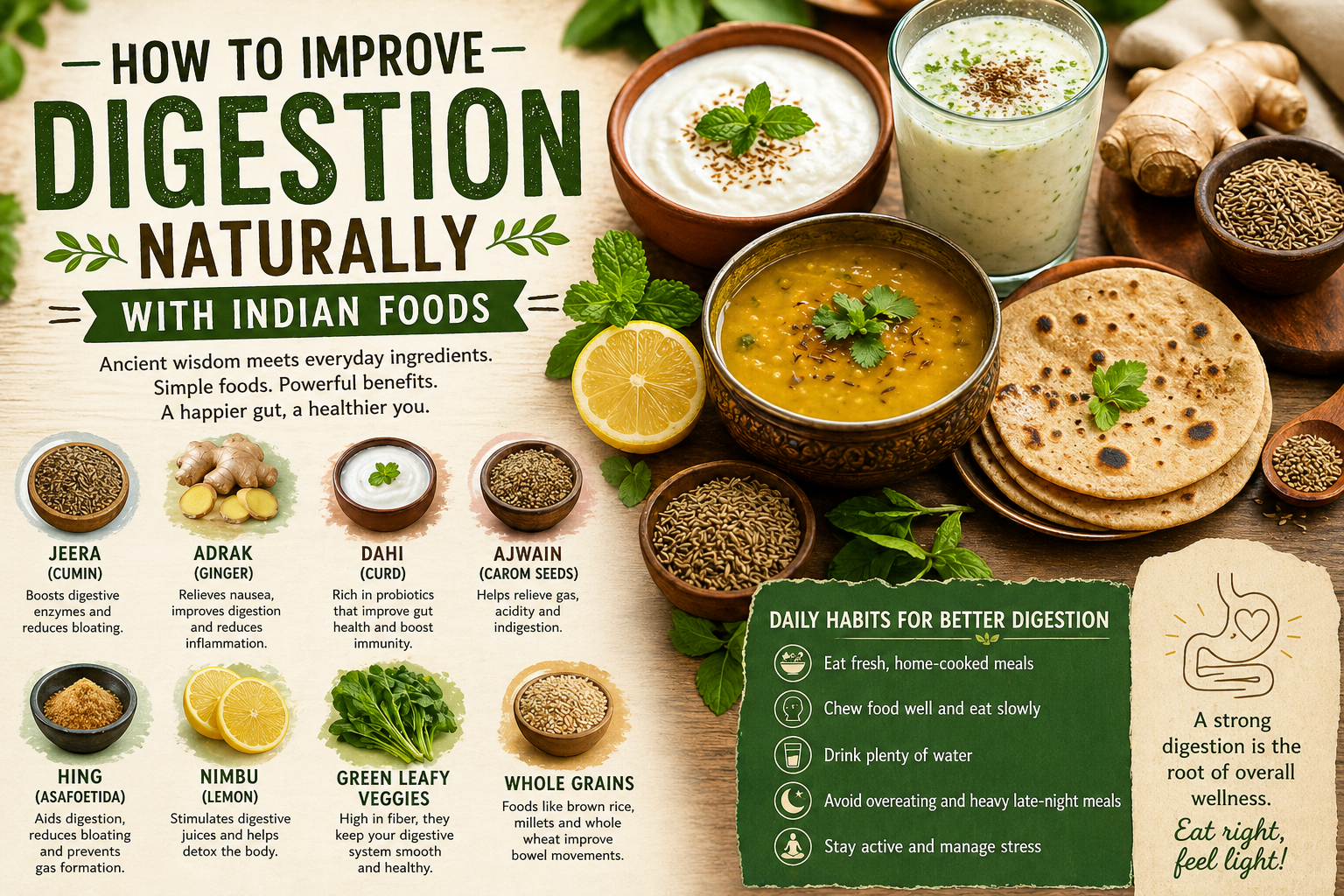
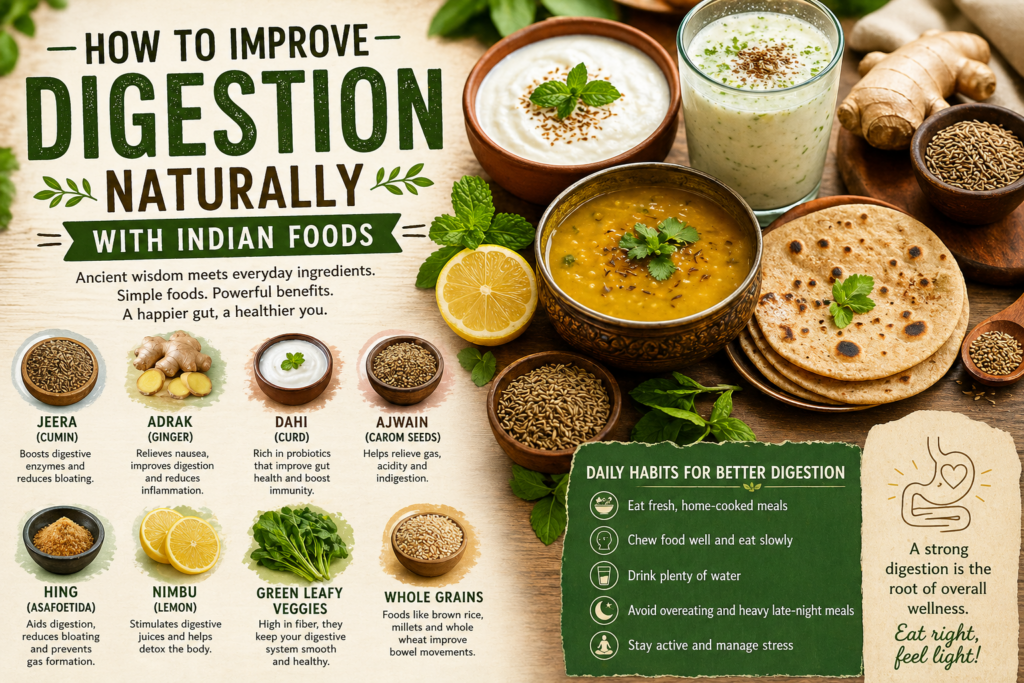
    🌿 How to Improve Digestion Naturally with Indian Foods

    Ever felt heavy, bloated, or just off after a meal?

    Digestion isn’t just about what you eat—it’s about how your body processes it. And long before modern diets and supplements, Indian kitchens were already full of ingredients designed to keep digestion smooth and balanced.

    The best part? You probably already have many of them at home.


    🧠 Why Digestion Matters More Than You Think

    Good digestion isn’t just about avoiding discomfort.

    It affects:

    • Energy levels
    • Immunity
    • Skin health
    • Mood

    In traditional Indian practices like Ayurveda, digestion is seen as the foundation of overall health. When it’s strong, everything else tends to fall into place.


    🌿 Indian Foods That Naturally Boost Digestion

    Let’s look at some everyday ingredients that quietly do powerful work inside your body:


    🧂 1. Jeera (Cumin) – The Everyday Healer

    A simple tadka ingredient, but incredibly effective.

    Cumin helps:

    • Stimulate digestive enzymes
    • Reduce bloating
    • Improve nutrient absorption

    👉 Try this: Drink jeera water (boiled cumin seeds in water) in the morning.


    🍶 2. Dahi (Curd) – Your Gut’s Best Friend

    Curd is rich in probiotics, the good bacteria your gut needs.

    It helps:

    • Balance gut flora
    • Improve digestion
    • Cool the stomach

    👉 A bowl of curd with meals can make a noticeable difference.


    🌿 3. Ginger – Small Root, Big Impact

    Ginger has been used for centuries to treat digestive issues.

    It can:

    • Reduce nausea
    • Improve stomach emptying
    • Ease indigestion

    👉 Add fresh ginger to tea or meals for daily benefits.


    🌱 4. Ajwain (Carom Seeds) – The Quick Fix

    Ajwain is often used as a home remedy—and for good reason.

    It helps:

    • Relieve gas and acidity
    • Improve digestion quickly

    👉 A pinch of ajwain with warm water after meals works wonders.


    🍋 5. Lemon – Simple but Powerful

    Lemon stimulates digestive juices and helps break down food.

    👉 Start your day with warm lemon water to gently wake up your digestive system.


    🌾 6. Whole Grains – Gentle and Filling

    Foods like:

    • Brown rice
    • Whole wheat roti
    • Millets (like ragi, jowar, bajra)

    These are rich in fiber, which keeps digestion smooth and regular.


    🌿 7. Hing (Asafoetida) – The Underrated Ingredient

    Often used in small amounts, hing is powerful for digestion.

    It helps:

    • Reduce bloating
    • Prevent gas formation

    👉 That tiny pinch in dal or sabzi? It’s doing more than you think.


    🍽️ Simple Habits That Make a Big Difference

    Even the best foods won’t help much without the right habits:

    • Eat slowly and mindfully
    • Avoid overeating
    • Stay hydrated
    • Include fresh, home-cooked meals

    Sometimes, digestion improves not by adding more—but by simplifying what you already do.


    ⚖️ A Quick Reality Check

    No single food is a magic fix.

    Digestive health depends on:

    • Consistency
    • Balanced diet
    • Lifestyle habits

    If issues are frequent or severe, it’s worth consulting a professional instead of relying only on home remedies.


    Final Thought

    Indian food isn’t just about taste—it’s built on generations of understanding how the body works.

    From a pinch of hing to a glass of buttermilk, these small additions quietly support your gut every day.

    Sometimes, better digestion doesn’t require something new.

    It just means returning to what was always there.
  • Benefits of Guava

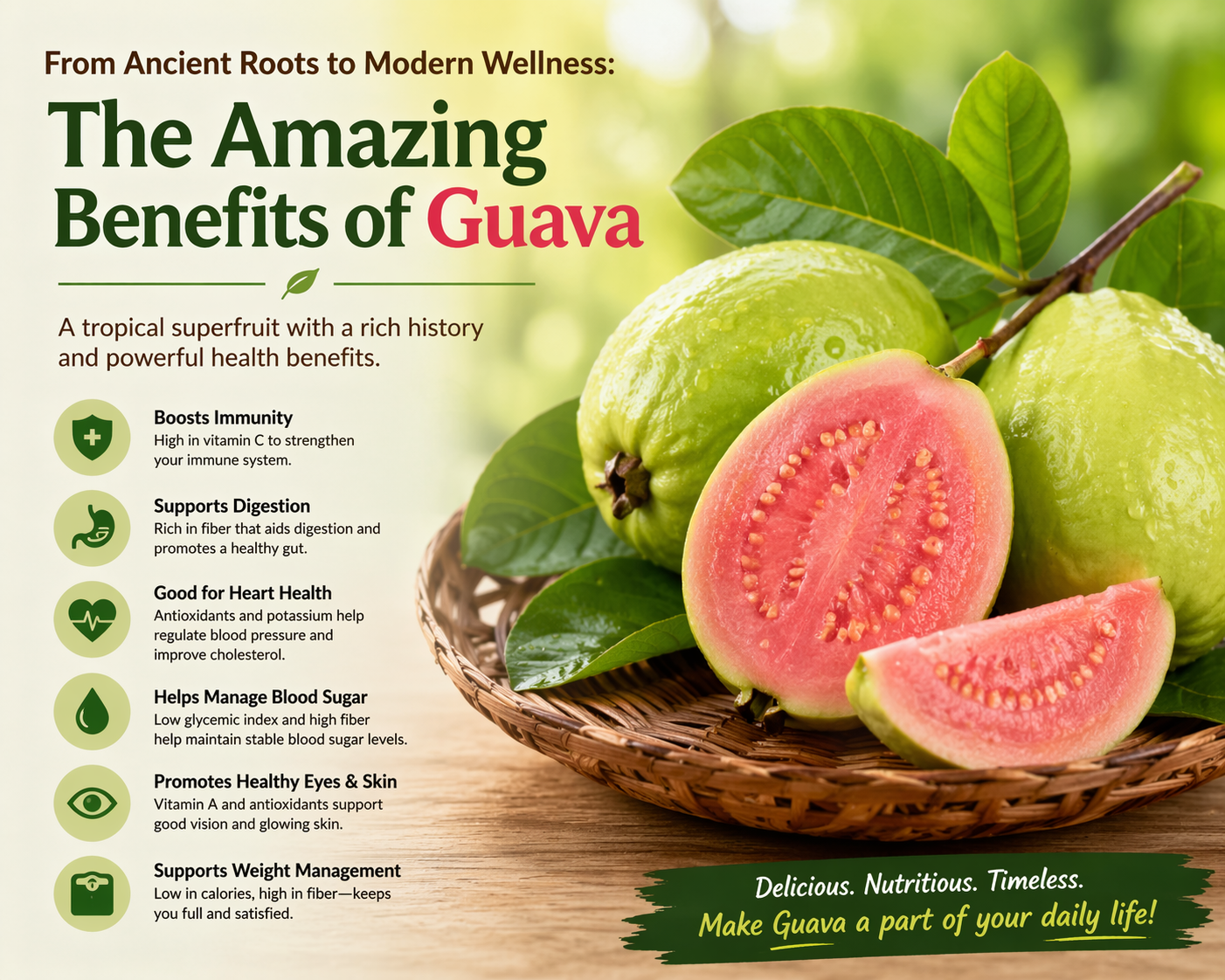
    Benefits of Guava

    Guava is more than just a delicious tropical fruit—it carries a rich history that stretches back centuries. Believed to have originated in Central America and southern Mexico, guava was cultivated and consumed by ancient civilizations long before it spread across the globe. Indigenous peoples valued guava not only for its sweet flavor but also for its medicinal properties. When Spanish and Portuguese explorers arrived in the Americas, they quickly recognized its value and helped introduce guava to regions such as Asia, Africa, and the Caribbean. Over time, guava adapted well to tropical and subtropical climates, becoming a staple fruit in many cultures and cuisines around the world.

    Today, guava is widely grown in countries like India, Brazil, Thailand, and Indonesia, and it plays an important role in traditional remedies as well as modern nutrition. Its long journey from a regional fruit to a global favorite speaks to both its versatility and its remarkable health benefits.

    One of guava’s most impressive qualities is its high vitamin C content. In fact, a single guava can provide more than twice the recommended daily intake of this essential nutrient. Vitamin C is crucial for strengthening the immune system, helping the body fight infections, and supporting skin health by promoting collagen production. Regular consumption of guava can contribute to a stronger immune defense and healthier, more radiant skin.

    Guava is also an excellent source of dietary fiber, making it highly beneficial for digestive health. Fiber aids in maintaining regular bowel movements, prevents constipation, and supports a balanced gut microbiome. Including guava in your diet can help keep your digestive system functioning smoothly and efficiently.

    In addition to supporting digestion, guava offers benefits for heart health. It contains powerful antioxidants such as lycopene and flavonoids, which help reduce inflammation and protect the body from oxidative stress. Along with potassium, these compounds can help regulate blood pressure and improve cholesterol levels, reducing the risk of cardiovascular disease.

    For individuals concerned about blood sugar levels, guava is a smart and nutritious option. Its low glycemic index and high fiber content help slow the absorption of sugar in the bloodstream, preventing sudden spikes. This makes guava particularly suitable for people with diabetes or those aiming to maintain stable energy levels throughout the day.

    Guava can also support weight management efforts. It is relatively low in calories but high in fiber, which helps you feel full for longer periods. This can reduce unnecessary snacking and support a balanced diet without sacrificing taste or satisfaction.

    Another benefit of guava is its contribution to eye health. Rich in vitamin A and antioxidants, it helps maintain good vision and may lower the risk of age-related eye issues. Its overall antioxidant profile also supports cellular health and may reduce the risk of chronic diseases.

    With its unique flavor and versatility, guava can be enjoyed in many ways—fresh, juiced, blended into smoothies, or added to salads and desserts. Its combination of taste, history, and nutrition makes it a truly valuable addition to any diet.

    From its ancient roots in the Americas to its global popularity today, guava stands out as a fruit that offers both cultural significance and impressive health benefits. Including it in your daily routine is a simple step toward a healthier lifestyle.