
🥕 The Journey of Carrot
Carrots sit quietly in our kitchens—humble, familiar, and often overlooked. Yet behind this everyday vegetable lies a story that stretches across centuries and continents. It’s a journey of color, cultivation, culture, and quiet transformation.
🌍 Where It All Began
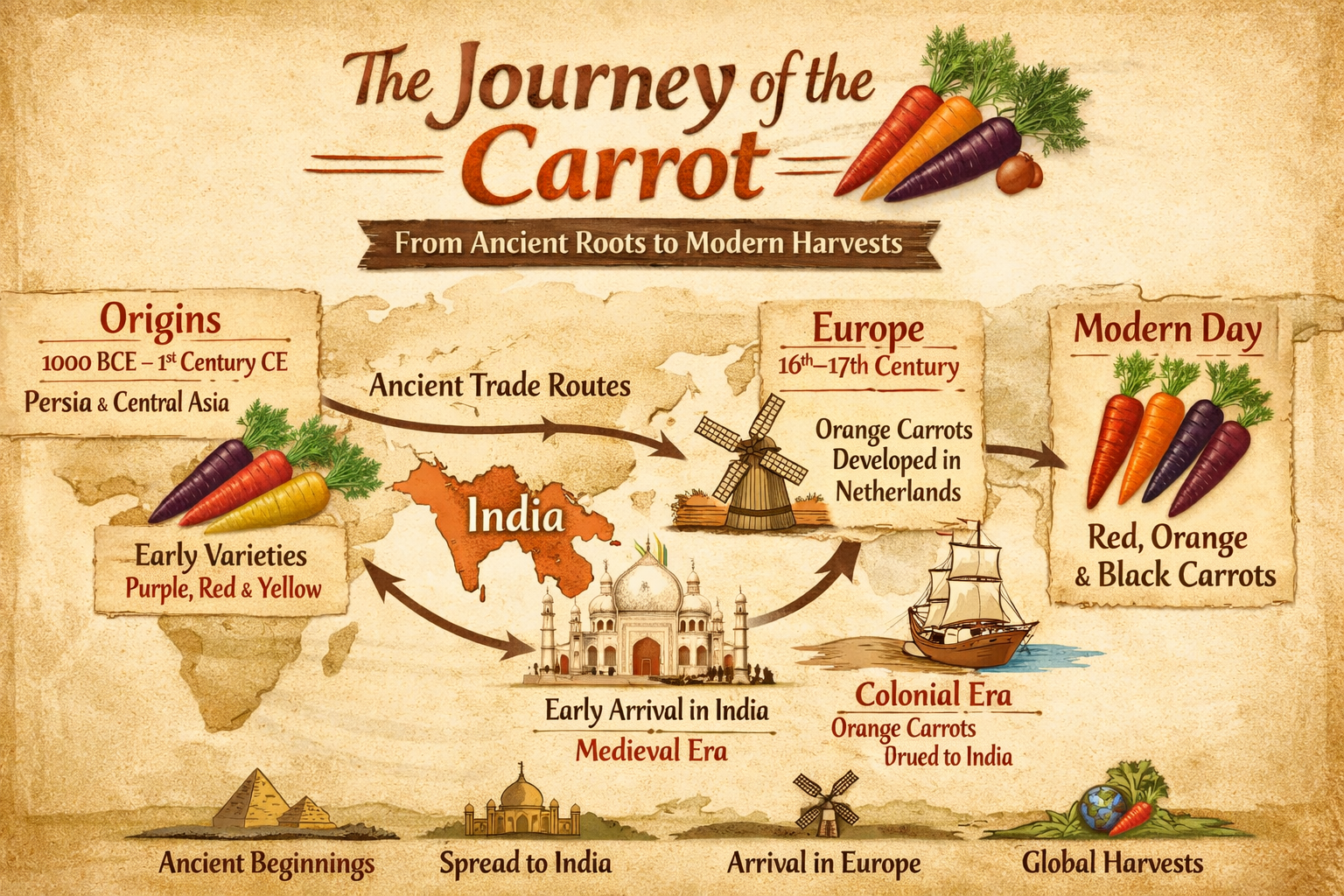
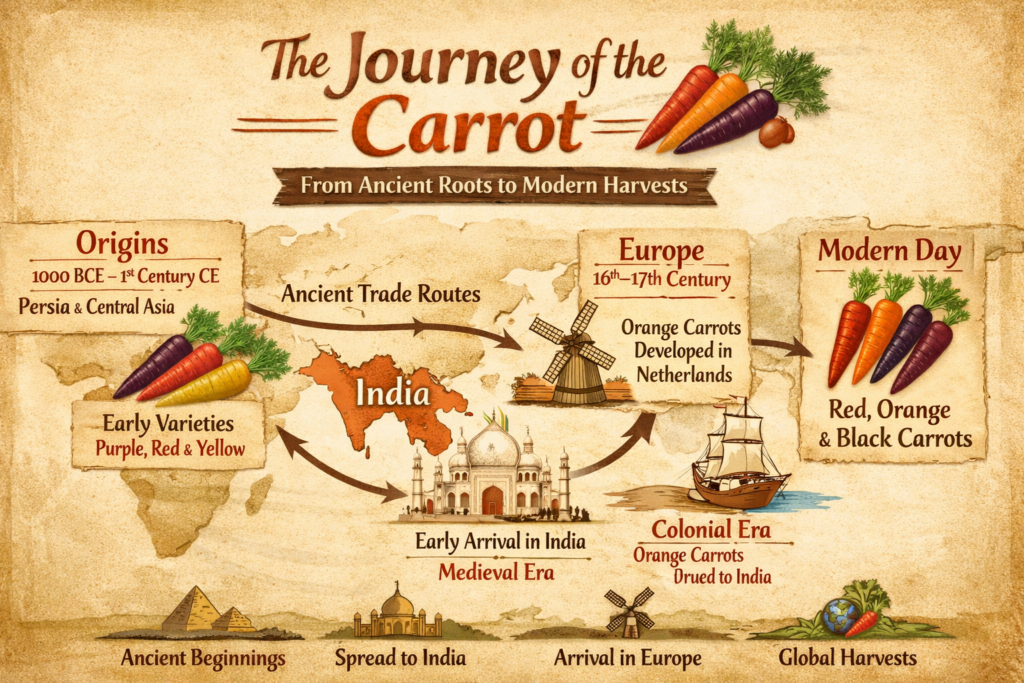
Long before carrots turned orange, they grew wild in the rugged lands of Persia and Afghanistan. These early carrots looked nothing like the ones we know today. They were slender, often twisted, and came in deep shades of purple, red, and yellow.
Interestingly, people didn’t grow them for the root at first. It was the leaves and seeds—aromatic and medicinal—that were valued. The root, now the star of countless dishes, was just an afterthought.
As trade routes expanded, so did the carrot’s journey. Slowly, it traveled eastward, eventually finding its way into the fertile lands of India.
🇮🇳 Carrots Find a Home in India
In India, carrots didn’t just arrive—they adapted, evolved, and became part of everyday life.
The red carrot, in particular, thrived in North India’s winter climate. Juicier, sweeter, and richer in flavor, it became deeply tied to seasonal cooking and tradition. Markets would fill with vibrant red bundles, signaling the arrival of winter.
Much later, during the colonial period, a new variety appeared—the now-familiar orange carrot, developed in Europe, especially in the Netherlands. Over time, it spread across India, becoming a year-round staple.
Yet even today, the red carrot holds a special place in Indian hearts and kitchens.
😋 A Taste That Transforms
Bite into a raw carrot, and you’ll notice its crisp texture and gentle sweetness, with a hint of earthiness. It’s refreshing, simple, and satisfying.
But cooking tells a different story.
Heat softens the carrot, deepens its sweetness, and unlocks a richness that feels almost indulgent. The red carrot, especially, becomes intensely flavorful—perfect for desserts and traditional dishes—while orange carrots remain milder and versatile.
Then there are the darker varieties, like black or purple carrots, with their bold, earthy tones, often reserved for special preparations.
🍲 From Kitchen Staple to Cultural Icon
Across India and beyond, carrots slip effortlessly into both simple meals and celebratory dishes.
In Indian homes, they shine in:
- Warm, comforting gajar ka halwa, slow-cooked to perfection
- Lightly spiced carrot sabzi, served with everyday meals
- Tangy, bold carrot pickle, rich with spices
- Traditional kanji, a fermented drink made from black carrots
Elsewhere in the world, carrots add life to soups, stews, salads, roasted platters, and even desserts like carrot cake.
Few vegetables move so easily between the ordinary and the festive.
💪 Nature’s Quiet Healer
Beyond taste and tradition, carrots carry remarkable nutritional strength.
Rich in beta-carotene, they help the body produce vitamin A—essential for vision, immunity, and skin health. Their fiber supports digestion, while antioxidants and minerals contribute to heart health and overall well-being.
In traditional Indian practices, especially, carrots—particularly black ones—are valued for their role in gut health, often consumed in fermented forms.
It’s nourishment, offered simply.
✨ Little Secrets Hidden in a Common Root
Even the most familiar foods carry surprises, and carrots are no exception.
- They were once grown more for their leaves and seeds than their roots
- The bright orange carrot is a relatively recent creation, shaped by European cultivation
- Purple carrots contain powerful antioxidants similar to those found in berries
- Early carrots were far less appealing—bitter, tough, and woody—before centuries of careful cultivation transformed them
- Despite India being a major producer today, the most traditional variety here remains red, not orange
These small details remind us how much history can hide in plain sight.
🌱 A Story Still Growing
From wild, colorful roots in ancient lands to the vibrant markets of India, the carrot’s journey is far from ordinary. It has changed shape, color, and purpose—yet remained a constant presence across time.
Today, whether it’s grated into a rich halwa, stirred into a simple sabzi, or eaten fresh and raw, the carrot continues to connect past and present.
A quiet vegetable, perhaps—but one with a story worth savoring.